About WIMSHURST MACHINE
Specification:
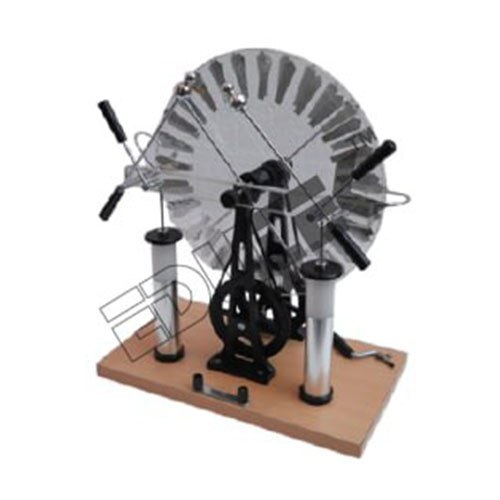
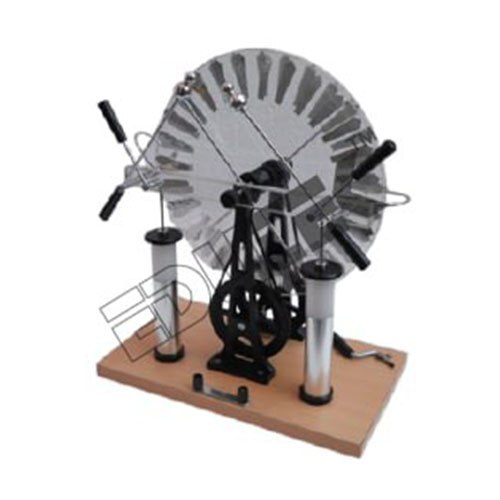
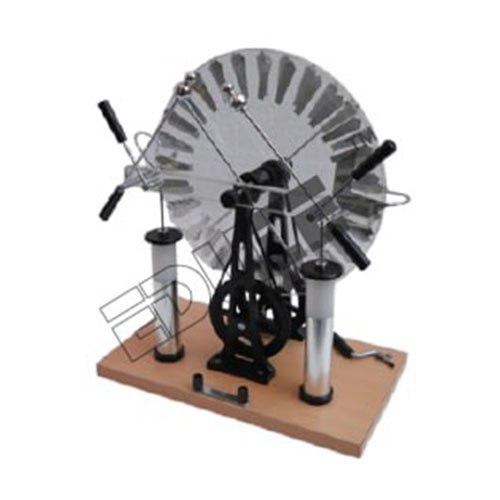
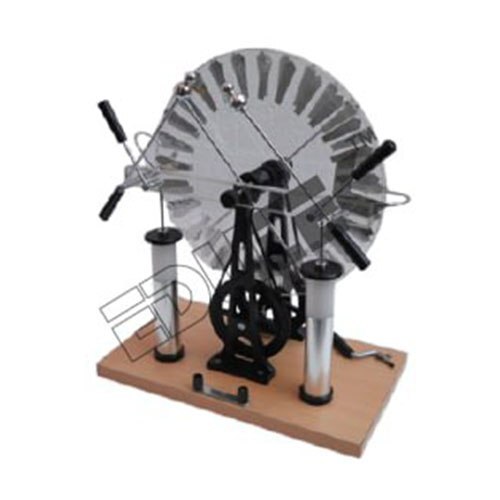
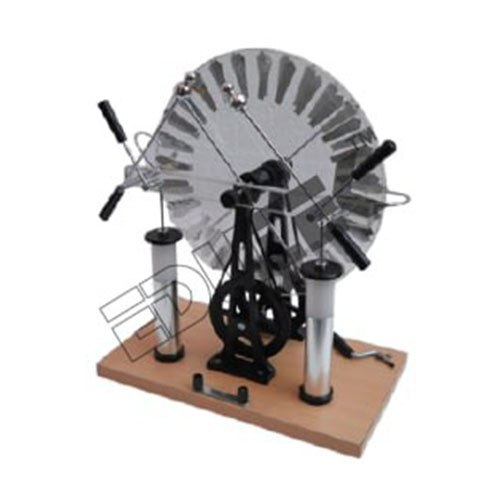
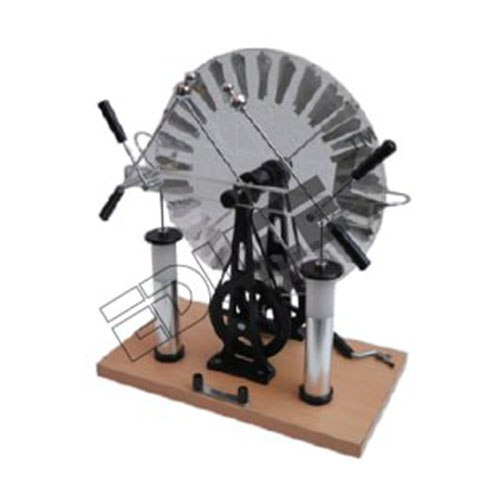
WIMSHURST MACHINE
The two plates are supported in two rigid uprights and driven by belt in opposite direction.
They are heavy, high resistance plastic with sectors of aluminium sheet.
Two Leyden jars (condensers) made form corning glass and aluminium foil.
The whole is mounted on a wooden base nicely polished.
High Voltage Electrostatic GenerationHarness the power of static electricity with the Wimshurst Machine. Its hand-operated mechanism allows you to generate visible sparks up to 5 cm, making it ideal for high-voltage demonstrations, charge storage experiments, and illustrating electrostatic principles in physics and engineering classes.
Durable Design with Safety in MindThe machine features transparent acrylic or polycarbonate discs with metal sectors for durability and performance. Safety is enhanced by insulated handles and a sturdy, non-conductive base. Its freestanding design and lightweight build allow easy setup and relocation on any benchtop workspace.
Easy Operation and MaintenanceManual cranking turns the discs via smooth gear assembly for immediate electrostatic generation. Minimal maintenance is required; simply clean the discs and sectors periodically to ensure optimal performance. No power supply is necessary, making it convenient for labs with limited electrical infrastructure.
FAQs of WIMSHURST MACHINE:
Q: How does the Wimshurst Machine generate high-voltage static electricity?
A: The Wimshurst Machine produces high-voltage electricity through manual rotation of twin discs with metal sectors. The hand-operated cranks drive the discs in opposite directions, causing charge separation and accumulation, which is then stored in Leyden jars for spark generation.
Q: What materials are used in the construction of the Wimshurst Machine?
A: This device incorporates transparent acrylic or polycarbonate discs, aluminum or brass sectors, and a rigid non-conductive base made from plastic or metal. Insulated handles and ergonomic cranks enhance safety and usability.
Q: Where is the Wimshurst Machine typically used?
A: The Wimshurst Machine is widely utilized in engineering and electronics laboratories, educational institutions, and science demonstrations for studying and displaying principles of static electricity and high-voltage phenomena.
Q: What is the maintenance process for the Wimshurst Machine?
A: Maintenance is minimal. Periodic cleaning of the discs and metal sectors is recommended to prevent dust buildup, ensuring consistent performance and spark generation. All components should be inspected for damage before use.
Q: When can I expect the machine to generate sparks during operation?
A: Sparks can be generated immediately upon manual cranking, provided environmental conditions are appropriate and the discs are clean. The output is dependent on rotation speed and charge accumulation in the Leyden jars.
Q: What are the safety features of the Wimshurst Machine?
A: The Wimshurst Machine is equipped with insulated handles to protect the operator from accidental shocks. Its robust and non-conductive base further enhances user safety during high-voltage experiments.
Q: What are the key benefits of using the Wimshurst Machine in experiments?
A: Users benefit from its visible spark output, manual operation, portability, and ease of use, enabling safe, hands-on exploration of electrostatic concepts. Its transparent design also allows students to observe internal mechanisms during demonstrations.





 Send Inquiry
 Send Inquiry

