About Stereo Microscope
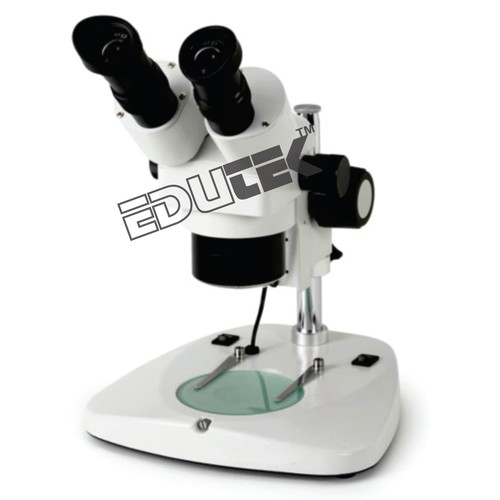
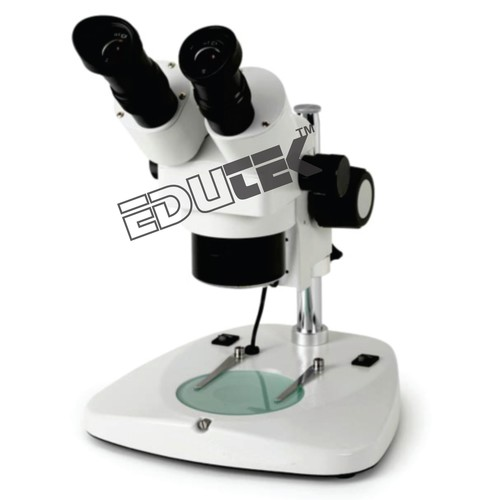
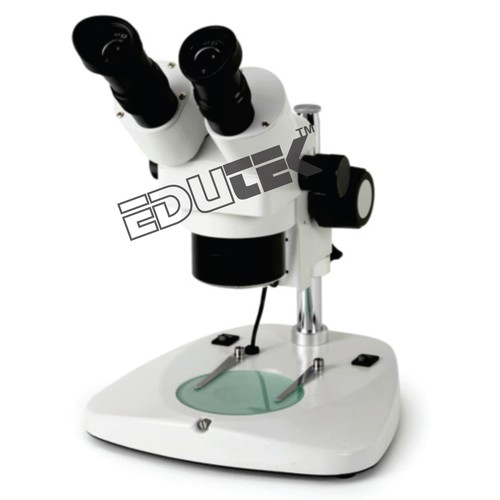
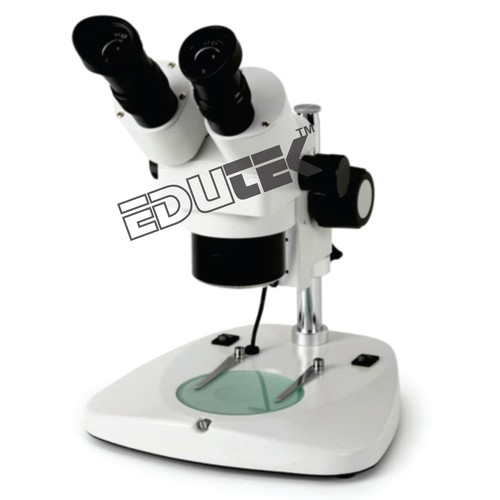
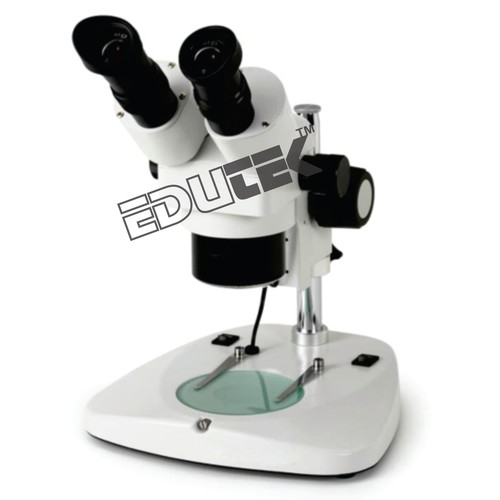
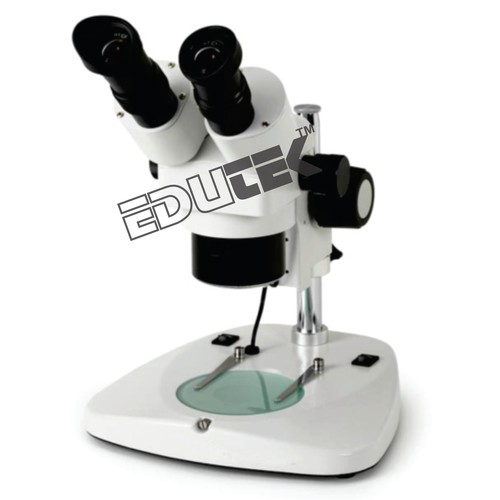
STEREO MICROSCOPE
To observe the microscopic object like plant cell, animal cell etc. Uses two lenses to make thing s look larger.
Specification
- Type: magnification.
- Objectives : 1 X - 2X, 1X-3X or 2X-4X; turret.
- Eyepieces : Wide field HWF 10X; optionally 15X, 20X All eyepieces accept 25mm diameter eyepiece graticules.
- Magnification Full range of magnifications 10X to 80X
- Stages Interchangeable clear and black/white.
- Working Distance 61 to 106mm
- Optical System Erect un-reversed image, convergent angle 120, interpupillary, adjustable from 55 to 5mm, diopter adjusment by left eyepiece tube.
- Binocular Tube 361 rotatable, inclined 45
- Focusing Coarse focusing with rack and pinion control.
- Illumination Deal Illumination built-in, dual illumination system providing both incident and transmitted light independently or simultaneously. in-base transformer provides low voltage, high intensity illumination
- Certification ISO/IEC product certificate
- Power supply 220V/501-17.
- Documentation Installation and operation manual
- General Features : Durable. Comfortable and Easy to Ilse Versatility for many Applications. large fields of view
- warranty One year.
MICROSCOPE
- Stereo microscope with complete system for incident or oblique illumination,
- Comprise: x 10 WF eye pieces plus eye guards,
- A stand with black/white reversible plate and stage clips together pre focus illuminator,
- Comprising head linkages and variable power supply.
- Head Monocular
- Stage plain stage with fixed condenser holder
- Eye piece 10 x wide field
- Objectives 4 x 10 x 40
- Condenser 2 lence flip top
- Illumination 6V, 10W, plus mirror unit
- Dimension 194 x 220 360 mm
High-Performance Magnification and Viewing QualityEquipped with rotatable turret objectives (2x, 4x) and widefield 10x eyepieces, this microscope enables users to perform detailed visual analysis from 10x to 40x magnification. The binocular display and adjustable interpupillary distance (55-75 mm) ensure comfortable viewing for extended sessions.
Advanced Illumination for Diverse SpecimensIncident and transmitted LED illumination offers flexibility to observe opaque and transparent samples. With adjustable brightness, users can tailor the lighting conditions according to specimen requirements, facilitating precise laboratory work.
Durable Construction and Reliable OperationThe microscopes metal body and optical glass lenses ensure long-term durability in demanding laboratory environments. With manual coarse adjustment focusing and a spacious working distance of 80 mm, it supports both routine and complex tasks efficiently.
FAQs of Stereo Microscope:
Q: How does the Stereo Microscopes magnification range benefit laboratory work?
A: The provides magnification from 10x to 40x, allowing users to examine both fine details and broader sample structures. This versatility is ideal for laboratory tasks involving biological specimens, electronics, and material analysis.
Q: What types of specimens can be observed with incident and transmitted LED illumination?
A: Incident illumination is best for opaque objects such as circuit boards or minerals, while transmitted light is suitable for transparent samples like tissue slices or thin films. LED brightness adjustment allows users to optimize viewing for different materials.
Q: When should I use the coarse focusing mechanism on this microscope?
A: Coarse adjustment is used for initial focusing and rapid stage movement. It is especially useful when shifting between objectives or viewing specimens that require significant changes in focal depth.
Q: Where can the Stereo Microscope be used effectively?
A: The is suitable for various laboratory environments, including biological research labs, electronics facilities, and educational institutions throughout India and internationally.
Q: What is the process for switching between magnifications on this microscope?
A: Simply rotate the objective turret between the 2x and 4x positions while using the 10x widefield eyepieces to achieve the desired total magnification (10x, 20x, 40x). Ensure the focusing mechanism is adjusted appropriately for sharp images.
Q: How does adjustable interpupillary distance improve user comfort?
A: By allowing users to set the eyepieces between 55 and 75 mm apart, the microscope accommodates different facial structures. This adjustment prevents eye strain and enables prolonged observation without discomfort.
Q: What are the benefits of choosing a metal body and optical glass lenses for lab microscopes?
A: A metal body ensures durability and stability, while optical glass lenses deliver clear, distortion-free images, contributing to the microscopes 100% accuracy and efficient operation in professional settings.






 Send Inquiry
 Send Inquiry

