About Stainless Steel Body Pass Box
Stainless Steel Body Pass Box
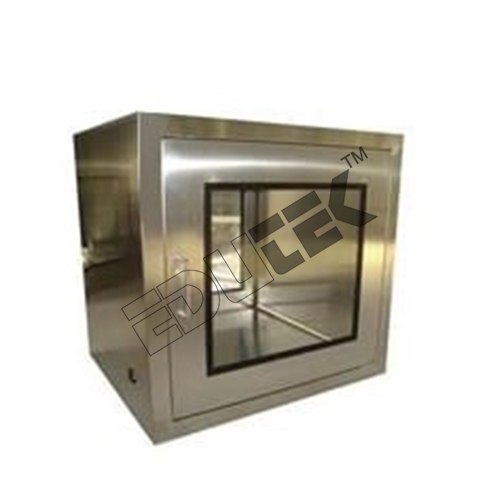
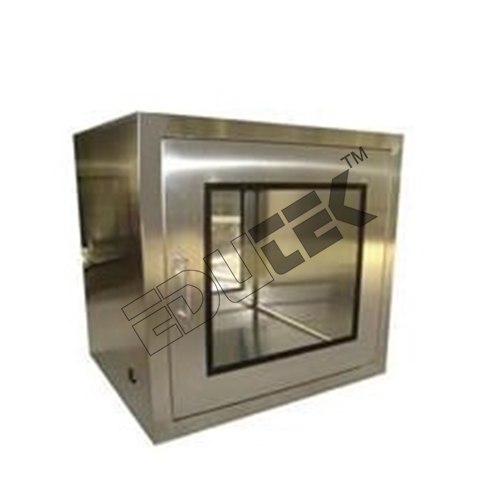
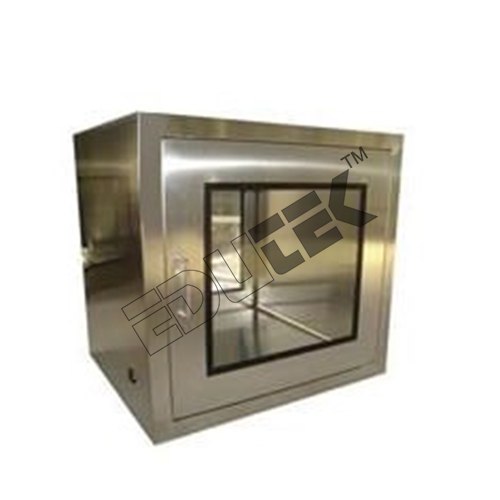
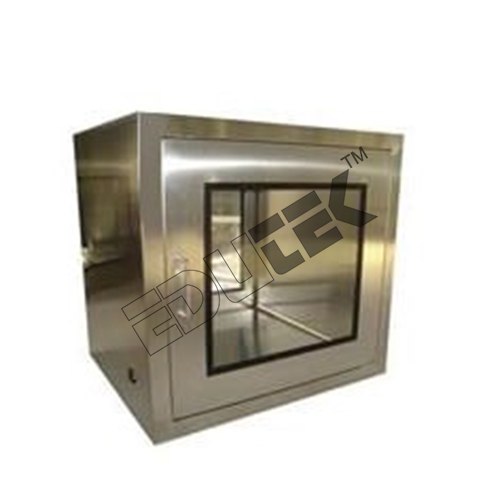
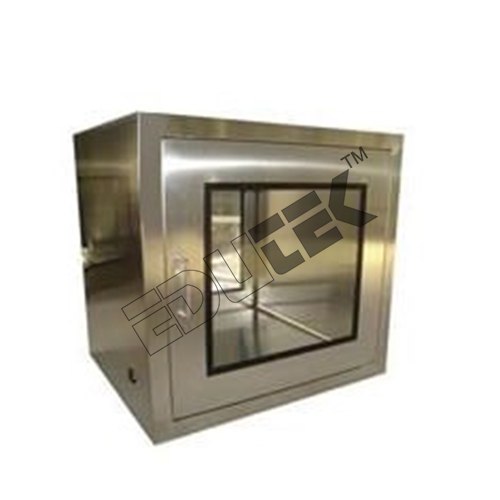
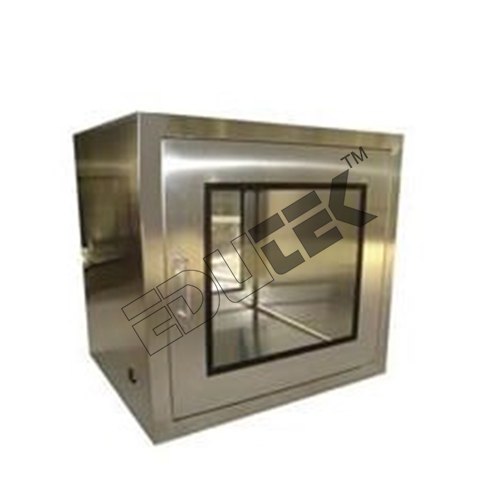
Pass box (stainless steel body) the pass box is an equipment normally installed on the wall between the clean room and any other room. It is used for transfer of material from and into the clean room, without contaminating the air of clean room and without having to open room door. This is achieved with the help of interlocking type doors of pass box.
Principal of working:
This equipment is installed on the wall between the clean room and the other room. The pass box has two doors at its extreme ends. One door opens in the clean room and other door open in the other room. These doors are electrically interlocked type so that any other door can be operated at a time. This avoids direct flow of air from the clean room to the other room or vice versa. This also avoid the need to open the clean room door frequently for transferring of material from & into the clean room. Thus, it helps in achieving the aim of material transfer without disturbing the cleanliness level of the clean room.
Construction:
It is made of commercial board and all its external & internal surfaces are dully laminated. L. M. S. Or s. S. Sheet body also can be supplied optionally. Each hinged door has wide glass viewing window, through which material kept in the pass box can be seen. These doors are electrically interlocked type so any one door can be opened at a time. U. V. & fluorescent light and hepa filter can be provided optionally.
Available size:
24"(w) x 24" (h) x 24" (d)
Other sizes on request. Electromagnetic Interlocking for Maximum SafetyThe pass box utilizes an electromagnetic interlocking mechanism to prevent both doors from opening simultaneously, thereby minimizing cross-contamination. This safety feature is crucial in laboratory environments where maintaining sterile conditions is vital. Whether handling samples or equipment, the interlocking system provides secure passage between different rooms.
Dynamic Clean Air with HEPA FiltrationDynamic pass box models feature high-efficiency HEPA filters, achieving air cleanliness to Class 100/ISO 5 standards. This ensures that airborne contaminants are effectively removed during transfers, maintaining laboratory integrity. The system operates with a noise level below 65 dB, supporting a quiet, controlled workspace.
Customizable Design and Installation OptionsEach unit can be tailored in size, capacity, and features to match specific laboratory needs. The stainless steel construction (SS 304/316) withstands rigorous use, while installation options include both floor and wall mounting. Optional accessories such as UV and fluorescent lights, hour meters, and digital or analog displays further enhance functionality.
FAQs of Stainless Steel Body Pass Box:
Q: How does the electromagnetic interlocking system work in the pass box?
A: The electromagnetic interlocking mechanism ensures only one door can be opened at a time. This prevents direct air exchange between controlled environments, maintaining sterility and minimizing contamination risks in laboratory operations.
Q: What is the difference between static and dynamic pass box types?
A: A static pass box simply provides a controlled physical barrier, while a dynamic pass box is equipped with an inbuilt HEPA filter and blower unit, supplying Class 100/ISO 5 filtered air during material transfer to further protect samples from contamination.
Q: When should a dynamic pass box with HEPA filter be used?
A: Dynamic pass boxes are recommended when transferring sensitive materials that require an extra level of air cleanliness during the movement. They are ideal in pharmaceutical labs, cleanrooms, and bioscience facilities where contamination control is critical.
Q: Where can the stainless steel pass box be installed?
A: This pass box can be mounted on floors or walls, offering flexibility depending on the laboratory layout and operational flow. Its customizable dimensions make it suitable for varied installation locations.
Q: What are the benefits of optional features like UV light and hour meter?
A: Optional UV lights provide additional surface disinfection inside the pass box, enhancing sterile conditions. The hour meter helps monitor operating time, ensuring maintenance schedules are observed for consistent system performance.
Q: How is the noise level managed in dynamic pass box models?
A: The dynamic models operate at noise levels below 65 dB due to efficient design and quality components, supporting a quieter and less disruptive laboratory environment.




 Send Inquiry
 Send Inquiry

