About Refractrometer, Abbe
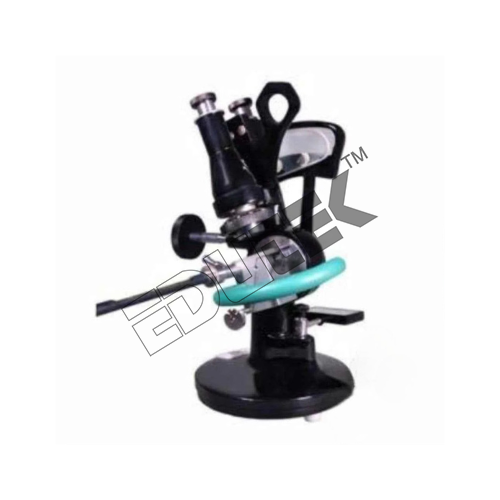
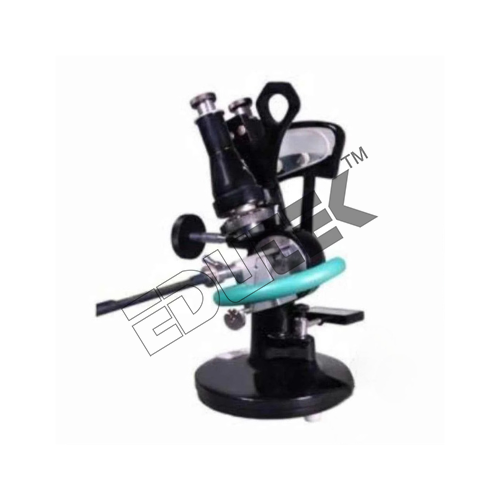
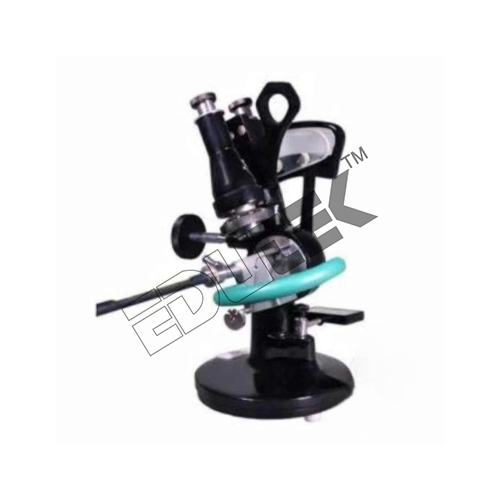
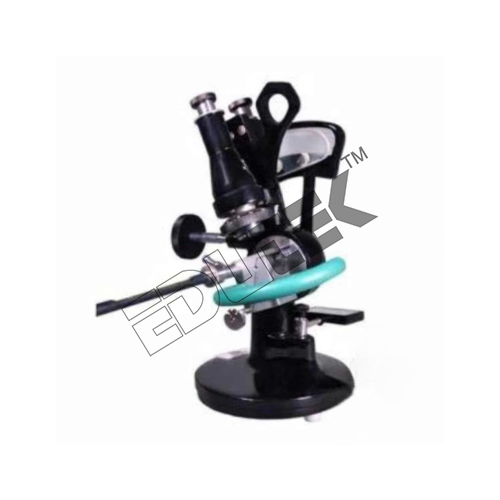
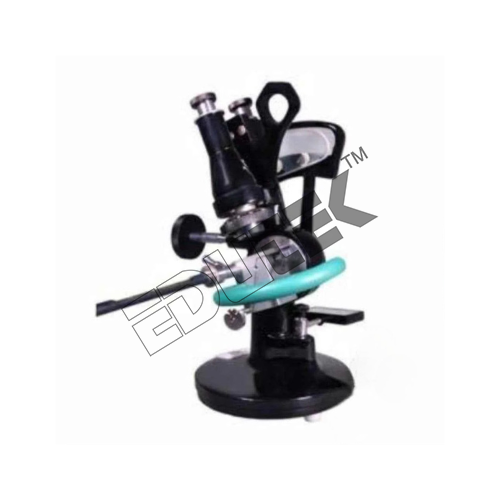
Refractrometer, Abbe
Specifications of Refractrometer, Abbe
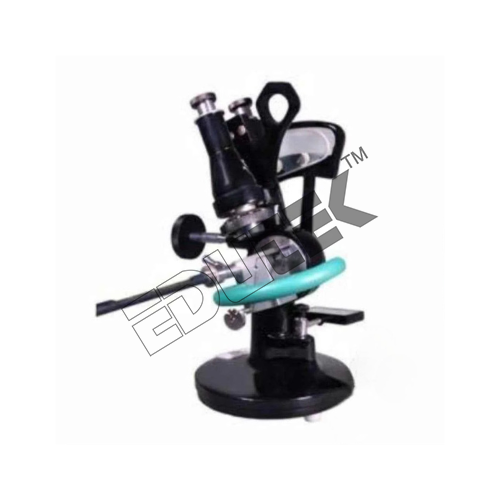
For quick examination of refractive indices & mean dispersion of liquids, solids and powders.Comprising Abbe double prisms, with thermostat, compensator, telescope mirror and radial arm with vernier. Range nD 1.3000 to nD 1.7000 in steps of 0.001, sugar percentage 0 to 95% in steps of 1 division.
Exceptional Measurement Range and AccuracyThe Abbe Refractometer supports measurements from 1.3000 to 1.7000 nD with a fine resolution of 0.0005. Its high purity optical glass and precise optical system ensure reliable and accurate results, making it indispensable in laboratories and quality control environments.
Temperature-Controlled ReliabilityAn integrated thermometer allows users to accurately monitor and control sample temperature from 0C to 70C. This feature ensures reproducibility in refractive index measurements, even with temperature-sensitive chemicals or solutions.
Simple Manual Operation and CalibrationNo external power source is neededthe device is 100% manual. Calibration is straightforward, making it suitable for professionals and students alike. The visual observation through the eyepiece and manual scale display offer clear, real-time readings.
FAQs of Refractrometer, Abbe :
Q: How does the Abbe Refractometer measure refractive index?
A: The Abbe Refractometer measures the refractive index by passing light through a small sample (1-2 drops) placed between two prisms. The user observes the boundary line through the eyepiece and reads the value on the integrated manual scale for precise analysis.
Q: What is the process for calibrating this refractometer?
A: Calibration is performed manually by using a standard reference liquid with a known refractive index. The user adjusts the calibration screw until the scale matches the reference value, ensuring accurate measurements for subsequent samples.
Q: When should the integrated thermometer be utilized during measurements?
A: The thermometer should be checked and monitored before and during every measurement, particularly if the samples refractive index is temperature-dependent. Accurate temperature control (0C 70C range) improves result reliability and consistency.
Q: Where is this refractometer most effectively used?
A: This instrument is ideal for laboratory settings, industrial quality control, and educational institutes where precise measurement of refractive indices is required, such as in food, chemical, and pharmaceutical industries.
Q: What are the benefits of the manual and electricity-free design?
A: The manual operation ensures the instrument can be used anywhere without dependence on electricity, reducing running costs and allowing for deployment in resource-limited environments or field locations while maintaining high efficiency.
Q: How does the refractometer handle temperature resistance and what materials make this possible?
A: The body is constructed with stainless steel and utilizes high purity optical glass, enabling resistance to temperatures up to 70C. This ensures durability and consistent performance across a range of laboratory environments.




 Send Inquiry
 Send Inquiry

