
EDUTEK INSTRUMENTATION
GST : 06AEWPJ6896D1ZU

Call us
07313726362
Call us
07313726362
Specification:
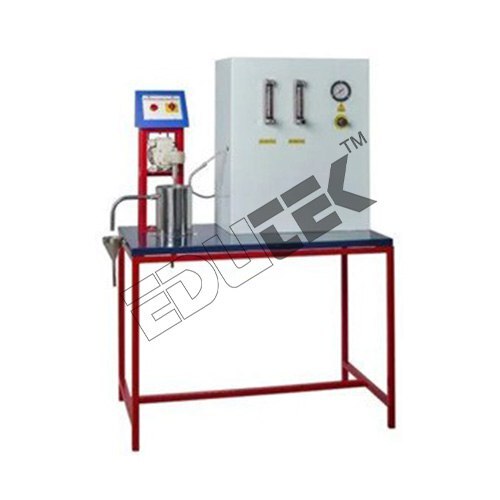
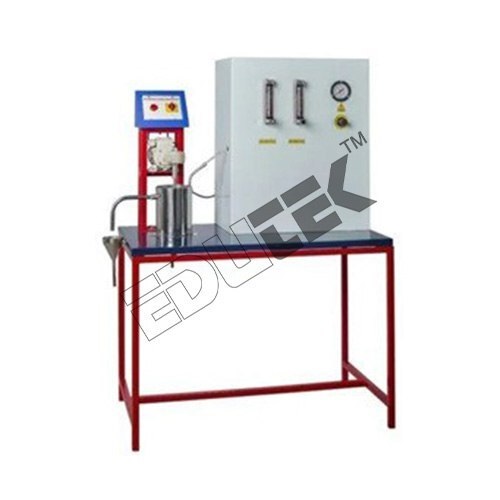
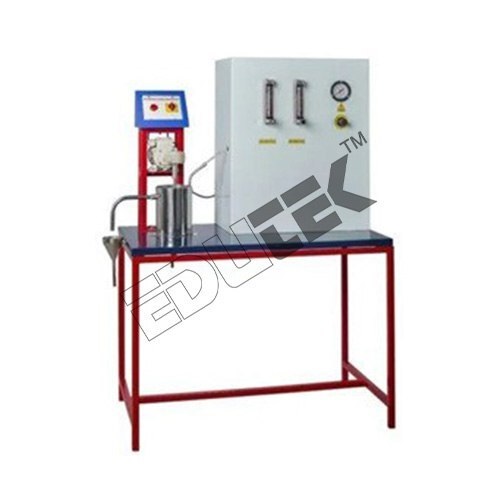
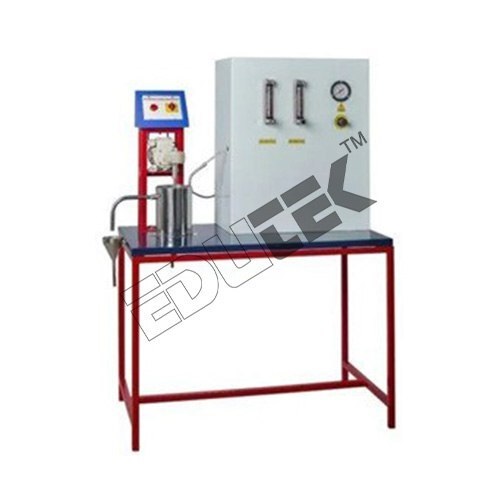
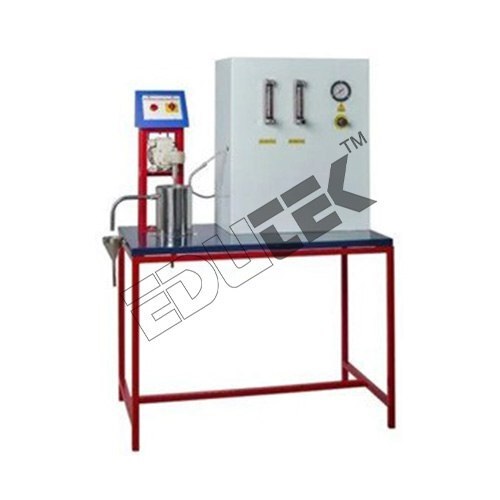
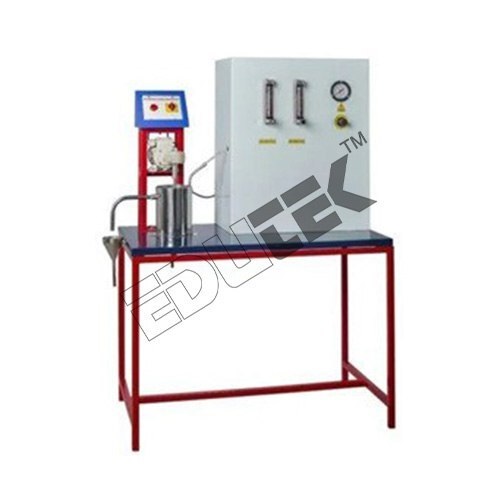
R.T.D. STUDIES IN PACKED BED REACTOR APPARATUS
Axial diffusion and dispersion offluid in packed beds are important for design and operation of separationequipment and Chemicals reactors. The tracer technique, the most widely usedmethod for the study of axial dispersion.
In stimulus response experimentation,we perturb the system using pulse input of tracer and then see how the systemreacts or responds to this stimulus.
The analysis of the response givesthe desired information about the system. The setup consists of a glass columnpacked with Rasching Rings and one feed tank. Water is fed to the reactorthrough liquid distributor, fitted at the bottom of the column.
Rotameter is provided to measure theflow of water. The flow rate can be adjusted by operating the needle valveprovided on Rotameter. For understanding the R.T.D. characteristics, a specialarrangement to inject tracer into the lower end of reactor, using a syringe, isprovided. Samples can be taken periodically from the top outlet of reactor.Pressure Regulator & Pressure Gauge are fitted in the compressed air line.
Experimentation/Learning Objectives
To plot RTD curve for Packed BedReactor.
To determine the Dispersion No.
Utilities Required
Compressed Air Supply: 0.25 CFM@1 bar
Water Supply.
Floor Drain.
Floor Area Required: 1.0 m x 1.0 m.
Instruments, Laboratory Glassware andChemicals required for analysis as per the system adopted.
Technical Details
Reactor Column: Material Borosilicate Glass
Packing: Rasching Rings, Material Borosilicate Glass. Size 8-10mm(approx.)
Feed Tank: Material Stainless Steel, Capacity 20 Ltrs.
Feed Circulation: By compressed air.
Flow Measurement: Rotameter.
Piping: Stainless Steel and PU pipe.
Pressure Regulator: 0-2 Kg/cm2
Pressure Gauge: Bourdon type 0-2 Kg/cm2
Stop Watch: Electronic
Arrangement is done to inject tracerinto the lower end of reactor

Price:
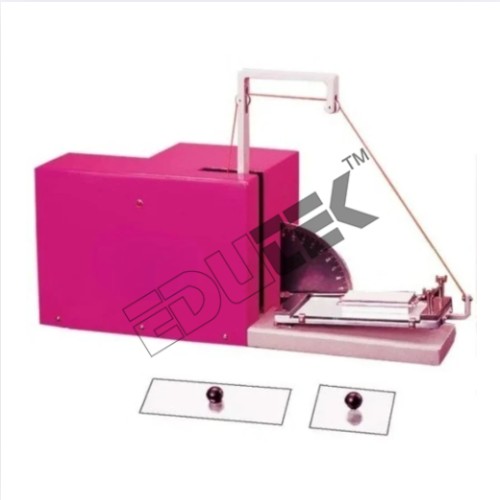
Price 500.0 INR / Piece
Minimum Order Quantity : 1 Piece
Usage : Laboratory, R&D, QA
Application : Testing slip resistance and sliding angle of materials
Power Supply : 220V AC, 50/60Hz
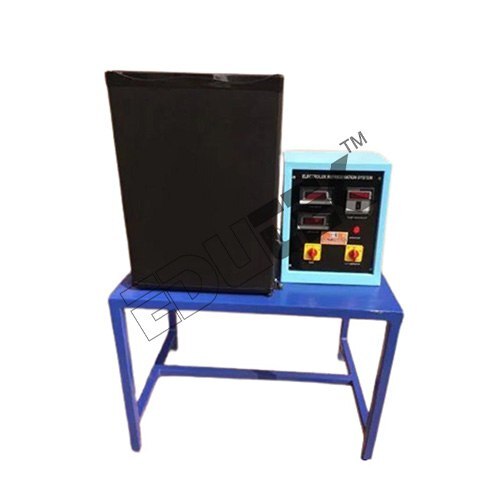
Minimum Order Quantity : 1 Piece
Usage : Engineering Testing Equipment
Application : Engineering Testing Equipment
Product Type : ELECTROLUX REFRIGERATION TEST RIG
Power Supply : 230V AC, 50Hz
Minimum Order Quantity : 1 Piece
Usage : Engineering Testing Equipment
Application : Engineering Testing Equipment
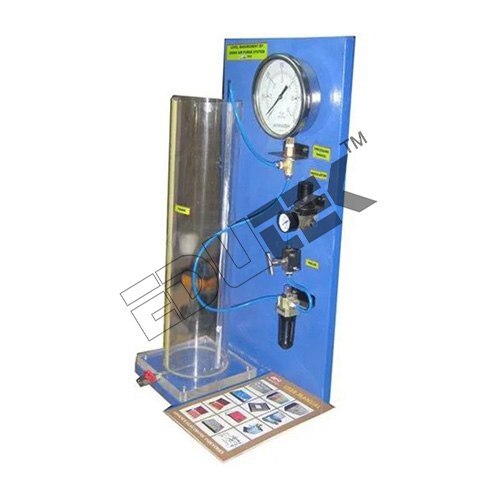
Product Type : MEASUREMENT OF LEVEL BY AIR PURGE METHOD APPARATUS
Power Supply : 230 V AC, 50 Hz
Minimum Order Quantity : 1 Piece
Usage : Engineering Testing Equipment
Application : Engineering Testing Equipment
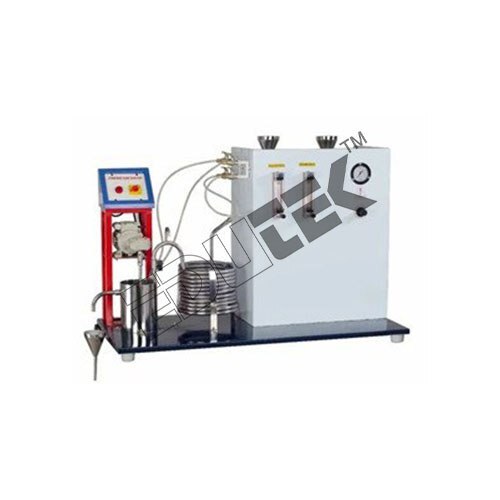
Product Type : CHEMICAL REACTOR SERVICE UNIT APPARATUS
Power Supply : 230V AC, 50 Hz

 Send Inquiry
 Send Inquiry

