About Polygraph 6-Channels Model
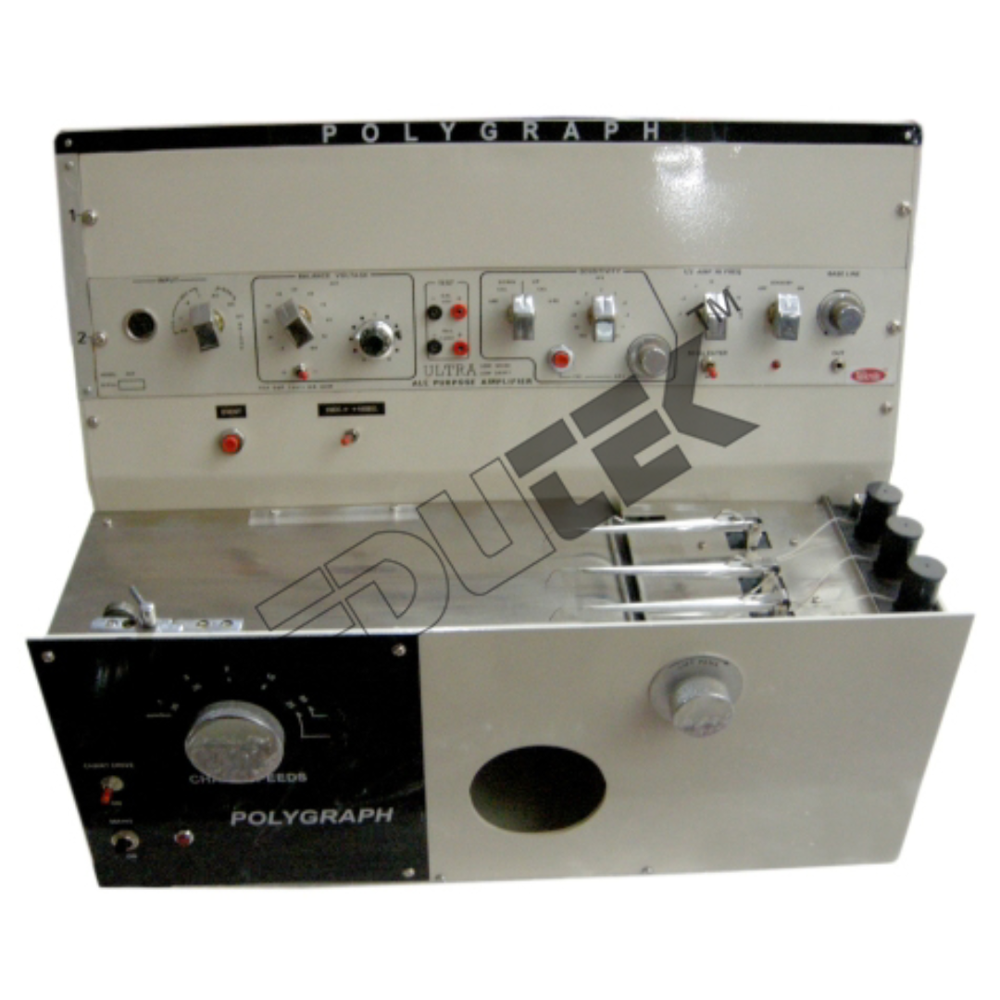
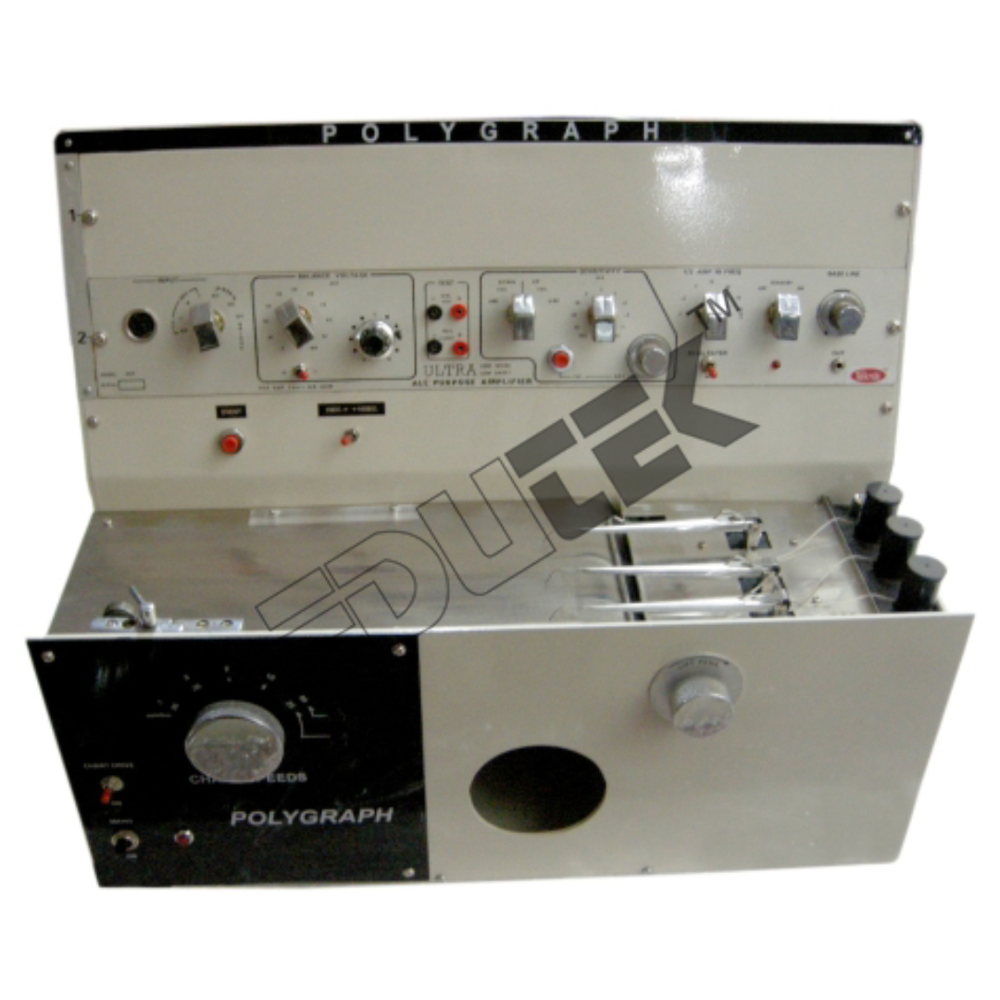
Polygraph 6-Channels Model : ETPL-330
A MAIN CONSOLE :
Standard table top housing:-
- It Houses
- 10 Speed noise free chart drive
- Ink pen recording system
- Power Supply
- Housing for amplifiers
- Time & Even Channel
B AMPLIFIERS
They are modular interchangeable and one can easily plug them in or out in few seconds. One will have to select an appropriate amplifier for the recording of a particulars parameter.
The amplifiers are incorporated with 50Hz notch filter IN & OUT toggle switch to cut off unwanted 50
cycles interference.
Versatility in Signal RecordingWith six simultaneous channels, this polygraph offers researchers, clinicians, and educators the ability to record and analyze multiple physiological signals at once. The facility to adjust sensitivity and chart speed ensures accurate and detailed documentation of a wide range of biopotential signals, making this model an invaluable resource in diverse diagnostic and investigative scenarios.
Robust Design and SafetyThe table-top polygraph is built with a durable metal body, finished in white or metallic grey, ensuring longevity in demanding environments. Fuse protection adds an important safety feature, while banana jack connectors provide secure and reliable connectivity for all accessories. Its 20 kg construction and approximate dimensions of 55 x 45 x 22 cm offer stability and ease of use during operation.
Complete Set for Immediate OperationThe instrument comes with all necessary accessories, including electrodes, leads, and cables, plus a comprehensive operating manual. This complete package allows for straightforward setup and prompt commencement of physiological recording tasks. Its analog pen recording system provides a tangible and instantly readable chart for assessment and documentation needs.
FAQs of Polygraph 6-Channels Model:
Q: How do I adjust the sensitivity of each channel on the Polygraph 6-Channels Model?
A: The Polygraph features sensitivity adjustment ranging from 0.01 mV to 50 mV per division, allowing you to fine-tune the recording for each biological input independently. This enables accurate signal capture according to the specific physiological measurement being performed.
Q: What signals can be recorded with this polygraph, and for what applications is it best suited?
A: This polygraph is designed to record various physiological signals such as ECG, EMG, and EEG. Its ideal for research labs, educational demonstrations, and clinical diagnostics, supporting explorations in human and animal physiology.
Q: When can I expect results from a recording session, and how are data outputs provided?
A: Results are produced in real time as the physiological signals are recorded onto 150 mm wide paper using the analog pen system. Chart drive speed can be adjusted between 2.5 mm/sec and 25 mm/sec to tailor data output to the nature of the study.
Q: Where should I set up and operate the polygraph for optimal performance?
A: The device is designed for tabletop use in controlled indoor environments such as clinics, research laboratories, or educational settings. Ensure that the surface is stable and the area is dry, well-ventilated, and near a 220V AC power source.
Q: What is the process for connecting subjects and starting a physiological recording session?
A: Attach the included electrodes to the appropriate physiological sites on the subject using the leads and cables. Set the desired sensitivity and chart speed, then initiate recording either manually or electronically as outlined in the operating manual.
Q: How does the polygraph benefit clinical or research work compared to digital systems?
A: Analog pen recording offers immediate, physical readouts that are immune to certain digital data loss risks. The robust, multi-channel design allows simultaneous assessment of multiple sensors, supporting complex experiments and diagnostics.




 Send Inquiry
 Send Inquiry

