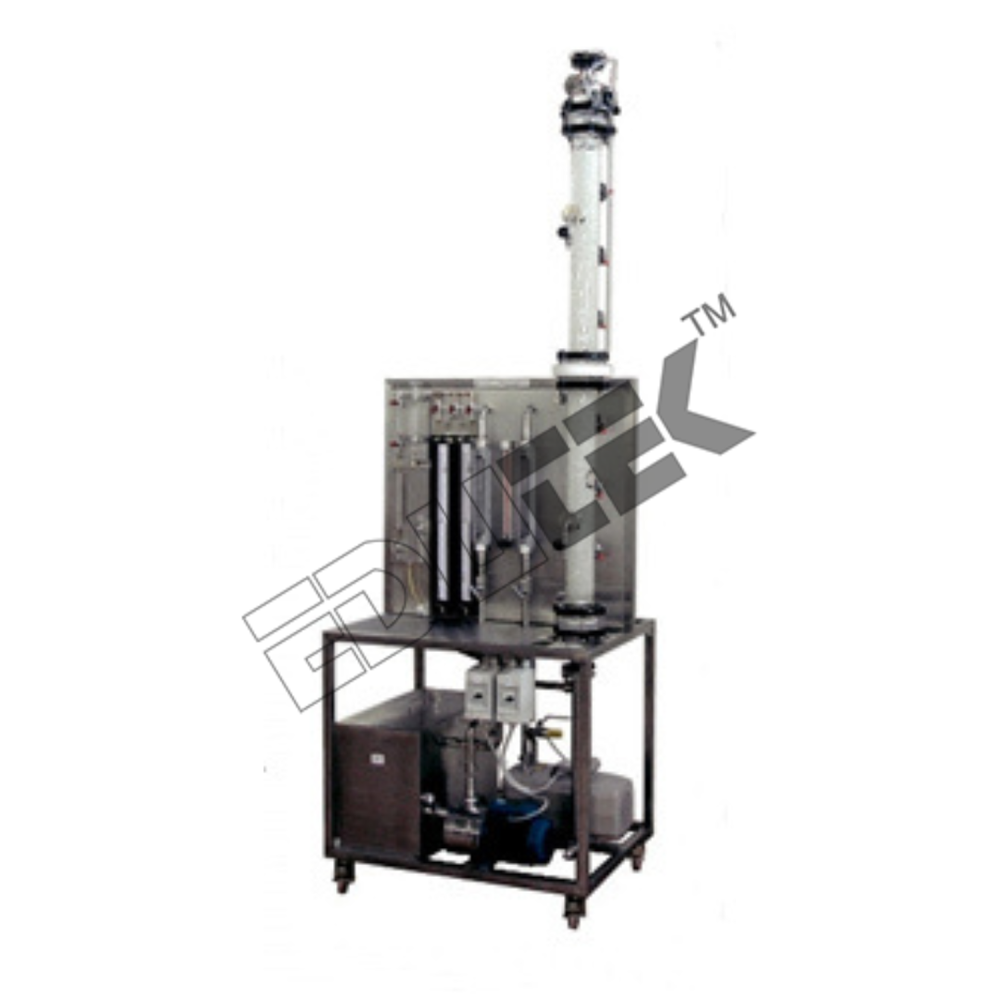
About PLATE TYPE HEAT EXCHANGER APPARATUS
Specification:
PLATE TYPE HEAT EXCHANGER APPARATUS
Heat Exchanger- S.S. Plate heatexchanger wiles nos. of 200 X 400mm.
Calibrated water flow measuringvessel
Thermometers to measure inlet andoutlet temperatures of fluid.
Flow controls valves.
A technical manual accompanies theunit.
Optional Accessories
Rotameters to measure water flowrates instead of measuring vessel.
Multi-channel digital temperatureIndicator to measure the temperatures instead of thermometers.
Advanced Heat Transfer Learning ToolThis apparatus provides a hands-on method for understanding the principles of heat exchange. Its stainless steel plate design ensures consistent thermal conductivity and reliable performance, making it ideal for educational and research environments alike.
Flexible Measurement OptionsWith features such as a calibrated water flow measuring vessel and optional rotameters and digital temperature indicators, the Plate Type Heat Exchanger Apparatus adapts to various laboratory protocols, ensuring both accuracy and ease of use during experiments.
FAQ's of PLATE TYPE HEAT EXCHANGER APPARATUS:
Q: How does a Plate Type Heat Exchanger Apparatus work in a laboratory setting?
A: The apparatus operates by allowing two fluids at different temperatures to flow on opposite sides of stainless steel plates, enabling efficient heat transfer between them. Temperature and flow are monitored to study the heat exchange process.
Q: What are the main components of this Plate Type Heat Exchanger Apparatus?
A: Key components include stainless steel plates (200 x 400mm), thermometers for temperature measurement, a calibrated water flow measuring vessel, and flow control valves. Optional accessories such as rotameters and digital temperature indicators increase precision.
Q: When should optional accessories like rotameters or digital temperature indicators be used?
A: These accessories are recommended when experiments require higher accuracy in measuring water flow rates or temperature readings, or when digital data collection is preferred for analysis or reporting.
Q: Where is this product typically used?
A: This apparatus is widely utilized in educational institutes, research laboratories, and industrial training centers where in-depth study and demonstration of heat transfer principles are required.
Q: What process does the Plate Type Heat Exchanger Apparatus demonstrate?
A: It demonstrates the transfer of heat between two fluids through exchange plates, enabling students and researchers to observe temperature changes and calculate heat transfer rates in real time.
Q: How does this apparatus benefit heat transfer education?
A: By providing real-time data and visual observation of heat exchange, it enhances conceptual understanding and offers practical experience in handling laboratory instrumentation related to thermal systems.