
EDUTEK INSTRUMENTATION
GST : 06AEWPJ6896D1ZU

Call us
07313726362
Call us
07313726362
Specification:
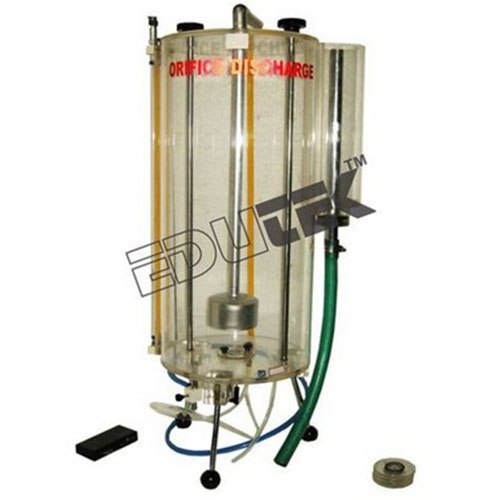
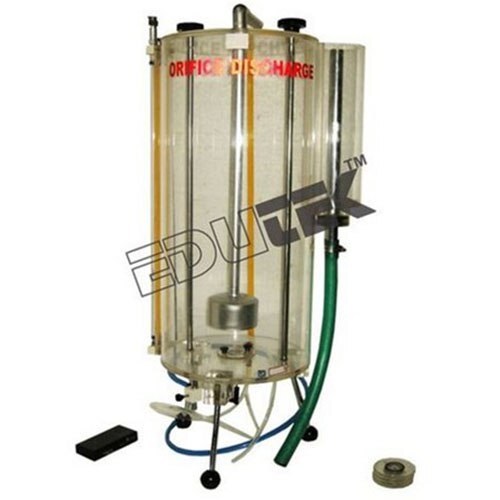
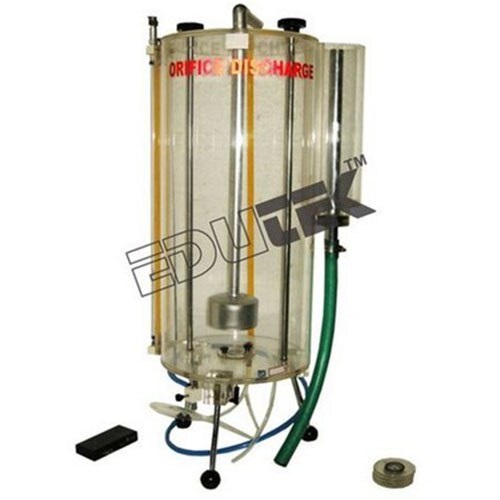
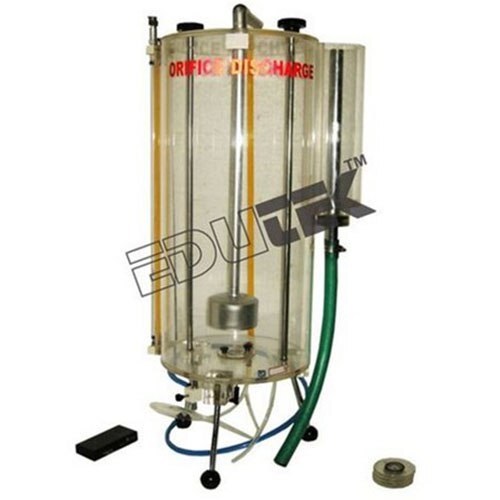
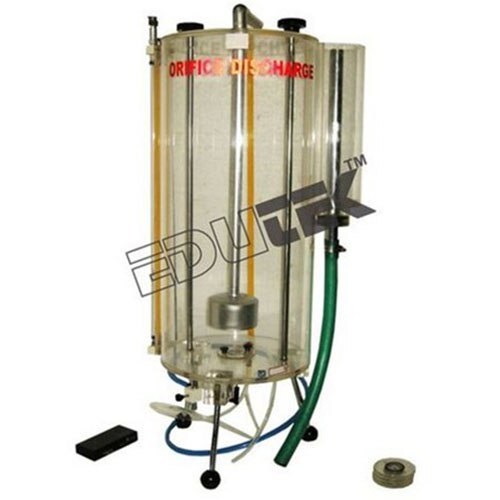
ORIFICEMETER DISCHARGE
The Orifice Discharge accessoryconsists of a cylindrical clear acrylic tank which has an orifice fitted in thebase. A traverse assembly is provided which enables a piton tube to bepositioned anywhere in the jet. Attached to this piton tube is a fine wirewhich can be traversed across the jet to accurately measure the jet diameterand the vena contract diameter and so determine the contraction coefficient.
The piton head and the total headacross the orifice are shown on manometer tubes adjacent to the tank. Inaddition to the sharp edged orifice six additional orifices with differentprofiles are supplied. All orifices have a common bore of 13 mm for directcomparison of performance.
Demonstration Capabilities:-
Determining the contraction andvelocity coefficients
Calculating the discharge coefficient
Technical Specifications:-
Cylindrical clear acrylic tank withorifice fitted in base
Seven interchangeable orifices
Piton tube and wire-on micrometer tomeasure jet velocity and diameter
Quick-release fitting for easyconnection to Hydraulics Bench
Educational software available as anoption
Traverse mechanism: Lead screw with adjusting nutcalibrated 0.1mm per division
Standard orifice: Sharp-edged 13mm diameter
Max head: 365mm


Price:
Minimum Order Quantity : 1 Piece
Application : Engineering Testing Equipment
Usage : Engineering Testing Equipment
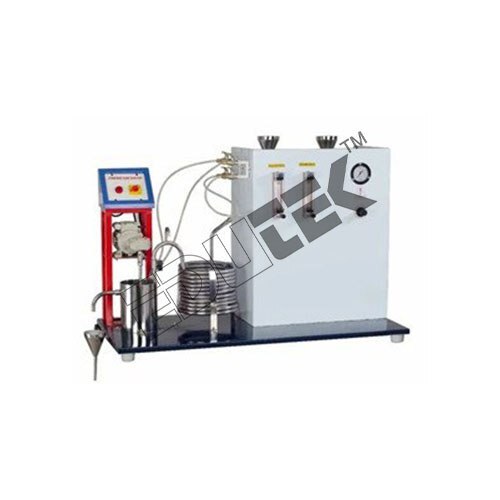
Product Type : CHEMICAL REACTOR SERVICE UNIT APPARATUS
Mounting Type : Benchtop/Laboratory
Minimum Order Quantity : 1 Piece
Application : Engineering Testing Equipment
Usage : Engineering Testing Equipment
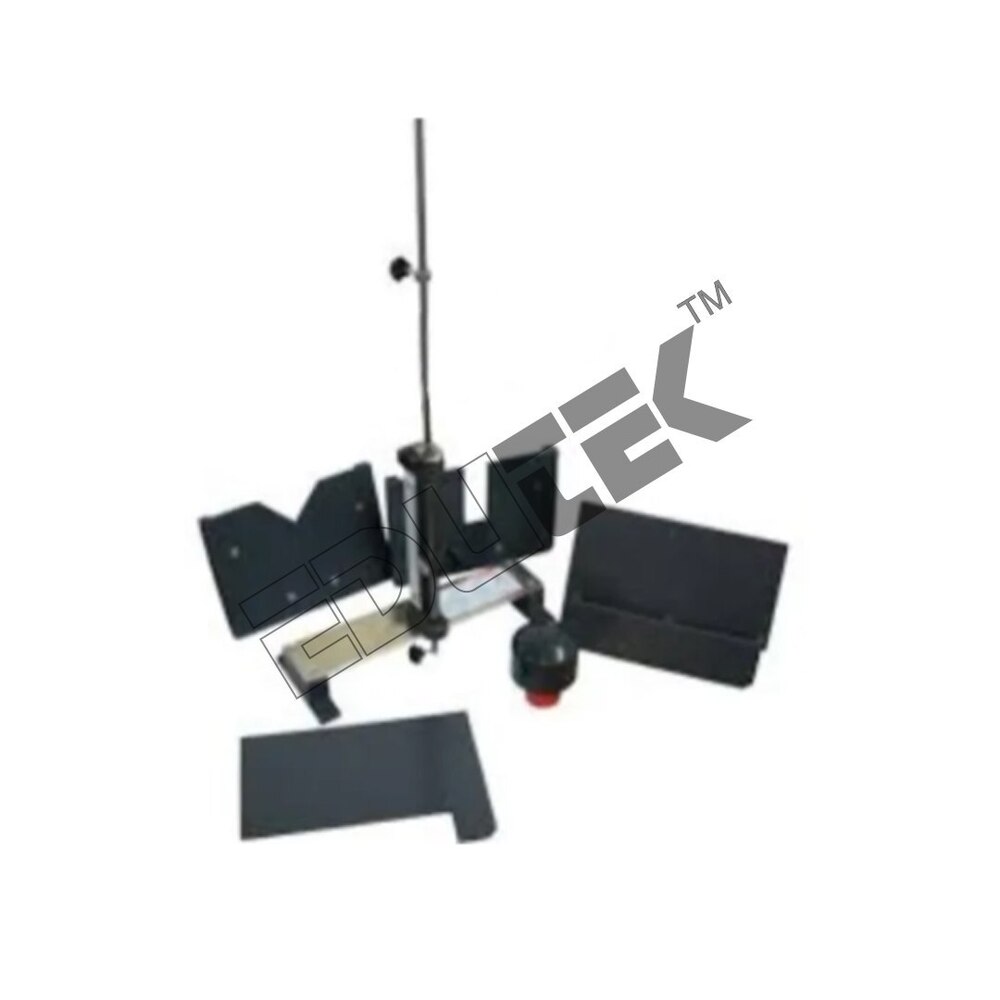
Product Type : VNOTCH WEIR
Mounting Type : Fixed
Price 64000.0 INR / Piece
Minimum Order Quantity : 1 Piece
Application : Engineering Testing Equipment
Usage : Engineering Testing Equipment
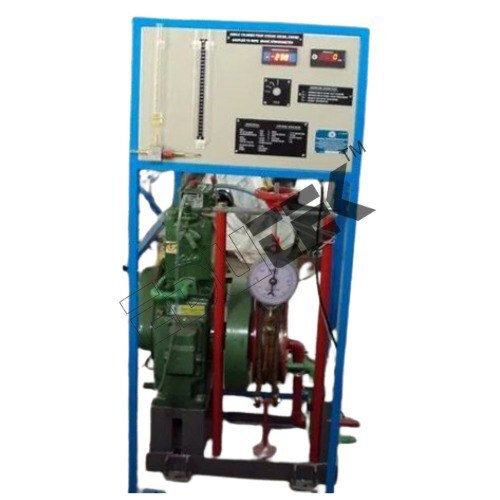
Product Type : 1 CYLINDER FOUR STROKE WATER COOLED DIESEL ENGINE TEST RIG WITH ROPE BRAKE/ELECTRICAL BRAKE/HYDRAULIC BRAKE/AIR COOLED EDDY CURRENT/WATER COOLED EDDY CURRENT DYNAMOMETER/COMPUTERIZED 1 CYLINDER FOUR STROKE WATER COOLED DIESEL ENGINE TEST RIG.
Price 65000.0 INR / Piece
Minimum Order Quantity : 1 Piece
Application : Engineering Testing Equipment
Usage : Engineering Testing Equipment
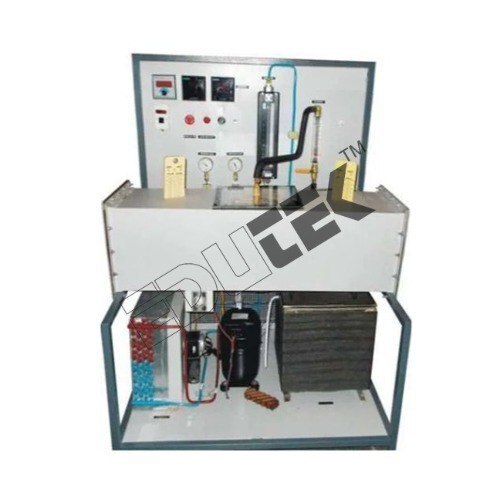
Product Type : AIR WASHER TEST RIG

 Send Inquiry
 Send Inquiry

