About Malaria Detection Microscopes
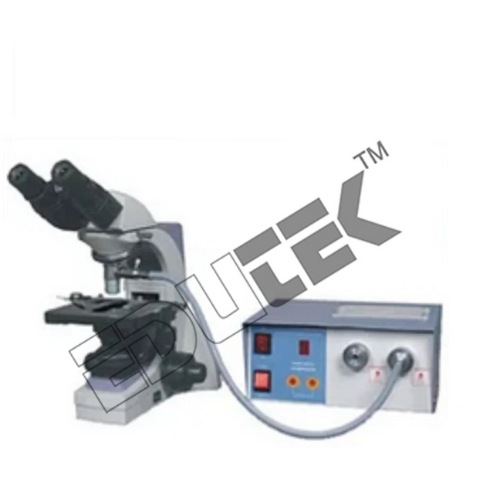
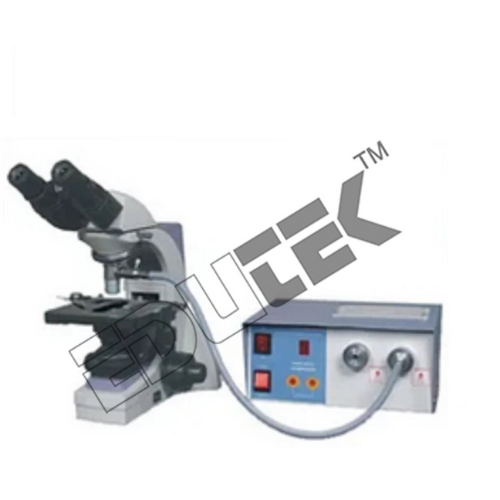
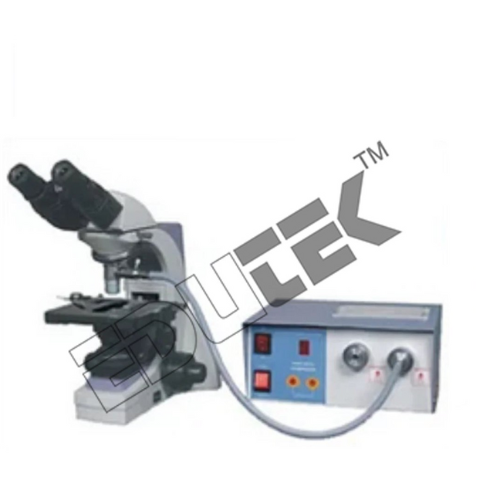
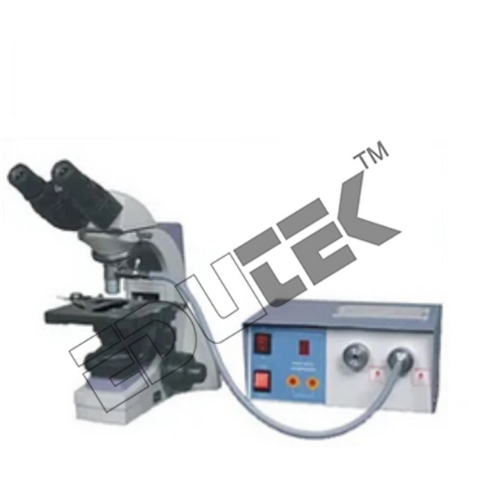
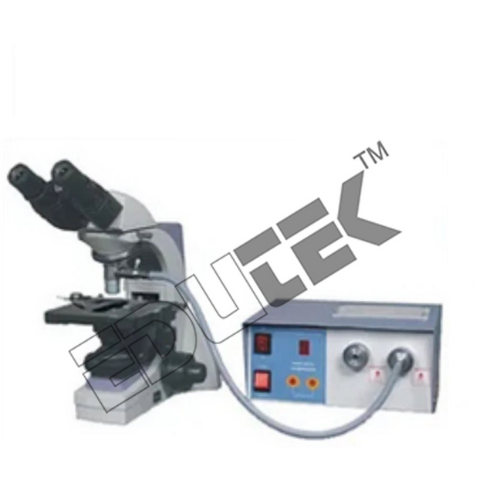
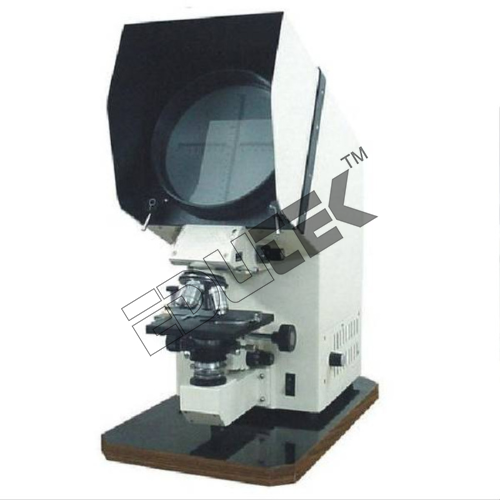
Malaria Detection Microscopes ETMS-144
This a new method for identifying the malaria parasite in the peripheral blood. It involves staining of the centrifuged and compressed red cell layer with acridine orange and its examination under UV light source. It is fast, easy and claimed to be more sensitive than the traditional thick smear examination.
Method: The tube is a high-precision glass hematocrit tube, pre-coated internally with acridine orange stain and potassium oxalate. It is filled with 55-65 micro liters of blood from a finger, ear or heel puncture. A clear plastic closure is then attached. A precisely made cylindrical float, designed to be suspended in the packed red blood cells, is inserted. The tube is centrifuged at 12,000 rpm for 5 minutes. The components of the buffy coat separate according to their densities, forming discrete bands. Because the float occupies 90% of the internal lumen of the tube, the leukocyte and the thrombocyte cell band widths and the top-most area of red cells are enlarged to 10 times normal. The tube is placed on the tube holder and examined using a standard white light microscope equipped with the UV microscope adapter, an epi-illuminated microscope objective. Fluorescing parasites are then observed at the red blood cell/white blood cell interface. The key feature of the method is centrifugation and thereby concentration of the red blood cells in a predictable area of the tube, making detection easy and fast. Red cells containing Plasmodia are less dense than normal ones and concentrate just below the leukocytes, at the top of the erythrocyte column. The float forces all the surrounding red cells into the 40 micron space between its outside circumference and the inside of the tube. Since the parasites contain DNA which takes up the acridine orange stain, they appear as bright specks of light among the non-fluorescing red cells. Virtually all of the parasites found in the 60 microliter of blood can be visualized by rotating the tube under the microscope. A negative test can be reported within one minute and positive result within minutes. is a new method for identifying the malarial parasite in the peripheral blood. It involves staining of the centrifuged and compressed red cell layer with acridine orange and its examination under UV light source. It is fast, easy and claimed to be more sensitive than the traditional thick smear examination.
SPECIFICATIONS
- Coaxial Binocular Microscope,
- UV adapter
- Excitation Filter D470/40x -- 8 mm dia, 3 mm thick (Excitation (x) filter should be positioned with the arrow pointing toward the specimen, toward the inside of the cube, and away from the light source.),
- Dichroic Beam Splitter 500 DCLP, 7.8x10.95x0.75mm (Dichroic mirrors should be mounted with the coated surface towards the light source, excitation filters, and the specimen).
- Barrier Filter E5151PV2, 9.90mm dia, 3mmthick (Emission (m) filters should be placed with the arrow pointing towards the specimen, towards the inside of the cube, and away from the detector / eye),
- 62x objective (gives sharp image of plasmodium vivax, phalciparum and shizhont etc),
- Focusing lens Passes white light from illuminator to the excitation filter.(size 13mm or above),
- Standard 36 TPI Threading Assures adaptability to all.
Precision and VersatilityThis microscope offers a mechanical stage with X-Y coaxial controls, ensuring seamless slide movement and precise positioningvitally important for malaria parasite detection. The quadruple reversed nosepiece provides easy switching between objectives (4x, 10x, 40x, 100x oil). A sturdy, powder-coated frame supports demanding environments.
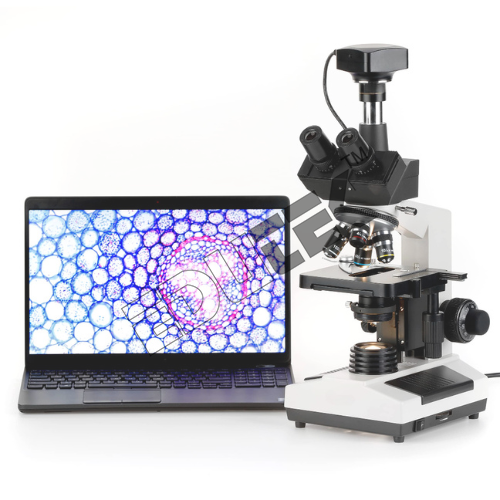
Digital Imaging for Enhanced AnalysisThe optional integrated CMOS digital sensor allows users to capture high-quality images and videos. With up to 5 MP still image resolution and real-time viewing via a USB 2.0 interface, documentation and remote consultation become straightforward, making the microscope ideal for educational and diagnostic settings.
Durability and Field ReadinessConstructed from strong, powder-coated metal and equipped with anti-fungal optics, this microscope is built to last in both laboratory and challenging field conditions. The portable design, optional battery operation, and included dust cover support easy transport and ensured longevity during on-site use.
FAQs of Malaria Detection Microscopes:
Q: How does the X-Y coaxial stage control benefit malaria detection?
A: The X-Y coaxial stage control allows for smooth, precise movement of slides, which is vital for systematically scanning and accurately identifying malaria parasites within blood samples.
Q: What illumination options are available for this microscope, and how do they enhance usage?
A: The microscope supports both halogen and LED light sources, each with variable intensity. This flexibility ensures optimal lighting conditions for viewing samples, enhancing parasite visibility and reducing eye strain during extended use.
Q: When should the digital imaging feature be used, and what are its advantages?
A: The digital imaging feature is beneficial when documentation, sharing, or analysis of findings is needed. It provides high-resolution images (up to 5 MP) and video capture, useful for remote consultation, teaching, or maintaining records.
Q: Where is this microscope most effectively used?
A: Its sturdy, portable design and anti-fungal optics make it ideal for both laboratory environments and field locations, particularly in regions where malaria is prevalent.
Q: What is the cleaning and maintenance process?
A: Regularly clean objectives and eyepieces with lens paper, cover the microscope with the supplied dust cover when not in use, and periodically check mechanical parts for smooth movement. Spare bulbs, fuses, and stage accessories are available for maintenance.
Q: How does the microscopes body material and design contribute to longevity and reliability?
A: The powder-coated sturdy metal frame ensures exceptional durability and resistance to environmental stress, while the anti-fungal optical system maintains performance in humid conditions, extending the microscopes operational life.
Q: What are the main benefits of using this microscope for malaria detection?
A: Users benefit from high magnification, refined focusing, robust construction, and optional digital imaging, leading to precise malaria diagnosis, enhanced documentation, and reliability in various environments.





 Send Inquiry
 Send Inquiry

