About Integral Proving Rings
Integral Proving Rings
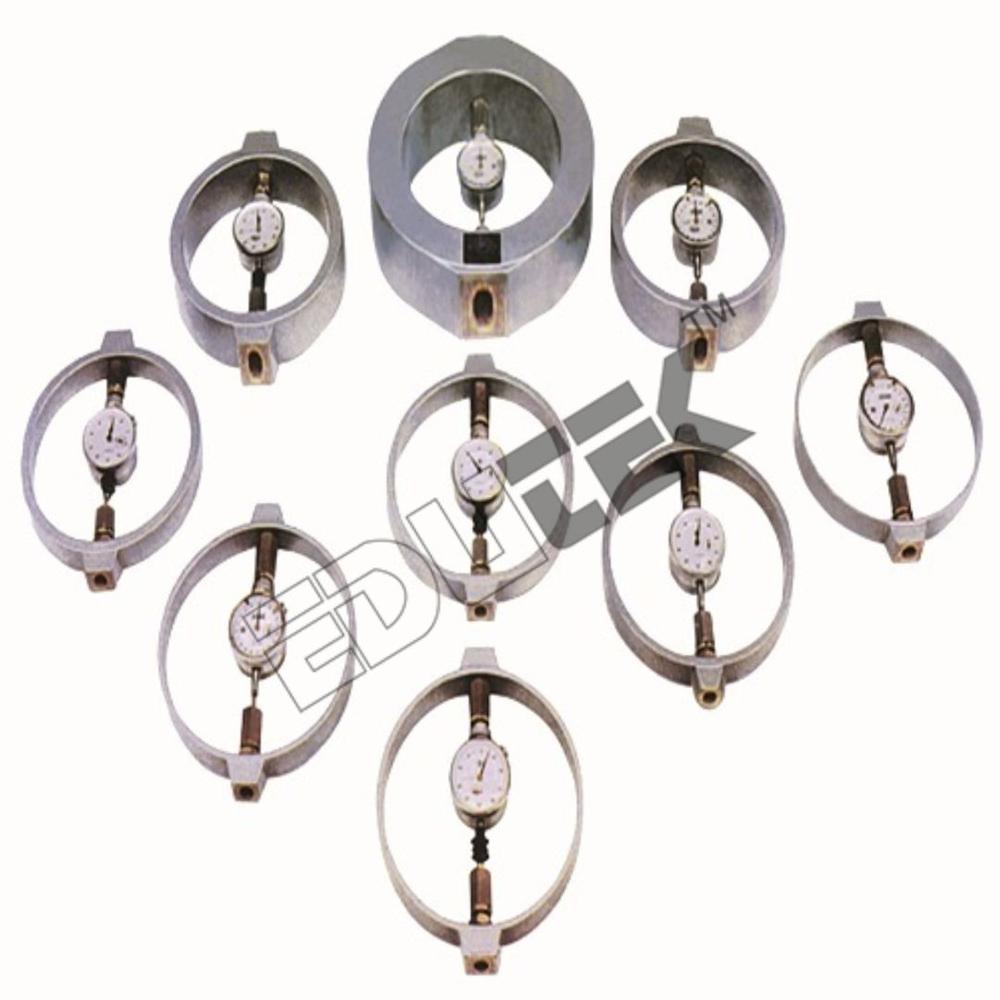
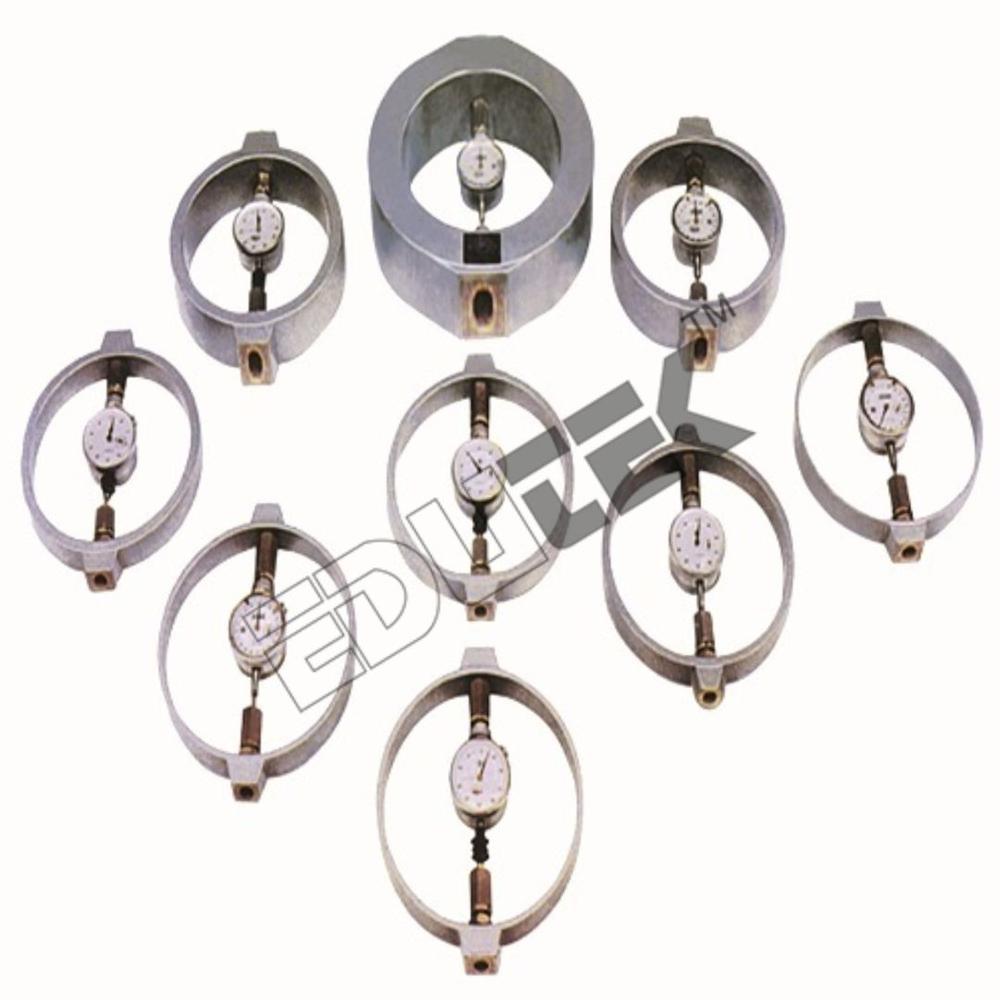
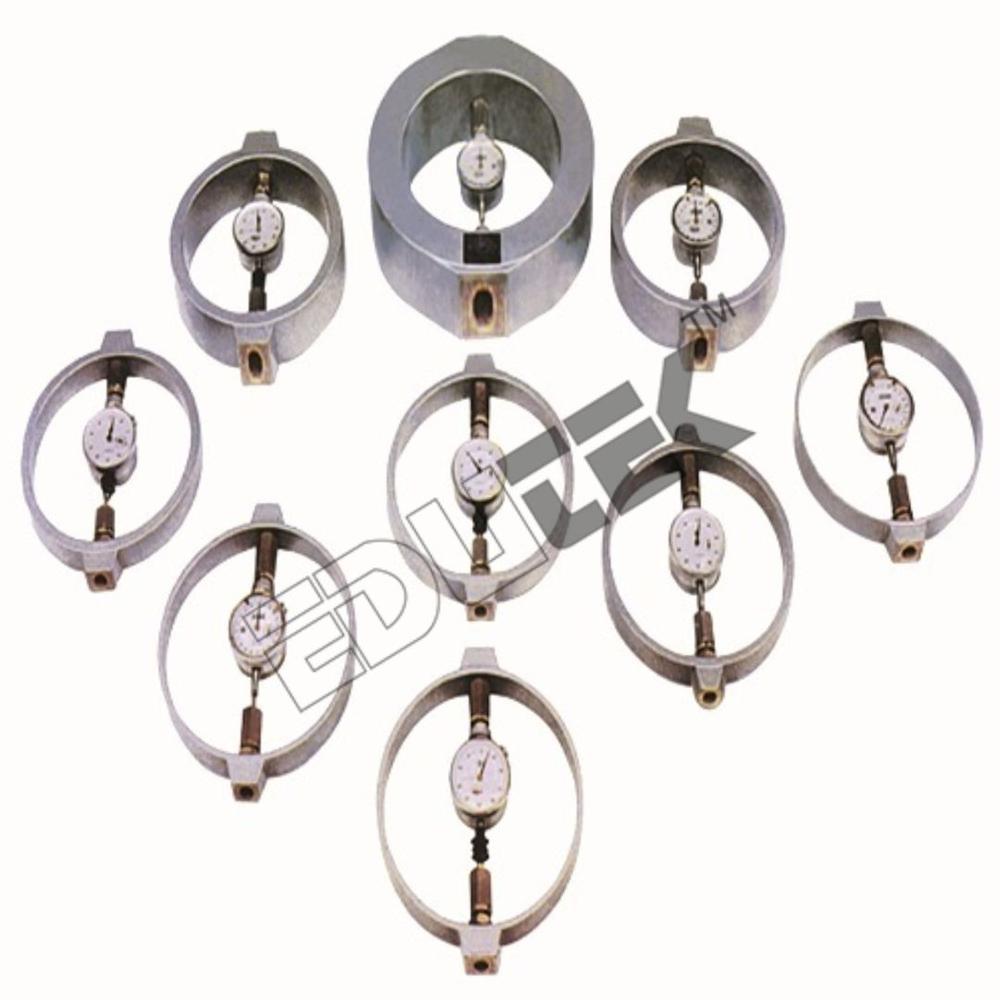
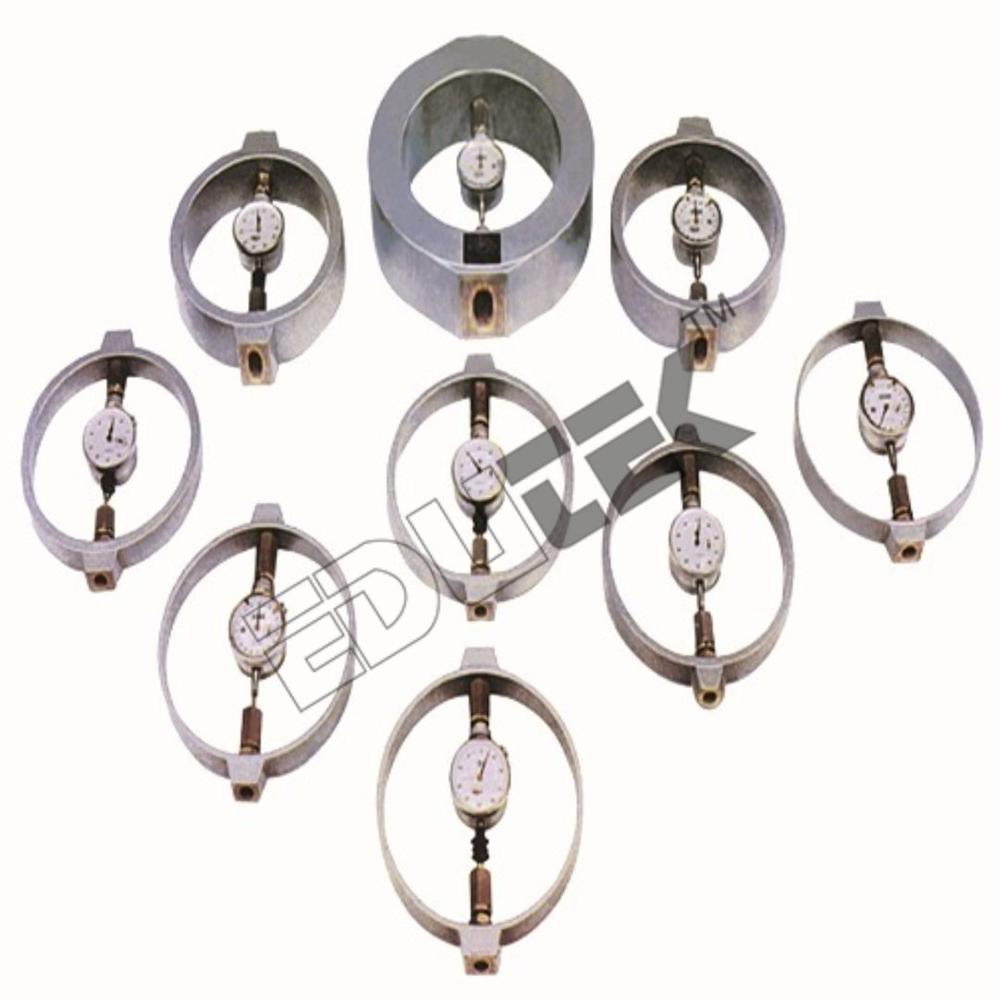
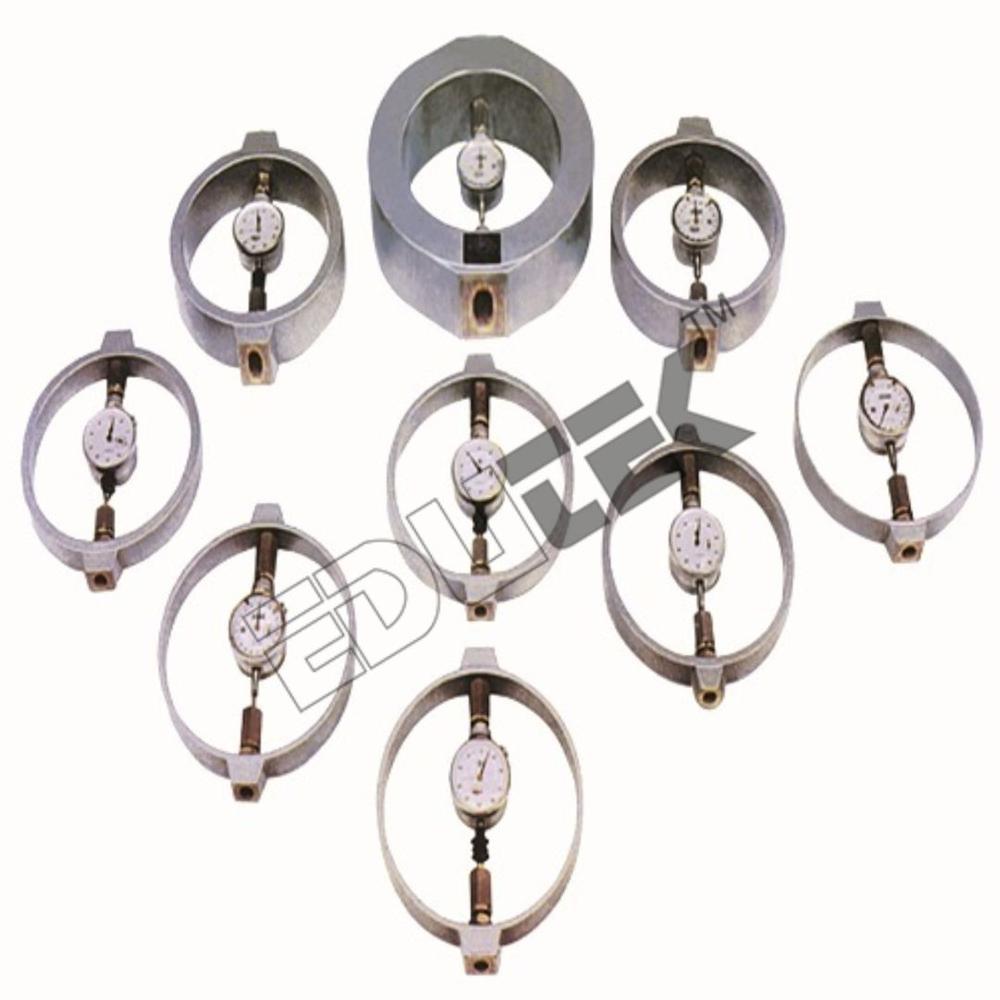
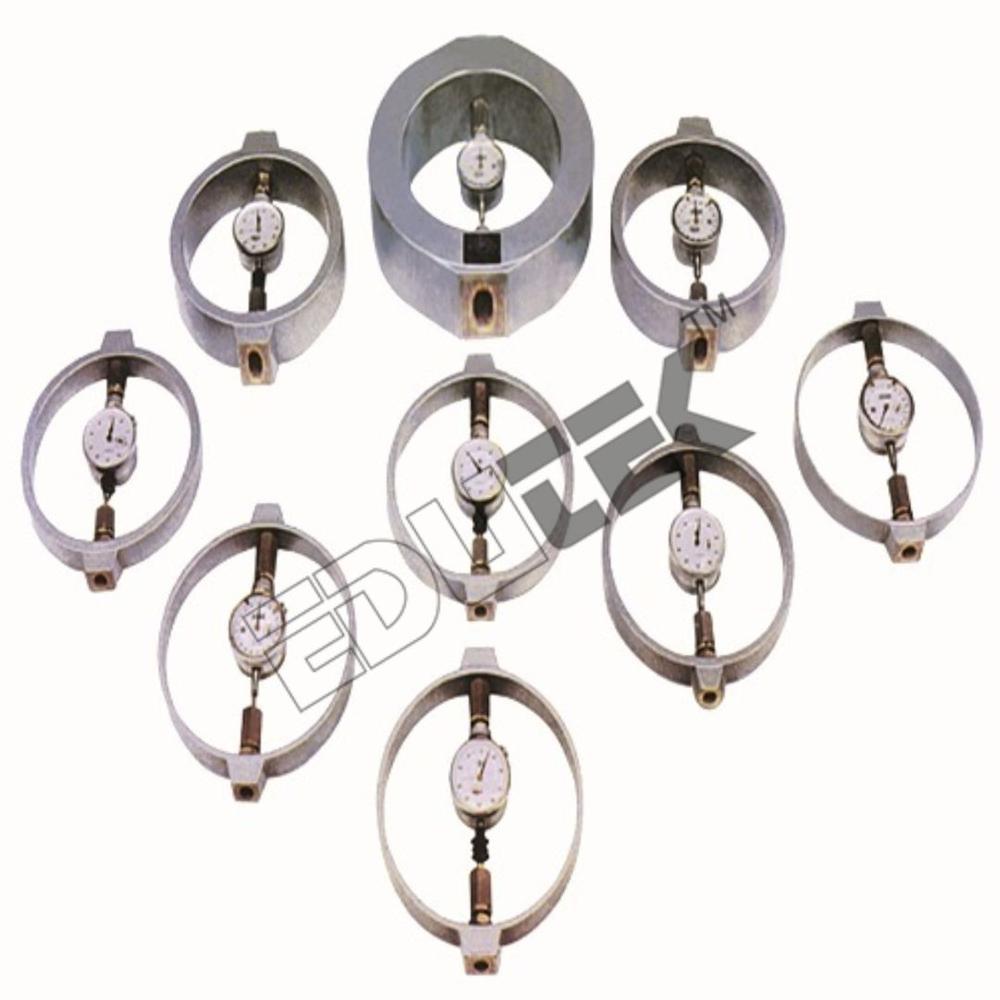
The Proving rings are made of special steel carefully forged to give maximum strength and machined to give high sensitivity commensurate with stability ensuring long life and accuracy. All proving rings are integral type viz, the loading (outside) bosses are forged integral with the ring body. This ensures that there is no possibility of abutment shift and consequent loss of accuracy in reading that always exists with bolted abutments. The dial gauge and anvil are mounted on U-brackets clamped to the ring body by set screw. The dial gauge is fitted with a special back cover and threaded bush. Which does not permit any shift from the original dial alignment, coaxial with the loading boss centres, that is set at the factory before calibration. For all compression proving rings and tension compression proving rings up to and including 5 KN capacity the loading bosses have female threading BSP The boss faces are ground and polished and are plane parallel to within 0.2mm total DTI run out.
Tension compression rings have their integral loading bosses male threaded, 1.25 dia, 8 tpi square thread, 1.25 long. Caps are provided for use when loading in compression Repeatability is as stipulated in IS 4169 The rings are supplied complete with dial gauge and Works calibration Chart. Individuallypacked in polished wooden. Boxes. NCCBM Calibration can also be arranged for any proving ring at an additional cost. Proving rings to meet special requirements are also available on request. Separate polished and ground pair of Loading Pads FOR Compression Proving Rings and Pair of Shackles for Tension Proving Rings are provided to suit each proving ring, at extra cost.
Precision and Versatility in Force MeasurementIntegral Proving Rings are engineered for laboratory applications requiring precise force measurement, such as soil and concrete testing. Their robust build quality and adherence to IS:4169 standards make them ideal for consistent and accurate results across a range of testing scenarios.
Calibration and Quality AssuranceEach proving ring is supplied with a calibration certificate, ensuring compliance with national standards. This process means you can trust each measurement, knowing the device has been meticulously checked for accuracy and performance before it reaches your laboratory.
Customizable for Varied Laboratory NeedsWith a broad capacity range from 25 kN to 200 kN and options for compression and tension testing, the proving rings meet the demands of different testing environments. Optional carrying cases and loading fixtures provide enhanced adaptability and usability, making laboratory handling convenient.
FAQs of Integral Proving Rings:
Q: How does the Integral Proving Ring ensure measurement accuracy?
A: The Integral Proving Ring comes with a high-precision dial gauge that has a least count of 0.002 mm and is supplied with a calibration certificate in accordance with IS:4169 standards. This guarantees 100% accuracy in force measurement for both compression and tension applications.
Q: What is the main process for using the Integral Proving Ring in laboratory settings?
A: To use the proving ring, mount it securely in the testing setup and connect it to the specimen or apparatus. Apply force manually using the loading assembly, and monitor the analogue dial gauge for precise measurement readings. Follow the included calibration certificate for best practices.
Q: When should I calibrate or re-certify my proving ring?
A: Calibration should be performed initially as provided upon delivery, as well as periodically according to your laboratorys quality protocols or after extensive use, to maintain measurement accuracy and compliance with IS:4169 standards.
Q: Where is the Integral Proving Ring typically used?
A: These proving rings are commonly used in soil and concrete testing laboratories, academic institutions, research centers, and industrial settings where accurate force measurement is essential for quality control and material analysis.
Q: What are the benefits of using a proving ring with a manual operation and analogue display?
A: Manual operation ensures straightforward, tactile control over force application, while the analogue dial gauge offers immediate, easily readable results, minimizing risks associated with electronic failures and enhancing reliability during critical testing routines.
Q: What optional accessories are available for this model?
A: You can opt for convenient carrying cases and specialized loading fixtures, which enhance portability, storage, and versatility in various testing environments.




 Send Inquiry
 Send Inquiry

