About FTIR Spectrometer
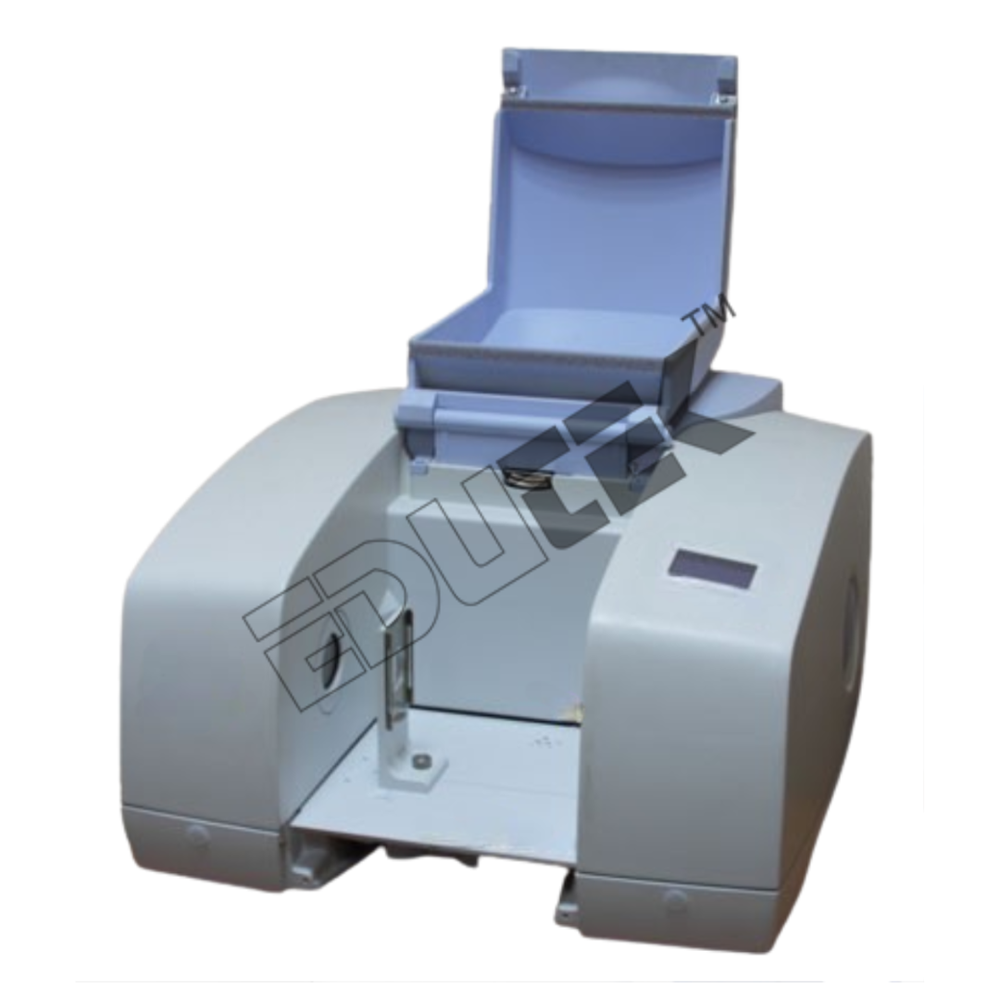
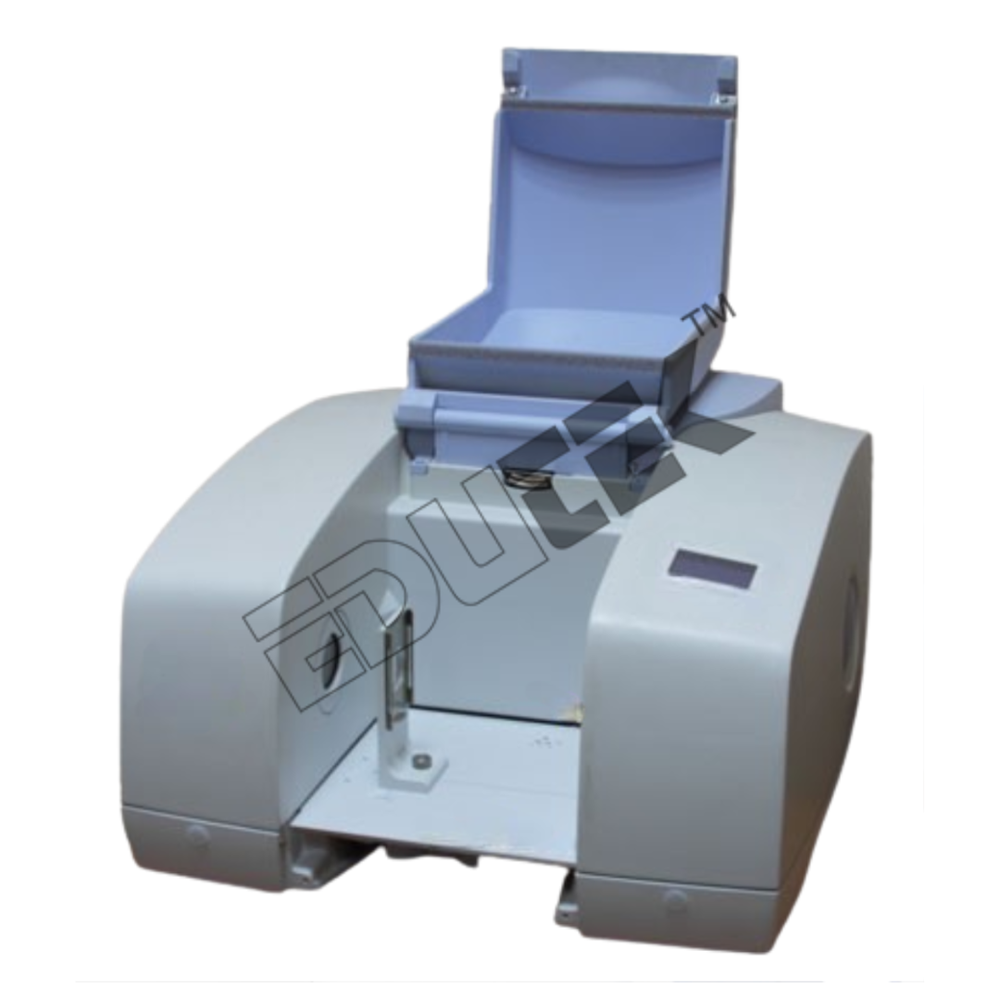
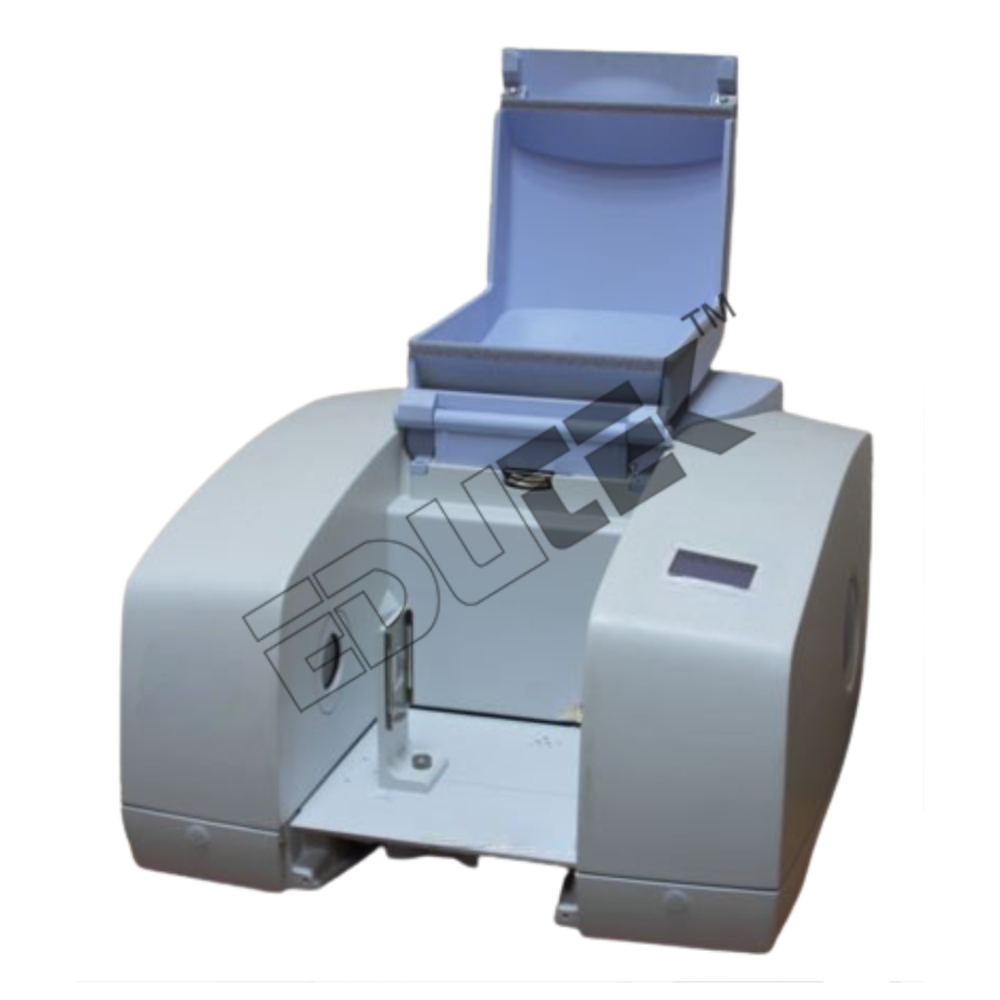
FTIR SPECTROMETER ETA-18
DESCRIPTIONS OF FTIR SPECTROMETER
This highly flexible system can be upgraded from a simple FTIR bench to a fully automated multi-spectral range system that can acquire spectra from the far-infrared to visible.
SPECIFICATION OF FTIR SPECTROMETER
- Spectral Range 7800 to 350 cm-1
- Resolution Better than 0.85cm-1
- Wave Number 0.01cm-1
- Scanning Speed 5-step adjustable for different applications
- Signal to noise ratio better than 15,000:1 (RMS value, at
- 2100cm-1, resolution: 4cm-1, detector:
- DTGS, 1 minute data collection)
- Beam splitter Ge coated KBr
- Infrared Source Air-cooled, high efficiency Reflex
- Detector DTGS
- Data system Compatible computer
- Software FT-IR software contains all routines needed
- for basic spectrometer operations, including
- library search, quantitation and spectrum
- export
With spectral resolution down to 1 cm and a vast wavelength range, this FTIR spectrometer provides reliable and detailed spectral data essential for both qualitative and quantitative analysis. Advanced detector options and specialized beam splitters further ensure accuracy in complex sample matrices.
Flexible Operation and Versatile ApplicationsThe spectrometer accommodates various accessories in its large sample compartment, making it suitable for multi-sample studies. Its touch panel and computer control enhance user experience, supporting research and routine analysis across pharmaceuticals, chemicals, forensic laboratories, and environmental monitoring.
Comprehensive Data Management and ReportingIntegrated software offers a suite of analytical and reporting tools for streamlined data interpretation. USB and Ethernet connectivity facilitate easy data transfer and remote monitoring, while high-resolution LCD display ensures intuitive workflow and real-time results visualization.
FAQs of FTIR Spectrometer:
Q: How does the FTIR spectrometer achieve precise analysis of organic and inorganic compounds?
A: The spectrometer utilizes a high-resolution wavelength range (7800350 cm) with advanced detectors such as DLATGS or optional MCT, ensuring clear spectral separation. The KBr/Germanium beam splitter and IR Globar source create accurate IR light paths, while atmospheric suppression compensates for CO2 and H2O interference for precise results.
Q: What types of samples and industries is this FTIR spectrometer suitable for?
A: It is ideal for qualitative and quantitative analysis of a broad spectrum of sample types including powders, liquids, and solids. Main application areas are pharmaceuticals, chemicals, food and agriculture, forensics, and environmental analysis, where high-precision detection is essential.
Q: When is it recommended to use the optional MCT detector instead of DLATGS?
A: The MCT detector is recommended for applications requiring higher sensitivity, faster response, or lower noise performance, especially in trace analysis or when studying weak infrared signals. DLATGS suits most routine analyses with excellent stability and reliability.
Q: Where can this spectrometer be installed and operated efficiently?
A: It is optimized for laboratory environments with operating temperatures of 10C35C and humidity up to 80% RH (non-condensing). Its robust metal and high-grade polymer construction, moderate footprint, and compatibility with standard power supplies make it easy to integrate into a variety of research or quality control settings.
Q: What is the process for operating the FTIR spectrometer and handling multiple samples?
A: Operation is user-friendly, involving simple sample placement in the large compartment, method selection via touch panel or computer, and initiation of scans at variable speeds. The system can handle single or multiple samples and provides comprehensive analytical results through its integrated software tools.
Q: How does atmosphere suppression improve analytical reliability?
A: Advanced CO2 and H2O compensation algorithms minimize interference from common atmospheric gases, ensuring cleaner spectra and more reliable datacritical for trace-level detection and accurate quantification in sensitive analyses.
Q: What benefits does the USB/Ethernet data interface offer for laboratory workflow?
A: The USB and Ethernet ports allow flexible data export, instrument networking, and convenient integration with laboratory information management systems. This accelerates reporting, facilitates remote access, and supports efficient collaboration within research or quality assurance teams.





 Send Inquiry
 Send Inquiry

