About FLOW CHANNEL
Specification:
FLOWCHANNEL
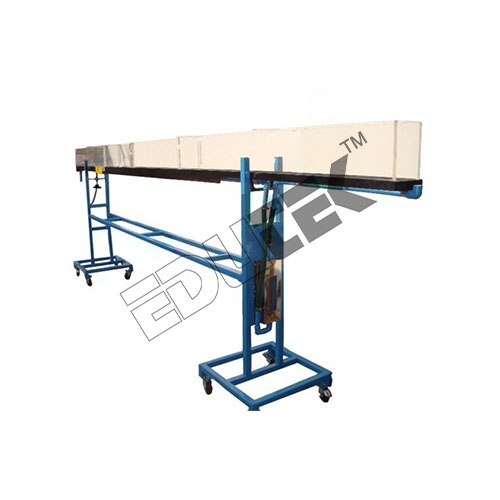
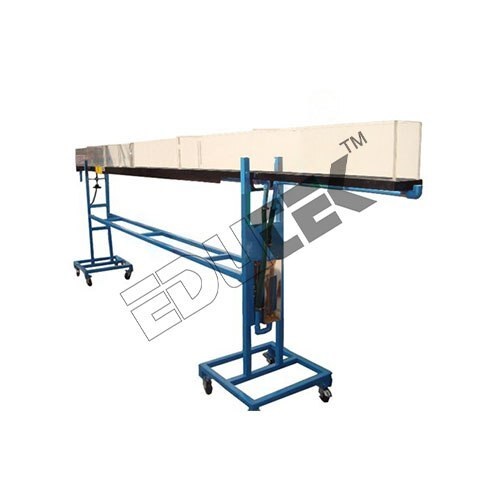
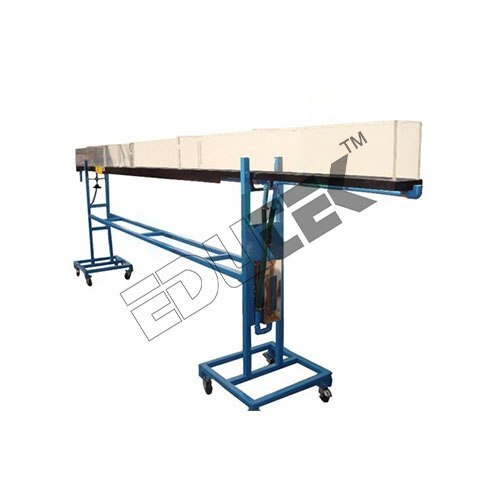
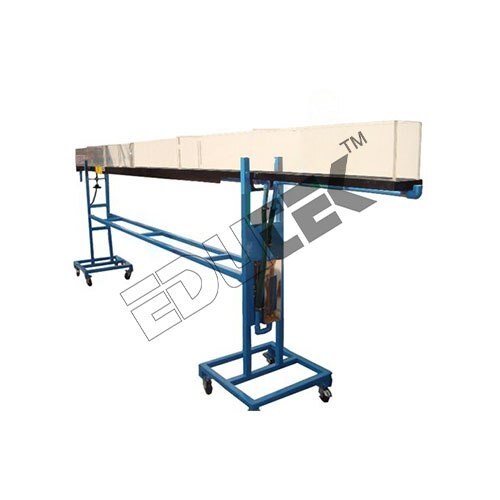
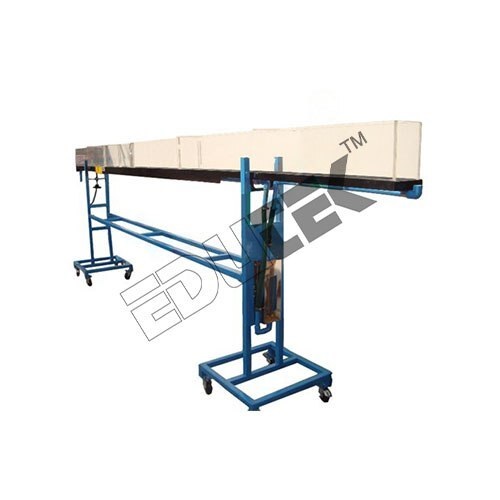
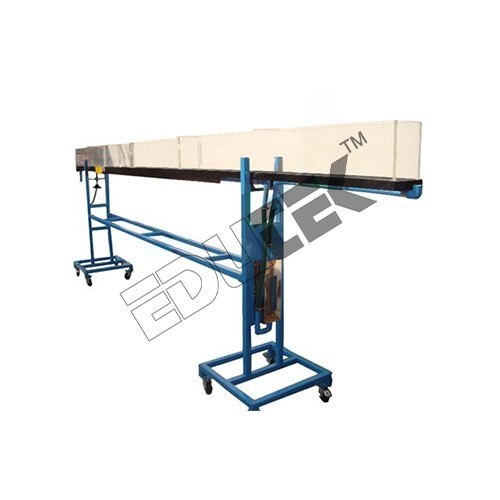
The channel consists of a clearacrylic working section of large depth-to-width ratio incorporating undershotand overshot weirs at the inlet and discharge ends respectively. Water is fedto the streamlined channel entry via a stilling tank to reduce turbulence.
Water discharging from the channel iscollected in the volumetric tank of the Hydraulics Bench and returned to thesump for recirculation.
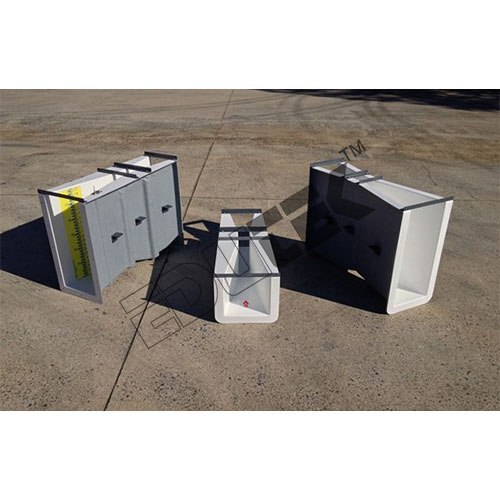
A dye injection system incorporatedat the inlet to the channel enables flow visualization in conjunction with areticule on the rear face of the channel. Models supplied with the channelinclude broad and sharp-crested weirs, large and small-diameter cylinders andsymmetrical and asymmetrical aerofoils, which in conjunction with the inletand discharge weirs, permit a varied range of open channel and flowvisualization demonstrations.
Demonstration & Visualisation Capabilities:-
Demonstrating basic phenomenaassociated with open channel flow
Visualization of flow patterns overor around immersed object
Technical Specifications:-
Clear acrylic working section fedfrom stilling tank
Six different models forinvestigation
Dye injection system
Quick release fitting for easyconnection to Hydraulics Bench
Educational software available as anoption
Dye injection needles: 5
Dye reservoir capacity: 0.45 L
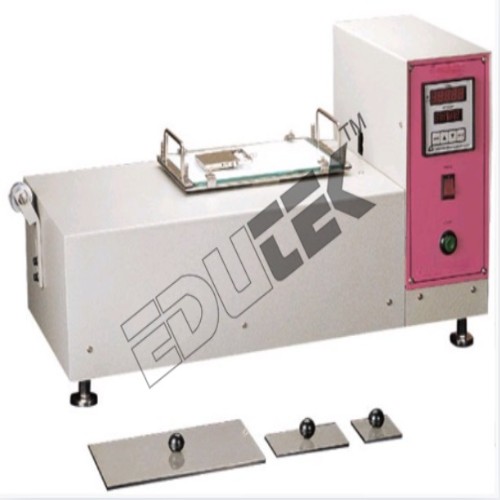
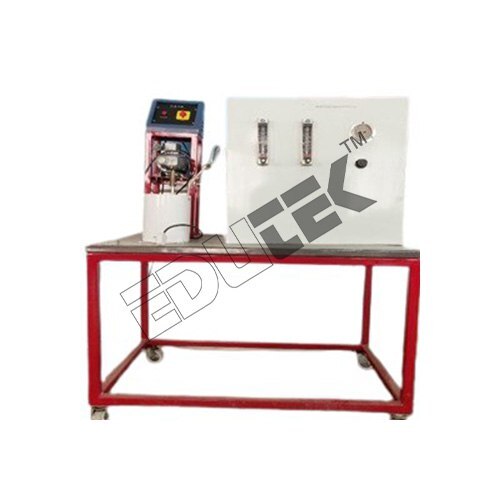
High-Precision Engineering TestingFLOW CHANNEL offers reliable, accurate measurements for air and water flow using advanced sensors and a digital interface. Built for high performance, it serves as a vital tool for research, product development, and quality assurance in engineering, academic, and industrial laboratories. This equipment ensures data integrity and fast response with adjustable speed and extensive control options.
Durable and Flexible ConstructionFeaturing a robust stainless steel or transparent acrylic body, FLOW CHANNEL is engineered to withstand rigorous usage. The device can be bench-mounted and caters to testing needs in varying humidity and temperature conditions. It supports both routine and custom test protocols, meeting a wide range of application requirements.
User-Friendly Operation and Data ManagementThe semi-automatic FLOW CHANNEL is equipped with a digital display, real-time data output, and versatile RS232/USB interfaces. Users can adjust controls manually or digitally, and benefit from intuitive operation, clear visual readings, and simplified data recording, enhancing workflow efficiency in testing setups.
FAQs of FLOW CHANNEL:
Q: How does the FLOW CHANNEL measure flow rates for air and water?
A: The FLOW CHANNEL utilizes high-precision sensors and digital display to accurately measure and record flow rates from 0.1 to 2000 ml/min in both air and water mediums, offering real-time results and a response time of less than two seconds.
Q: What materials are used in the construction of the FLOW CHANNEL?
A: The FLOW CHANNEL is constructed using either stainless steel for durability or acrylic for transparent viewing, ensuring longevity and adaptability for various engineering testing applications.
Q: When should I choose manual versus digital control mode on the FLOW CHANNEL?
A: Manual control is ideal for hands-on adjustments and fine-tuning during special tests, while digital mode offers ease of use, allowing quick setup changes, automated operations, and data output directly to RS232 or USB interfaces.
Q: Where can the FLOW CHANNEL be installed, and what are its mounting options?
A: Designed as a bench-top unit, the FLOW CHANNEL is suitable for laboratory, research facility, and industrial environments. Its compact and sturdy construction allows straightforward installation on standard workbenches.
Q: What is the standard process for conducting a flow test using this equipment?
A: Place the specimen in the designated chamber, set the test parameters (speed, flow medium, etc.), and initiate the test via manual or digital controls. The device captures real-time flow data, which can be recorded digitally for analysis.
Q: What benefits does the FLOW CHANNEL provide for engineering testing?
A: It delivers precise, quick, and reliable measurements, complies with international standards, supports customizable tests, and provides easy data recording, making it invaluable for research, quality control, and process optimization.
Q: How does the real-time data output function improve usage and analysis?
A: Real-time data output enables users to instantly monitor, record, and analyze results, reducing delays and allowing immediate actionable insights, thereby streamlining the testing and reporting processes.




 Send Inquiry
 Send Inquiry

