About Expansion Vessel Training Panel
EXPANSION VESSEL TRAINING PANEL
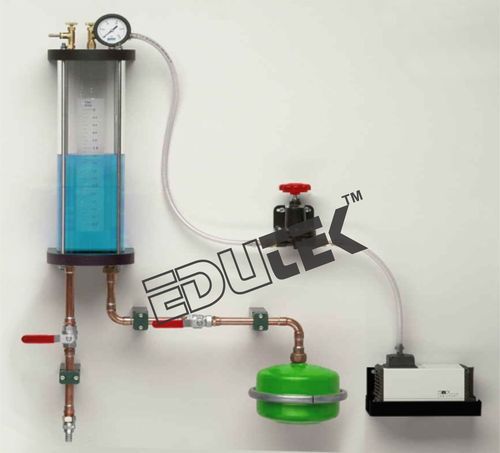
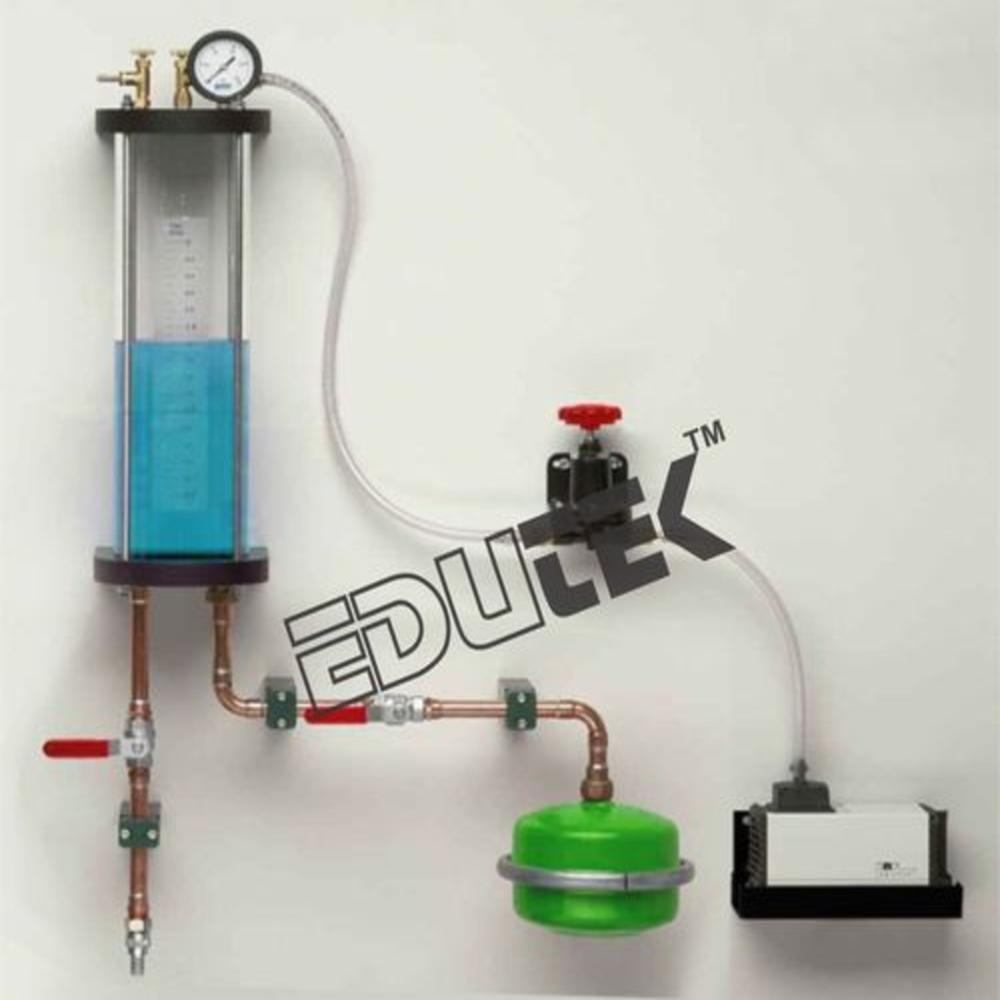
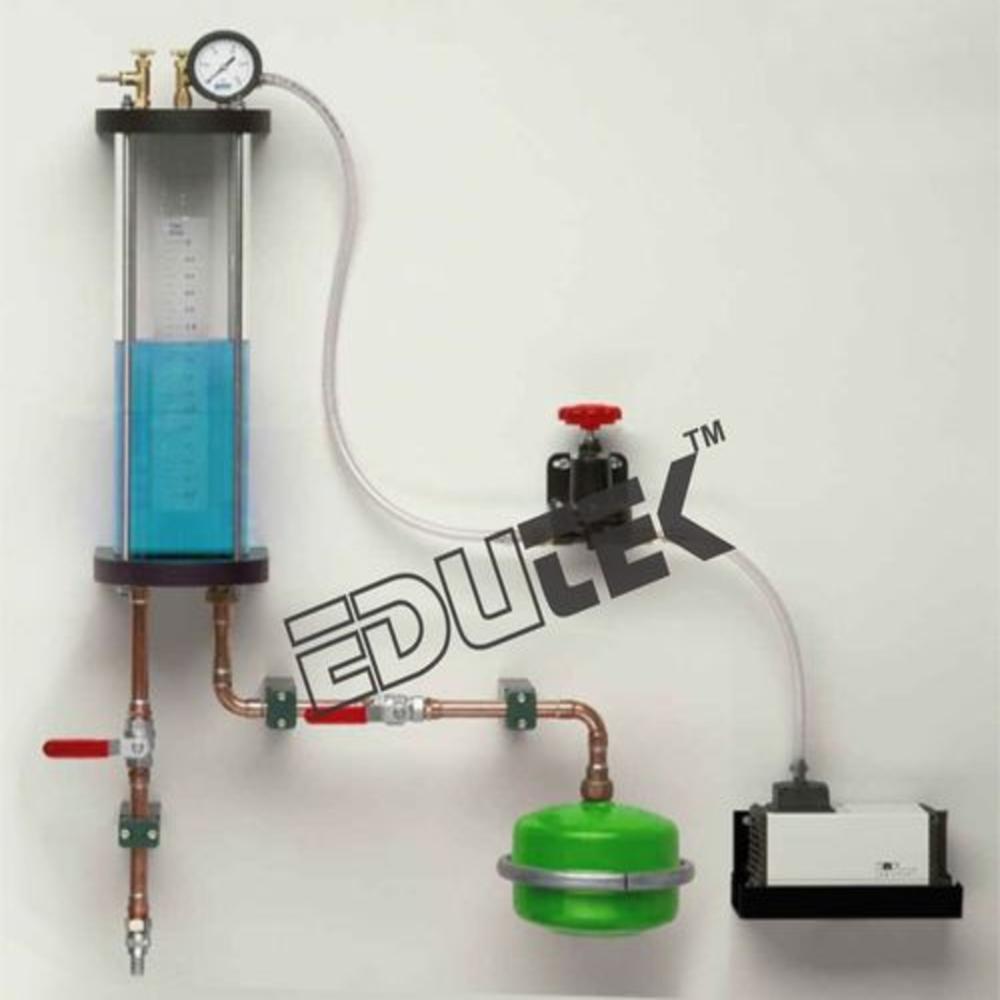
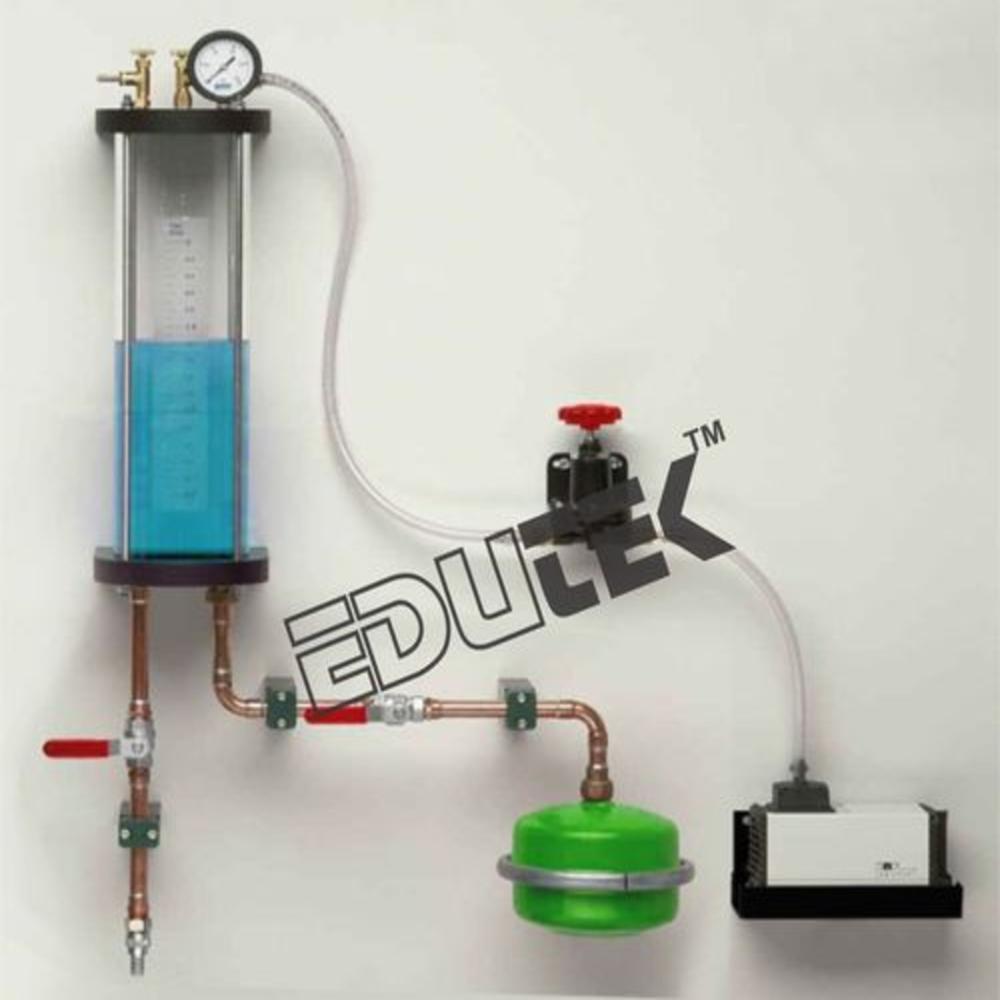
Using this trainer the function of a normal expansion vessel is examined and a pressure-volume characteristic recorded. The expansion vessel is filled with water from a supply tank. The pressure is generated using a small compressor and adjusted
using a pressure regulating valve. The amount of water taken up by the expansion vessel is read on a scale on the supply tank.
Learning Objectives / Experiments
- Function and operation of a diaphragm expansion vessel
- Displacement volume of an expansion vessel as a function of the pressure
Specification
- Trainer on heating systems and plumbing
- Small compressor for pressure generation
- Measuring tank with scale
- Expansion vessel
- Manometer
- Ball valve in connecting pipe between measuring tank and expansion vessel
- Adjustable safety valve
- Pressure controller for air with overpressure protection
- Cutaway model of an expansion vessel
Technical Data
Expansion vessel
- Volume: 2L
- Filling pressure: 1.4bar
Measuring tank
- Volume: 3.75L
- Max. pressure: 2.5bar
Compressor
- Power consumption: 65W
- Max. flow rate: 11.5L/min
- Max. pressure: 2bar
- Final vacuum: 240mbar
- Pressure controller for air, adjustable: 0.06...2bar
Measuring range
Dimensions and Weight
- L x w x h: 1650x700x1850 mm (panel)
- Weight: approx. 95kg (panel)
This training panel offers a hands-on approach to understanding the function and mechanics of expansion vessels, making it an essential addition to laboratory environments. Its high accuracy and efficient design aid in delivering clear experimental results, helping students and technicians grasp complex concepts with ease.
Precision Engineering for Accurate ResultsConstructed for full accuracy and high durability, the Expansion Vessel Training Panel is engineered to meet rigorous laboratory standards. With its substantial weight and sturdy build, it remains stable during operation, ensuring consistent performance during repeated training exercises.
FAQs of Expansion Vessel Training Panel:
Q: How is the Expansion Vessel Training Panel used in a laboratory?
A: The panel is utilized in laboratories for practical demonstrations and experiments related to the behavior of expansion vessels under varying pressure conditions. Users can conduct hands-on exercises to observe and analyze system responses, facilitating experiential learning.
Q: What processes can be demonstrated using this training panel?
A: This unit enables demonstration of pressure change, thermal expansion, and the safe operation of expansion vessels. It helps users understand how these vessels protect hydraulic or heating systems from excess pressure, making it a comprehensive teaching tool.
Q: When is the best time to incorporate the Expansion Vessel Training Panel into the curriculum?
A: It is most beneficial during modules or sessions focused on fluid mechanics, thermodynamics, or pressure vessel safety, allowing students to correlate theoretical knowledge with real-world application.
Q: Where can this equipment be installed for optimal use?
A: The panel is designed for laboratory environments in educational institutions or technical training facilities. Its dimensional specifications allow it to fit comfortably within most standard lab spaces.
Q: What are the main benefits of using this training panel for students and trainers?
A: It offers high educational value through hands-on learning, provides accurate measurements for reliable instruction, and demonstrates industry-standard vessel operations, thus enhancing understanding and skill development.
Q: How does the high accuracy of this panel enhance training sessions?
A: With 100% accuracy, training exercises yield reliable and repeatable results, allowing for precise observation of system responses. This ensures students and trainers get a clear, realistic view of expansion vessel behavior in various conditions.
Q: What makes this expansion vessel training panel highly efficient?
A: The efficiency arises from its robust construction and well-integrated components, ensuring quick setup and smooth operation. It maximizes instructional time and minimizes downtime, supporting effective and engaging laboratory sessions.




 Send Inquiry
 Send Inquiry

