About Electronic Control Trainer
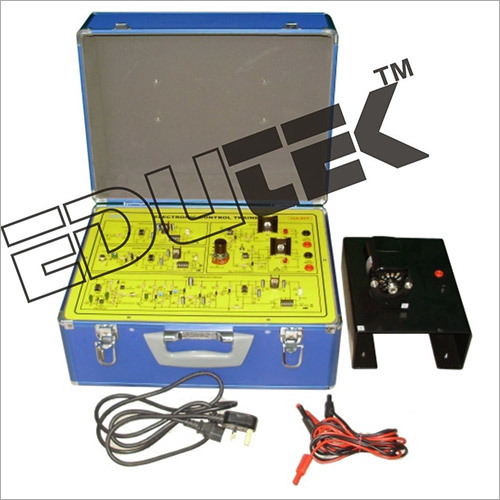
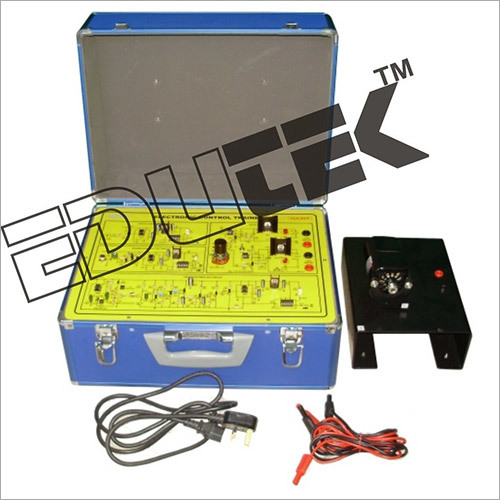
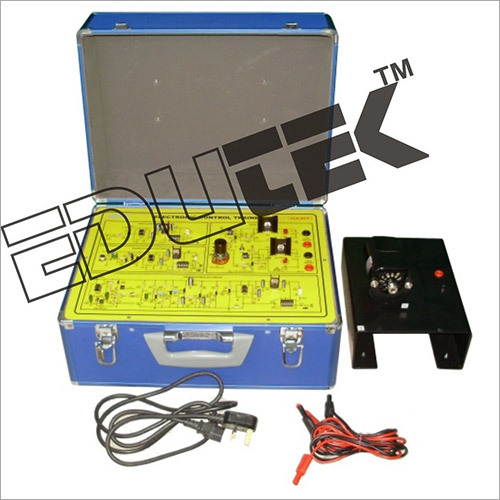
Electronic Control Trainer
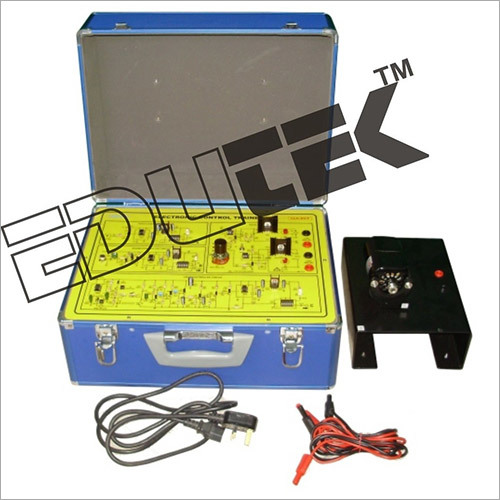
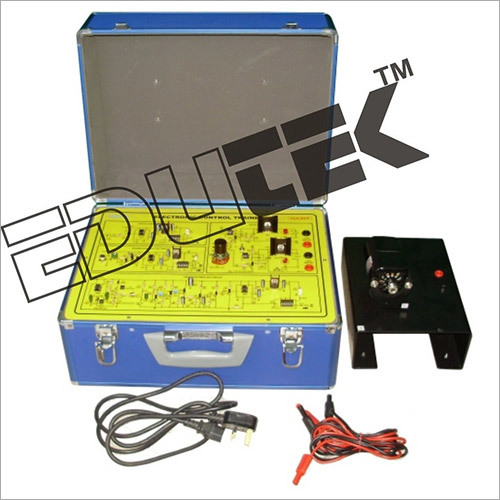
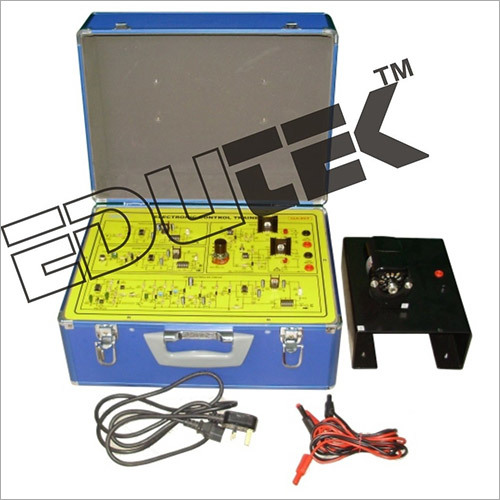
This trainer is provide a comprehensive course on Solid State Relays and their applications. Solid State Relays are typically used as the modern replacement to conventional electromagnetic relays. Solid State Relays generally provide more flexibility in their control applications and easily combine low voltage and high voltage circuits working in conjunction with each other. This trainer also provides a good introduction to semiconductor applications and theory.
Education Objectives
- The trainer features three low voltage circuits which controls the solid State Relay that in turn controls a higher voltage circuit.
- The low voltage circuits include a touch operated switch circuit, a sound operated switch circuit and an optical photo relay switch.
- A mode selection switch is used to determine which low voltage circuit will control the SSR. The SSR will then be turned off or on by this circuit.
- The SSR has an output of 220-240 VAC, single phase, 50 Hz, 16 amp and can control electric motors, lights or any other electrical device.
Experiments covers the basic types of semiconductors, details on the touch control switch, details on the construction of
the sound control switch, details on the Photo-Optical switch, comparison of electromechanical relay to SSR's,
characteristics of SSR and basic SSR design applications. SCR and TRIAC basics are also covered.
The Student Job Sheet sectioned is asked to includes detailed experiments for the student to follow.
Advanced Learning with Real-World ApplicationsThe Electronic Control Trainer is crafted to expose students to the practicalities of electronic and electrical control systems. By experimenting with SSR triggering, circuit interlocks, and safety shutdown procedures, learners gain hands-on experience crucial for engineering and technical careers. Designed for both group demonstrations and individual projects, it fosters real-world skills for the modern classroom.
Safety and Durability PrioritizedYour learning environments safety is paramount. This trainer integrates key safety features such as fused input and overload protection, ensuring reliable operation. Constructed from powder-coated metal with an acrylic front panel, it boasts a resilient build that withstands frequent academic use, making it a dependable addition to any laboratory.
Simple Integration and Modular ExpansionWith standardized banana terminals, clear push buttons, and mode selection switches, the trainer is user-friendly for students and instructors. Its modular architecture allows for channel expansion, supporting evolving training needs. The included manual and experiment guide enable seamless setup and versatile operation for various educational applications.
FAQs of Electronic Control Trainer :
Q: How does the Electronic Control Trainer facilitate practical learning?
A: The trainer provides hands-on study by enabling students to perform key experiments like SSR triggering, circuit interlocking, and safety shutdown demonstrations, simulating real-world control situations encountered in engineering and vocational settings.
Q: What components and interfaces are available for experimentation?
A: It includes a mode selection switch for controlling the SSR, banana terminals, push buttons, and switches. This variety ensures flexible circuit configuration and easy connection during training sessions.
Q: When is it suitable to use this trainer?
A: Ideal for engineering, polytechnic, ITI, and vocational education labs, it can be used during lectures, practical lab sessions, group demonstrations, or individual study experiments focused on electrical and electronic controls.
Q: Where can this trainer be installed or placed?
A: Its tabletop, desktop-optimized design makes it suitable for use in classroom laboratories, engineering workshops, and technical training institutes.
Q: What safety features are included to protect users and equipment?
A: It features a fused input and overload protection, safeguarding both users and equipment during operation, in compliance with academic safety standards.
Q: How can the trainer benefit educators and students?
A: Educators gain an effective demonstrative tool, while students acquire essential skills through direct interaction with modern control systems, preparing them for industry challenges.



 Send Inquiry
 Send Inquiry

