About Electrolysis Cell
Electrolysis Cell
Specifications for Electrolysis Cell
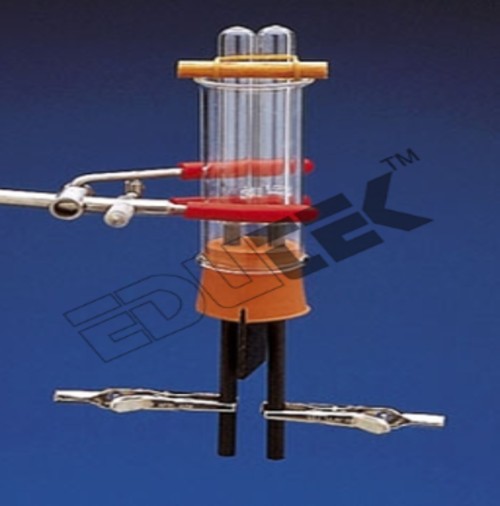
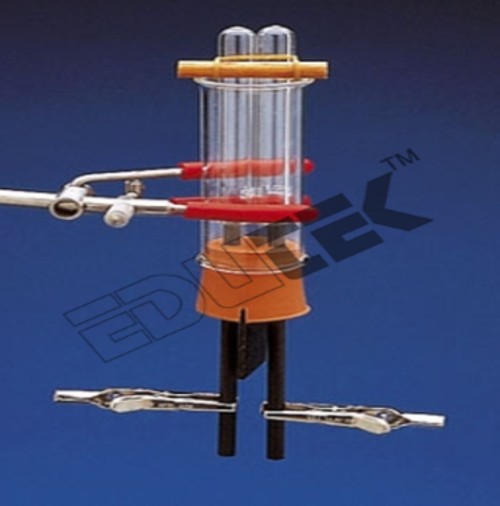
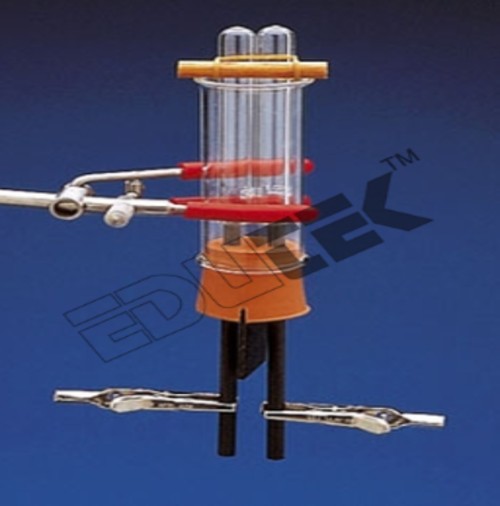
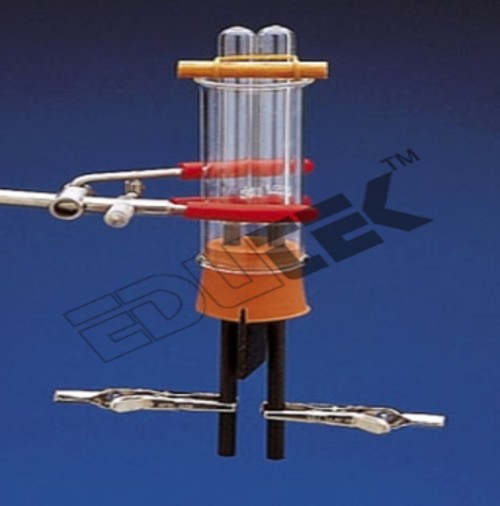
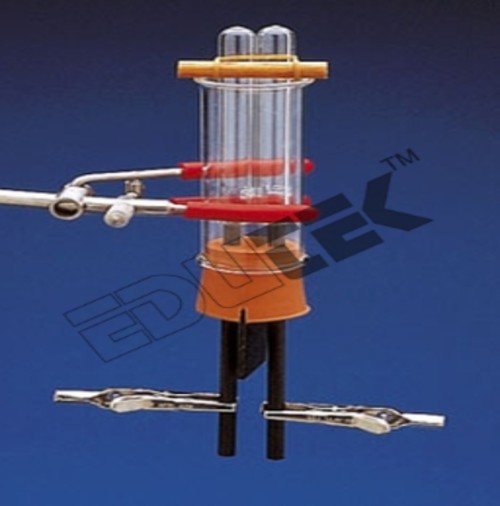
The gases evolved are collected in two 57 x 10 mm test tubes suspended over the electrodes by a piece of wood and rubber bands.
Each cell consists of a 75 x 25mm glass cylinder with a 2 hole rubber stopper fitted with 2 carbon electrodes.
Electrical contact is made through the crocodile clips and a piece of insulating material between the electrodes prevents short circuiting.
Highly Efficient and Precise PerformanceThis electrolysis cell promises exceptional accuracy and efficiency, supporting voltages from 6V to 12V. The use of platinum and carbon electrodes ensures reliable conductivity for consistent laboratory results. Its robust design guarantees stability during experiments, making it an essential tool for professionals and students alike.
Durable Borosilicate Glass ConstructionManufactured from premium borosilicate glass, the cell boasts excellent chemical and thermal resistance. The clear container facilitates easy observation of ongoing reactions, ensuring user safety and detailed process monitoring. Maintenance is straightforward, thanks to the manual wash cleaning method and resilient materials.
Versatile Laboratory ApplicationsPurpose-built for laboratory experimentation and electrolysis demonstrations, this cell adapts seamlessly to a range of educational or research settings. Its compatibility with both AC and DC power, along with a manageable 250 ml volume, means it excels in various controlled experiments and science education activities.
FAQs of Electrolysis Cell:
Q: How is the electrolysis cell set up and connected for laboratory experiments?
A: To set up the cell, position it securely on a benchtop, connect the platinum/carbon electrodes using the screw terminals, and link the power supply (6V12V DC or AC). Fill the glass container with up to 250 ml of your desired electrolyte before commencing your experiment.
Q: What materials are used in constructing the electrolysis cell and what are their benefits?
A: The cell is constructed with durable borosilicate glass, featuring platinum or carbon electrodes. Borosilicate glass offers superior thermal and chemical resistance, while platinum/carbon electrodes deliver excellent conductivity and corrosion resistance, ensuring longevity and consistent results.
Q: When should I perform maintenance or cleaning on the electrolysis cell?
A: Its recommended to manually wash the cell following each use. Regular cleaning prevents contamination between experiments and maintains accuracy and performance. Use appropriate laboratory cleaning solutions and rinse thoroughly before storage.
Q: Where is the ideal setting to use this electrolysis cell?
A: This cell is specifically designed for laboratory environments, including schools, research institutes, and industrial labs. Its clear, compact, and stable design makes it apt for benchtop use where close monitoring is necessary.
Q: What is the process for conducting an electrolysis demonstration with this equipment?
A: First, fill the cell with the correct electrolyte, secure the electrodes, and connect the power supply to the screw terminals. Once activated, observe the electrochemical reactions via the transparent container, enabling safe and detailed demonstration of the principles of electrolysis.
Q: How does the design aid in laboratory accuracy and efficiency?
A: The use of high-quality glass and precise electrodes ensures minimal interference and maximum visibility during experiments, supporting highly efficient electrolyte reactions with 100% claimed accuracy.
Q: What are the main benefits of using this electrolysis cell in laboratory settings?
A: Key benefits include high efficiency, temperature resistance up to 120C, clear observation during use, and compatibility with both AC and DC power supplies. This makes the cell versatile, reliable, and educationally valuable for repeated laboratory use.







 Send Inquiry
 Send Inquiry

