About Distribution System Trainer
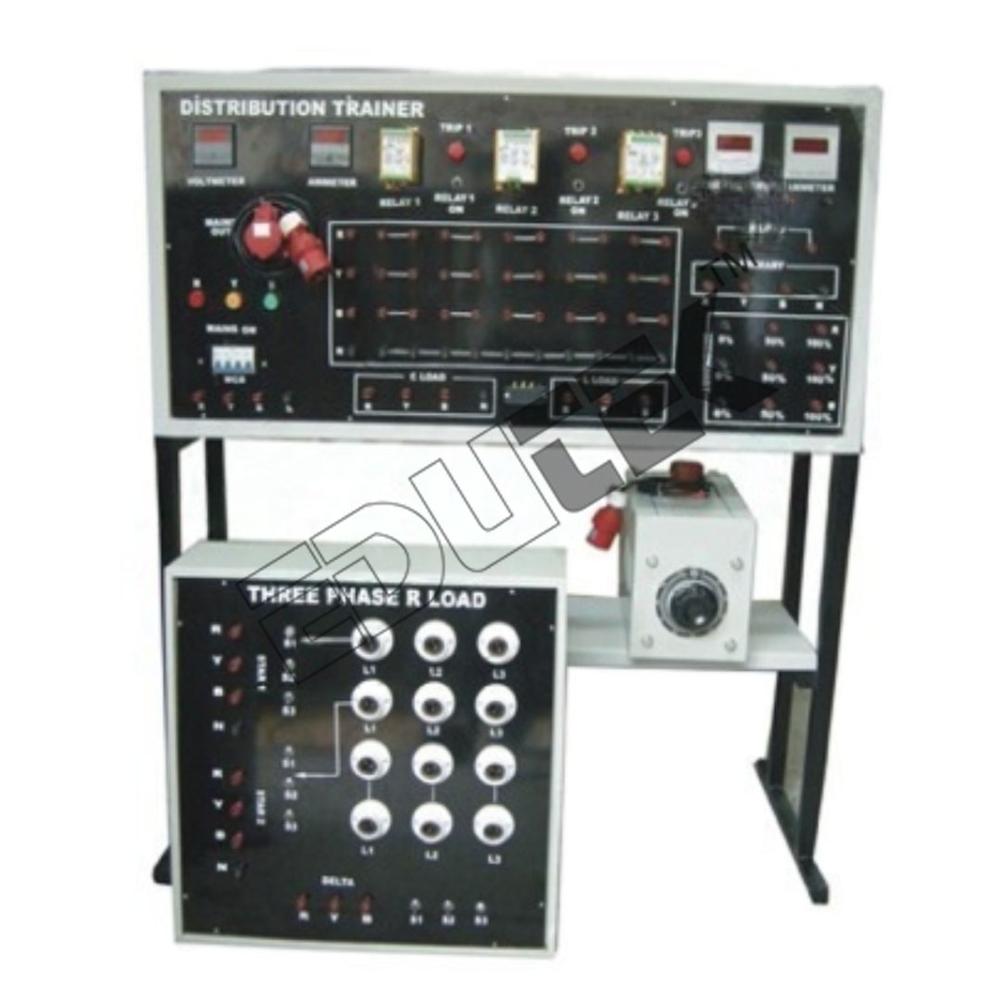
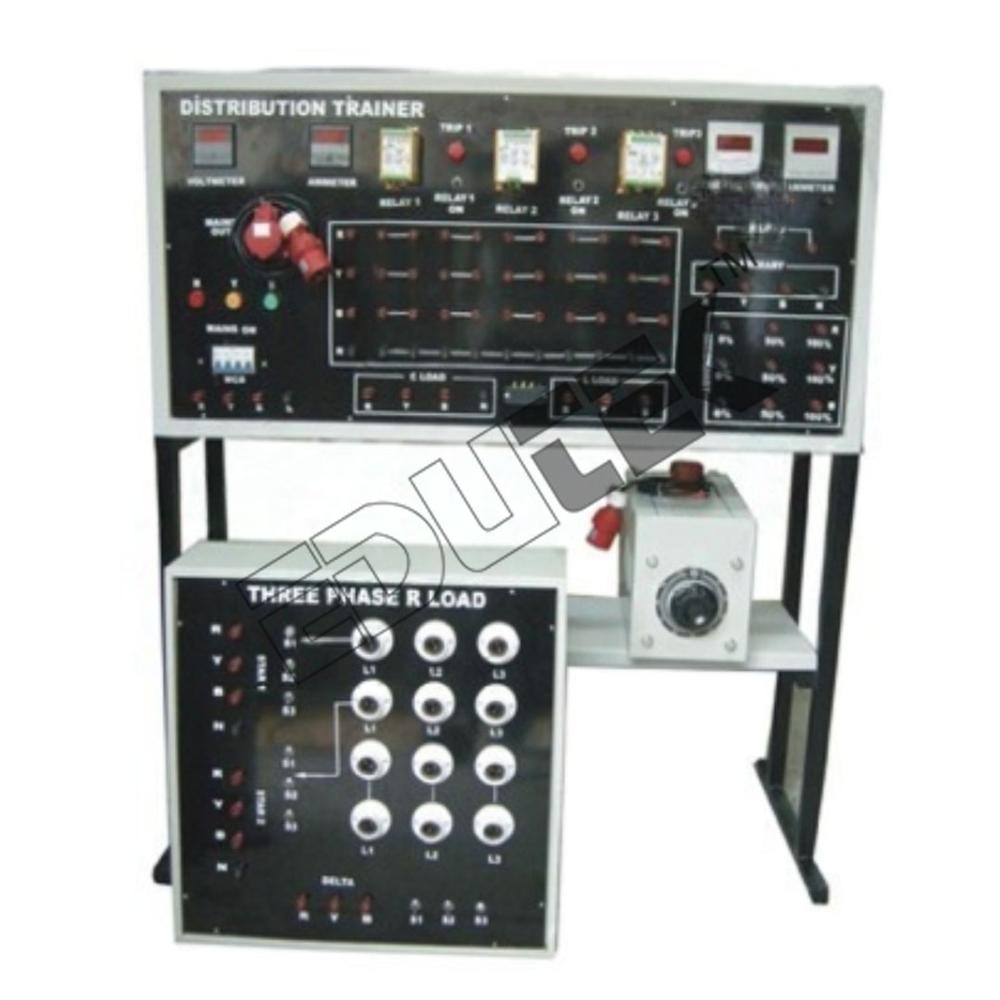
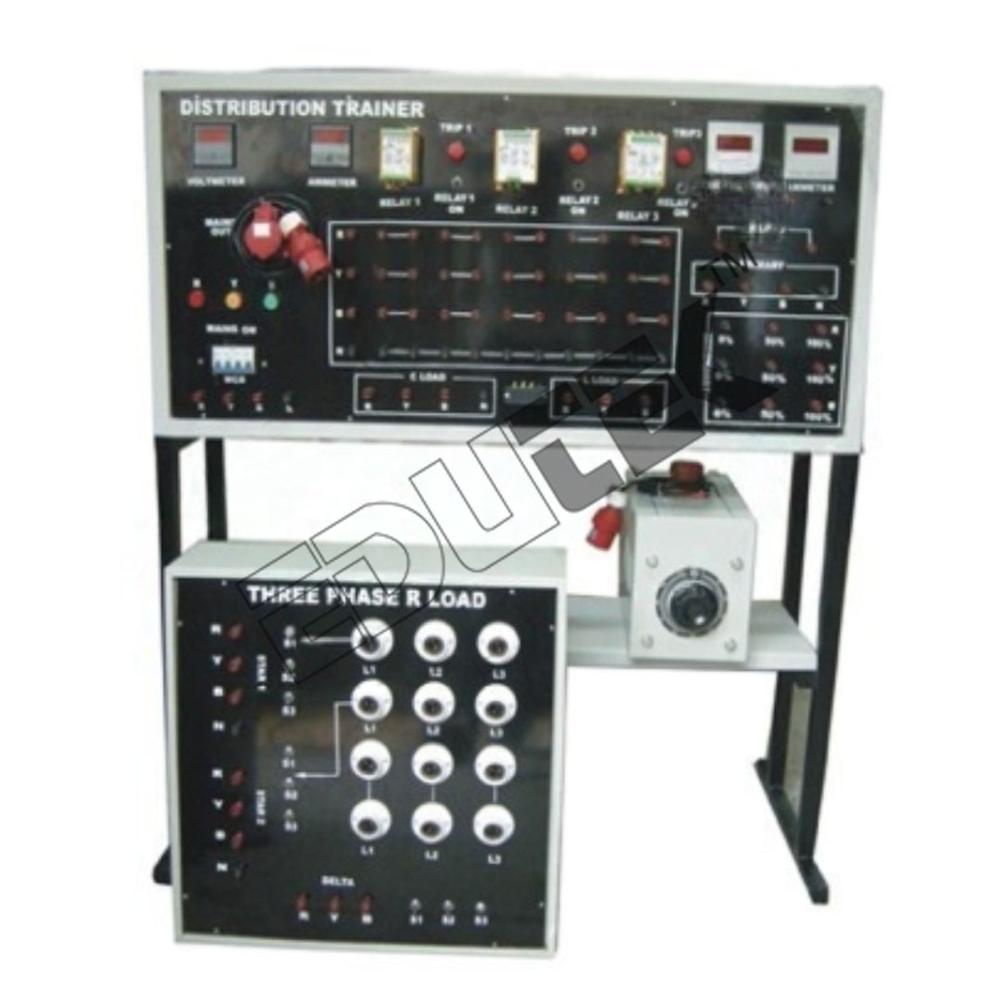
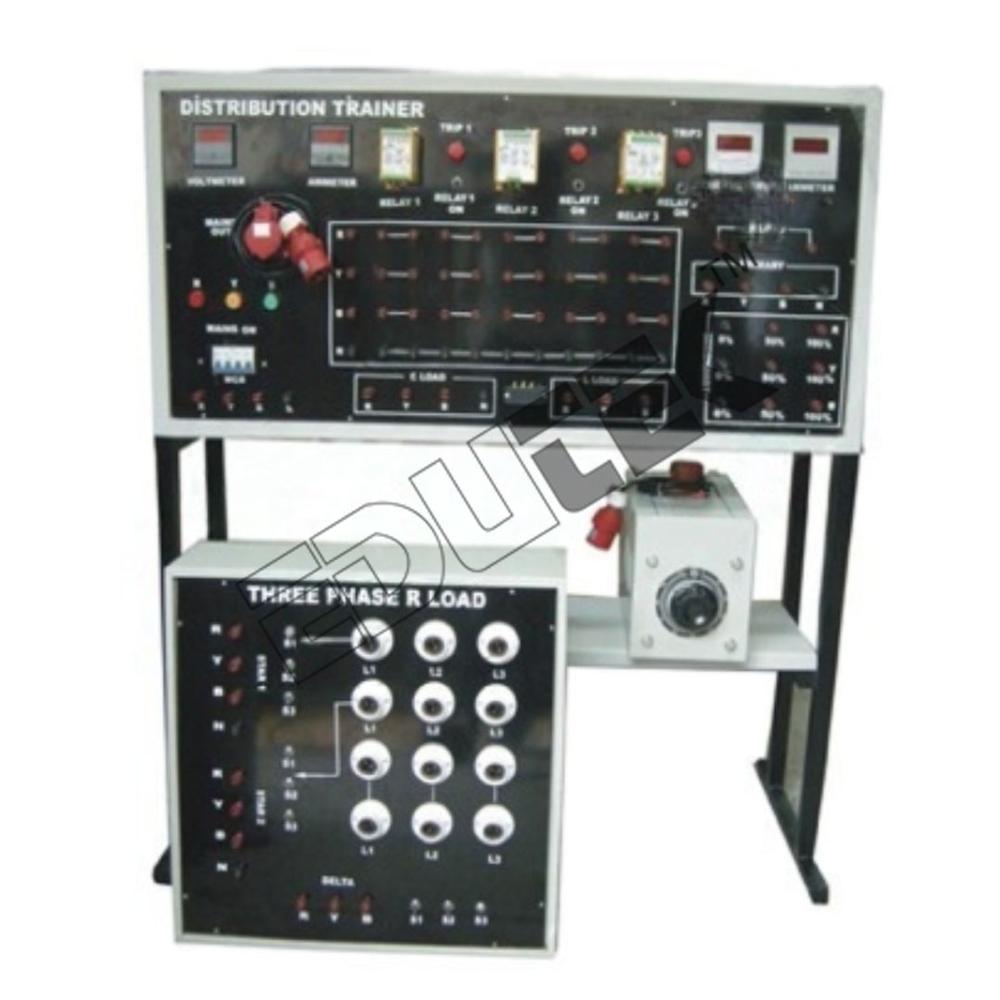
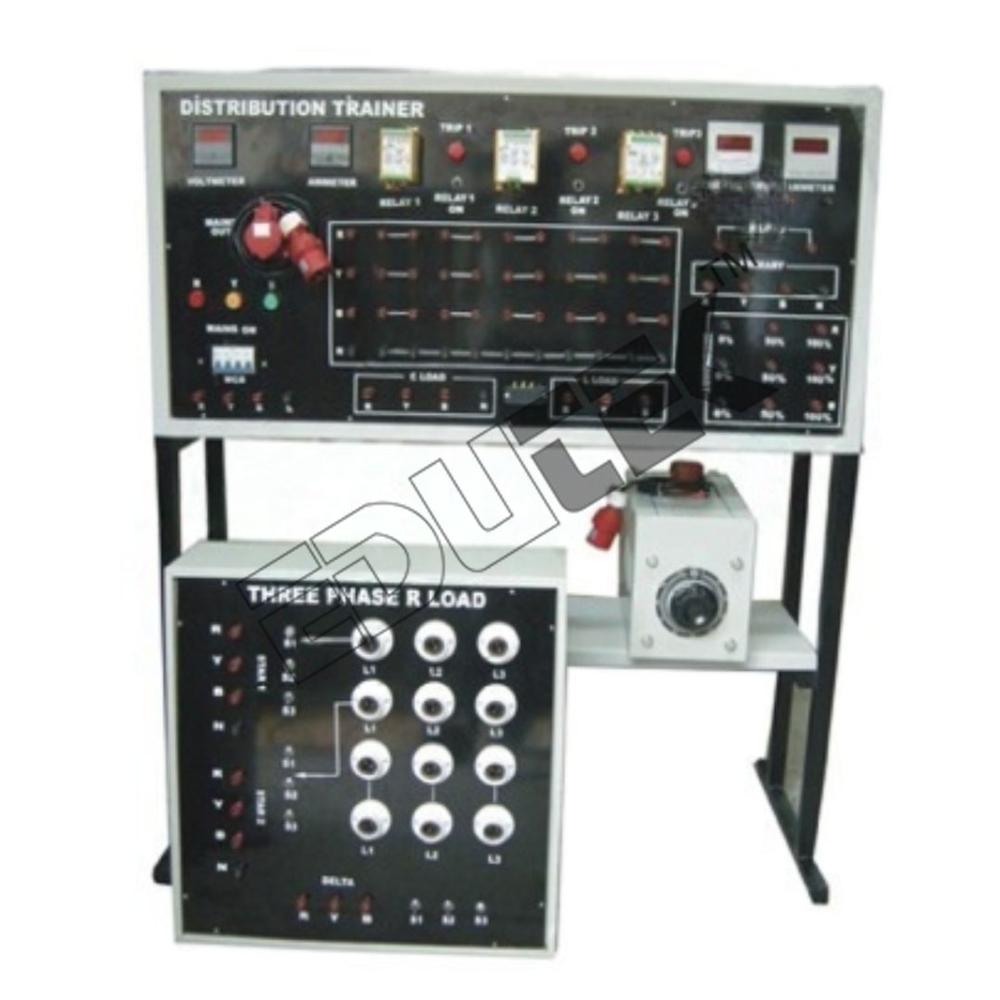
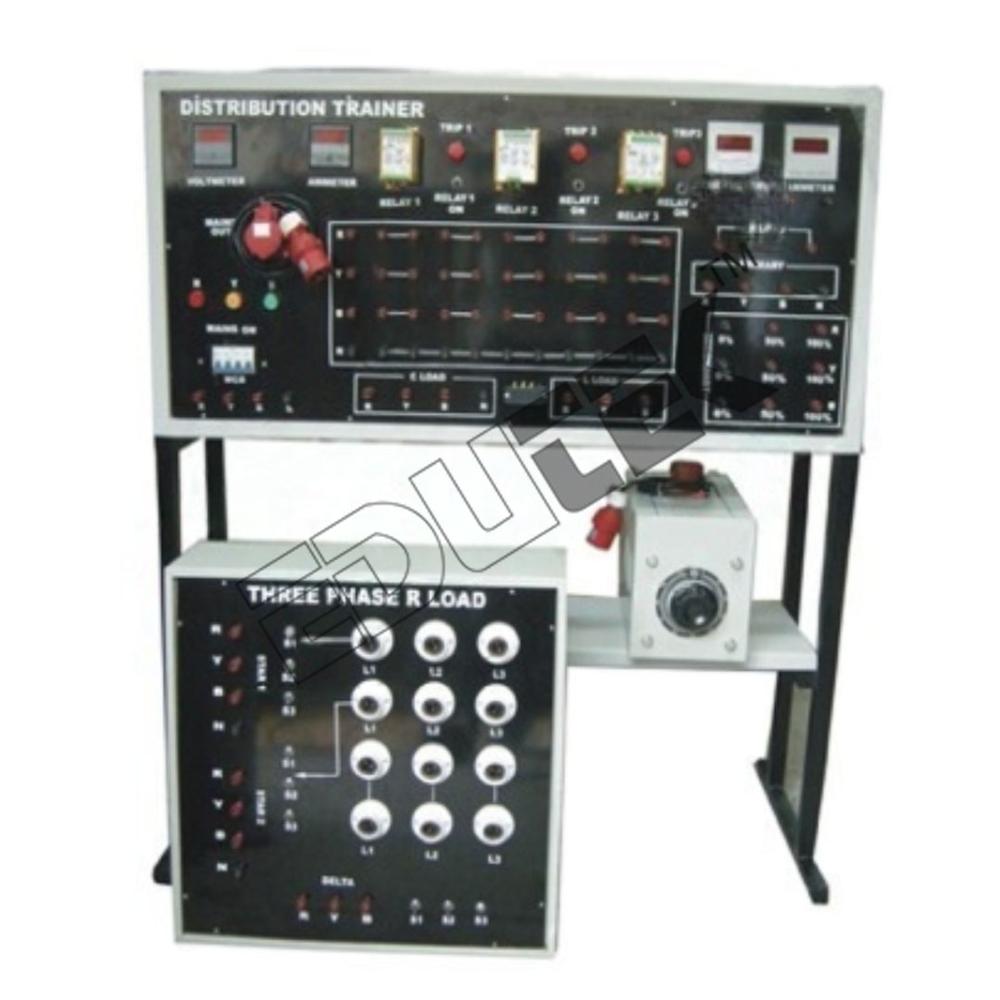
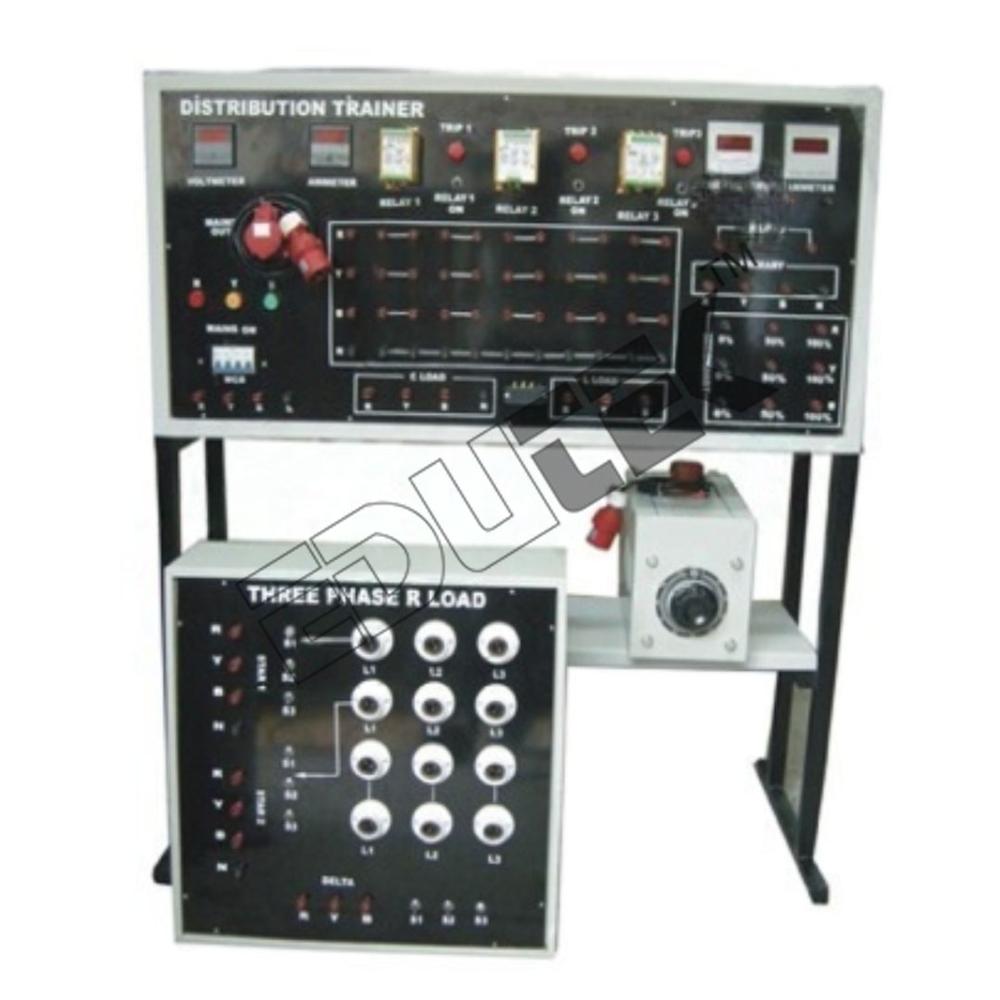
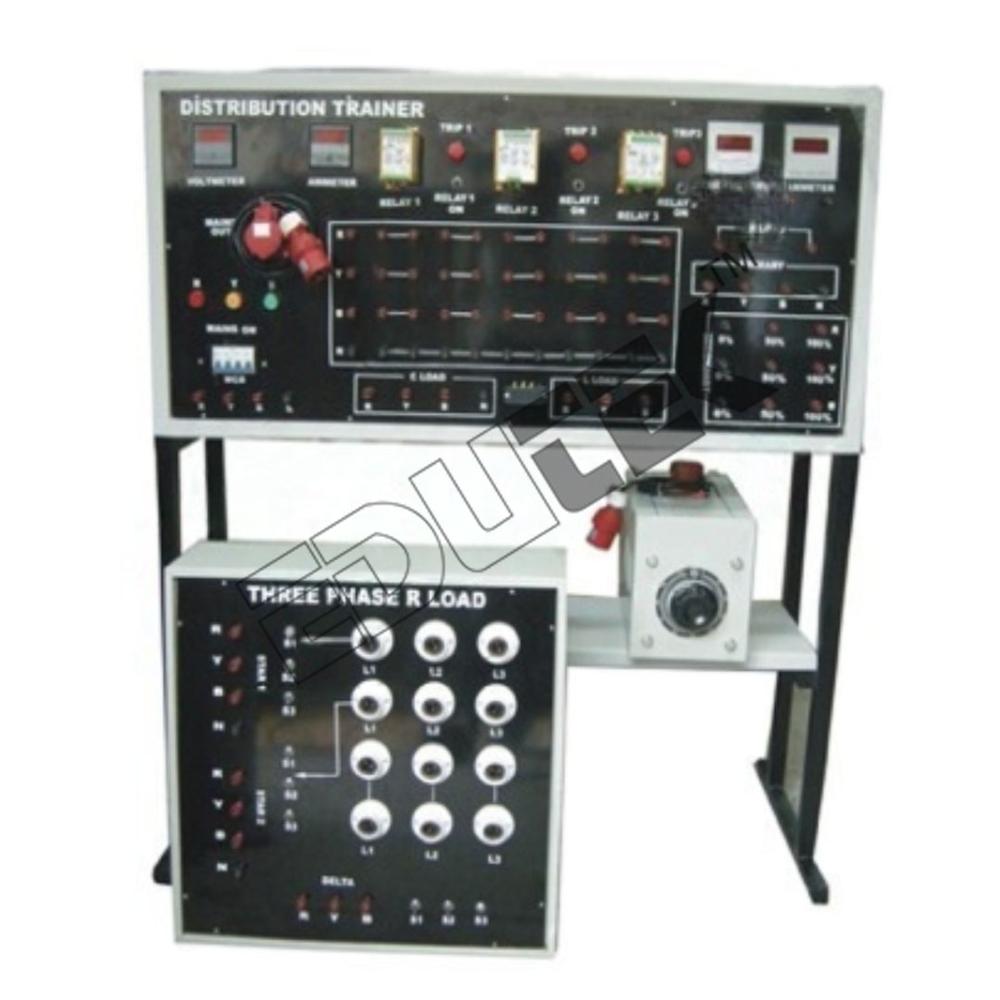
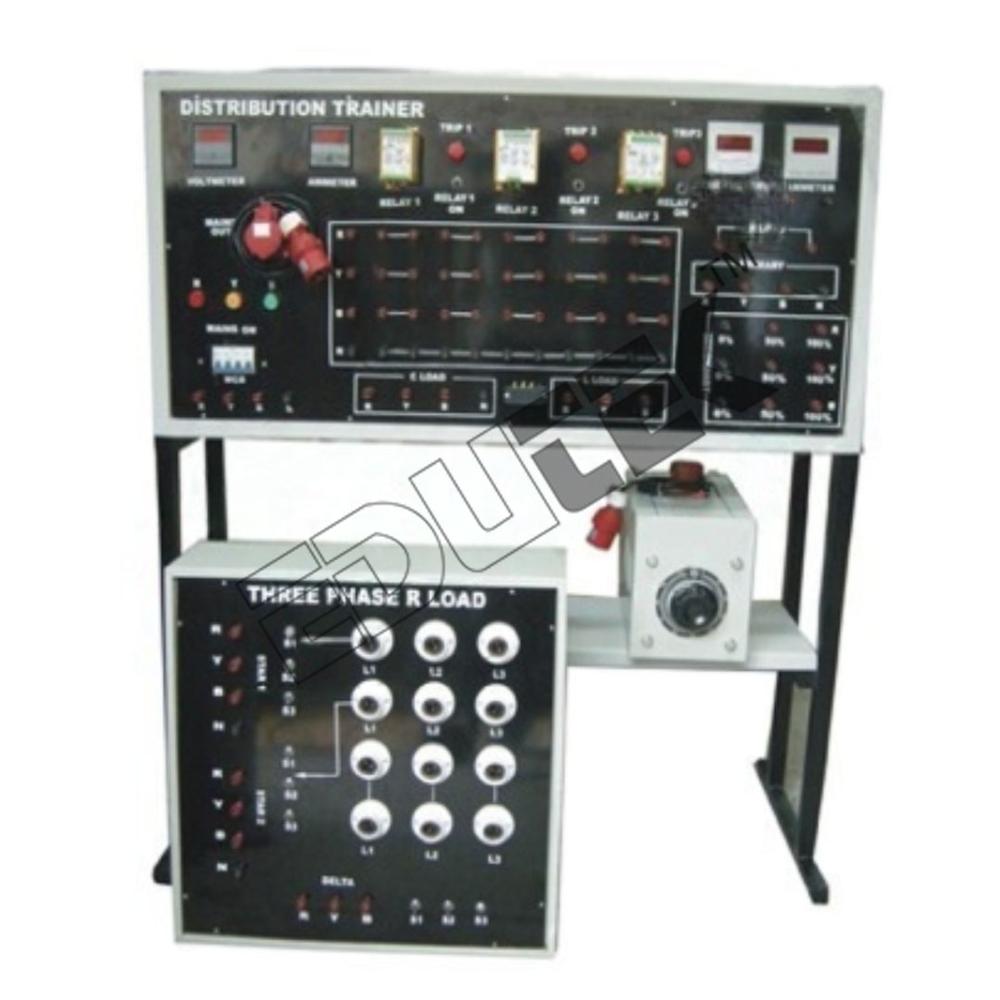
Distribution System Trainer
Specifications of Distribution System Trainer :
A distribution training equipment provides a list of experiments and having comprehensive in build instrumentation, metering and protective devices.
Fundamental configurable distribution system for ring main or radial feeders with six tapping from either system or the facility to demonstrate the effect of varying the conductor cross section. AC and DC methods are available and two dual wound transformers included for AC demonstration. Both AC and DC variable power supplies range from 0 to 30 volts and the two transformers having 240 V windings.
0-300v moving iron voltmeters
-2 nos 0-30 v rectified moving coil voltmeters
-3 nos 0-10 v rectified moving coil voltmeters
-1 nos 0-1 A rectified moving coil voltmeter
-11 nos Indication lamps to indicate volt drop in transmission line.
Three phase distribution consists of a three phase neutral distribution line with characteristics inductive and resistive features. Each phase line is represented by two separate sets of R and XL, and the neutral is to be divided in the same way.Each phase is to have a current transformer with the secondary taken to the terminals with protective relay. Three single pole protection relays of HV switch gear industry standard are to be included.
0-10 A moving iron ammeters
-4 Nos 0-500 V mowing iron voltmeters
-3 Nos Single element wattmeter for unbalanced load measurement
6 Nos Suitably scaled
1 Nos Power factor indicator
All the above are to be wired to safety sockets to allow insertion of the measuring devices
Other Information :
Pay Mode Terms: L/C (Letter of Credit), T/T (Bank Transfer)
Comprehensive Power Distribution SimulationThis trainer allows users to simulate multi-line single-phase and three-phase power distribution networks in a safe, controlled lab environment. With clear circuit representation, breaker simulation, fault creation, and adaptability to various technical curriculums, the unit supports both demonstration and in-depth experimentations for technical students.
Robust and Educational DesignBuilt with a 2mm thick, powder coated steel panel, the trainer is durable and stable for everyday lab or classroom use. Its multicolor, labeled panel sections foster an intuitive understanding of electrical distribution layouts, making it a valuable educational resource for institutes and training centers.
FAQs of Distribution System Trainer:
Q: How do I connect external circuits safely to the Distribution System Trainer?
A: The trainer uses banana sockets for safe and secure front-panel connections, allowing users to quickly set up and modify circuits with minimal risk of accidental contact.
Q: What educational benefits does the trainer offer for engineering and vocational students?
A: It offers a hands-on approach to understanding electrical power distribution, fault diagnosis, and circuit protection mechanisms, effectively bridging theoretical knowledge with practical skills.
Q: When and where should this system trainer be used?
A: The system is intended for use during laboratory experiments and technical training sessions in engineering colleges, polytechnic institutes, or vocational training centers, particularly within electrical engineering departments.
Q: What protections are built into the trainer to ensure user safety?
A: The unit is equipped with overload protection, short circuit protection, and fuse protection mechanisms to safeguard both users and equipment during experiments.
Q: What is the process for creating and simulating faults on this trainer?
A: Users can simulate electrical faults using the panel-mounted fault switches. Once engaged, faults cause instantaneous indication through analog and digital meters, facilitating direct observation of protective responses.
Q: How does the warranty coverage work for this trainer?
A: The manufacturers warranty covers any defects arising from the production process, ensuring peace of mind during use in educational settings.
Q: What are the main components included in the trainer and how do they enhance learning?
A: Key components include MCBs, analog and digital meters, busbars, transformer modules, wiring terminals, and indicators. Together, these features enable detailed simulation of real-world distribution networks, providing students with realistic technical training.





 Send Inquiry
 Send Inquiry

