About Constant Head Permeability Apparatus
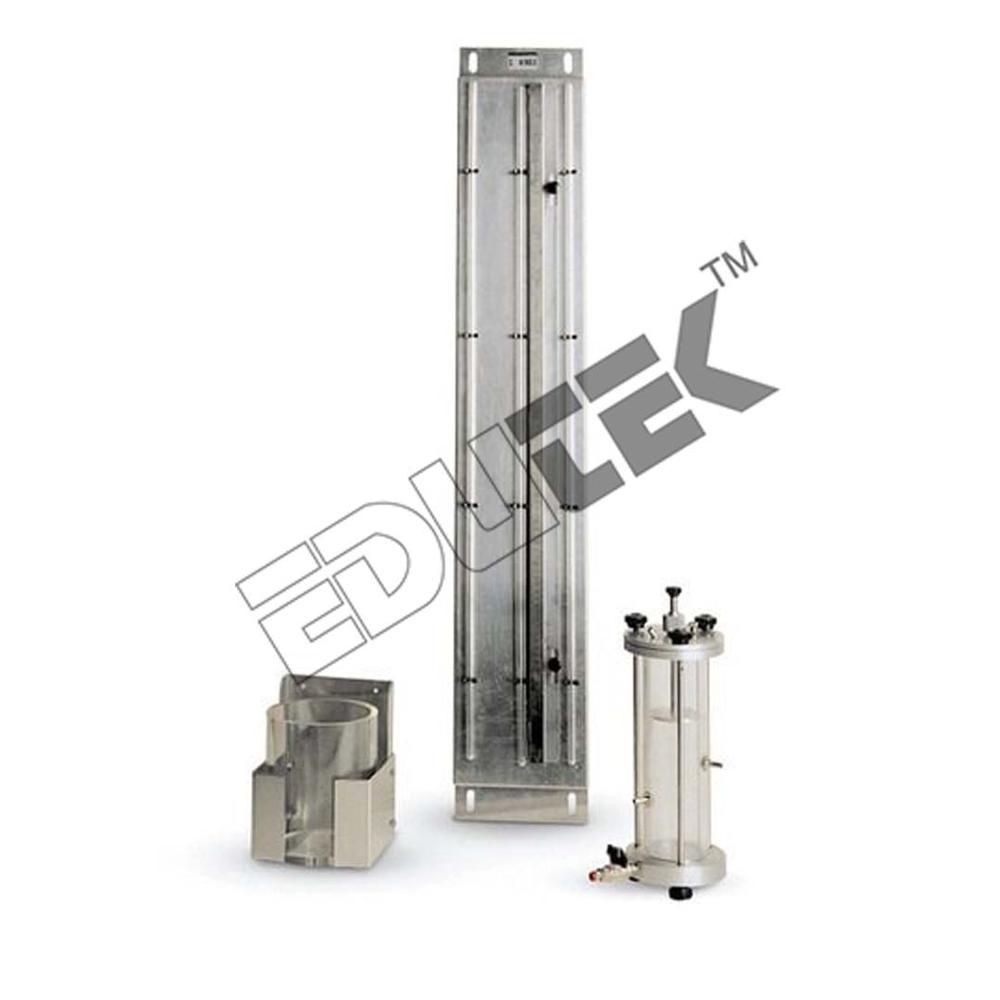
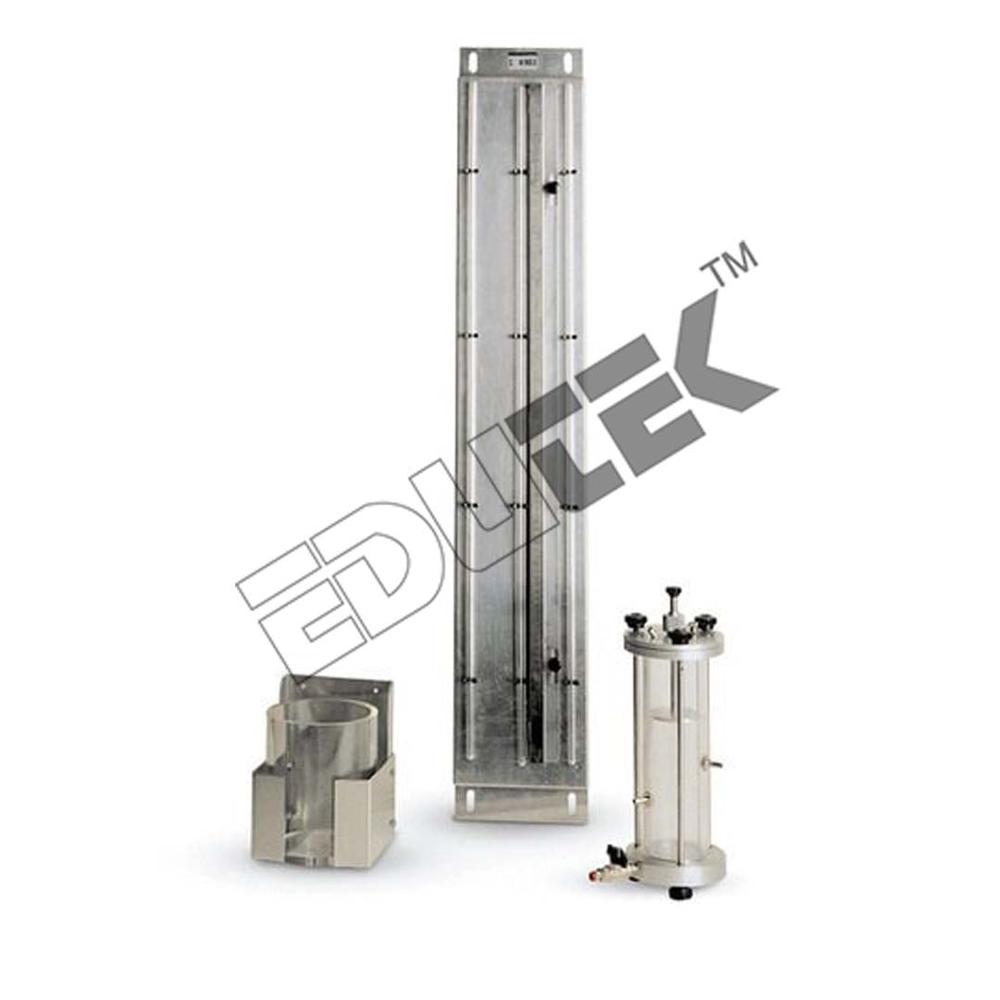
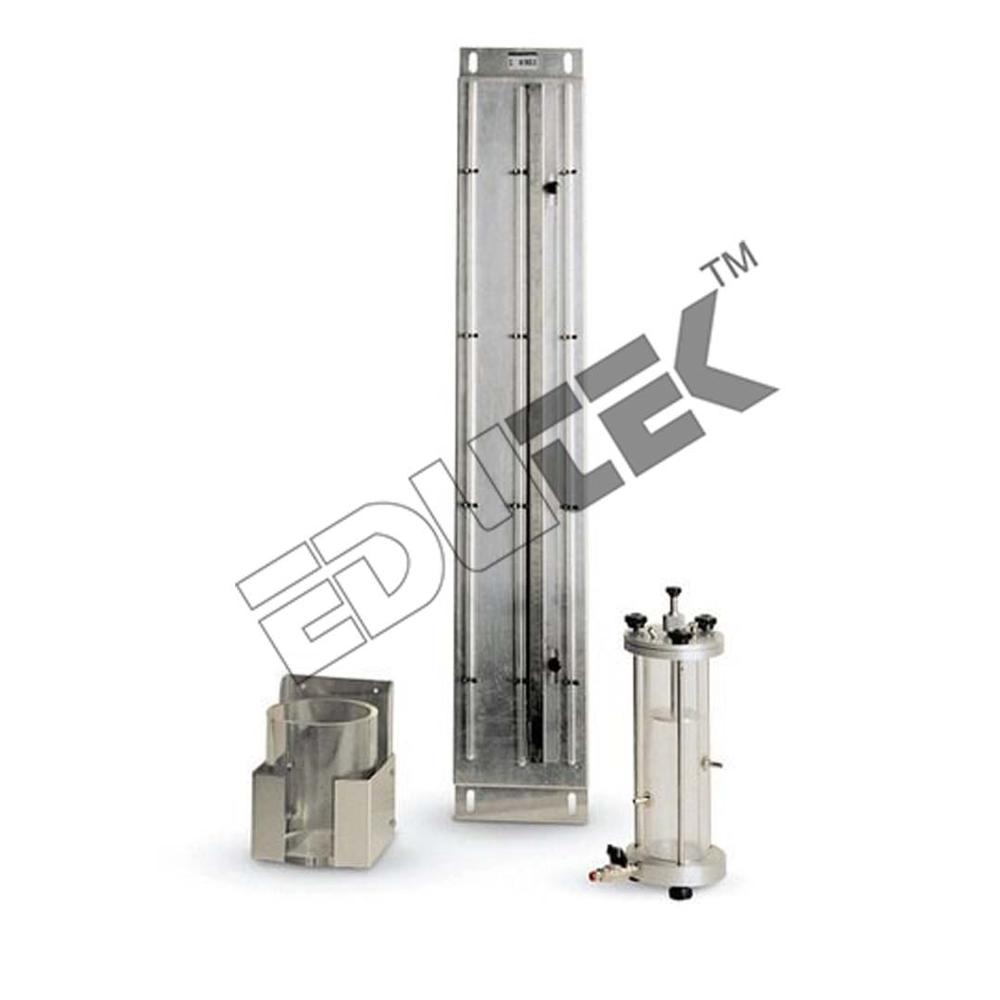
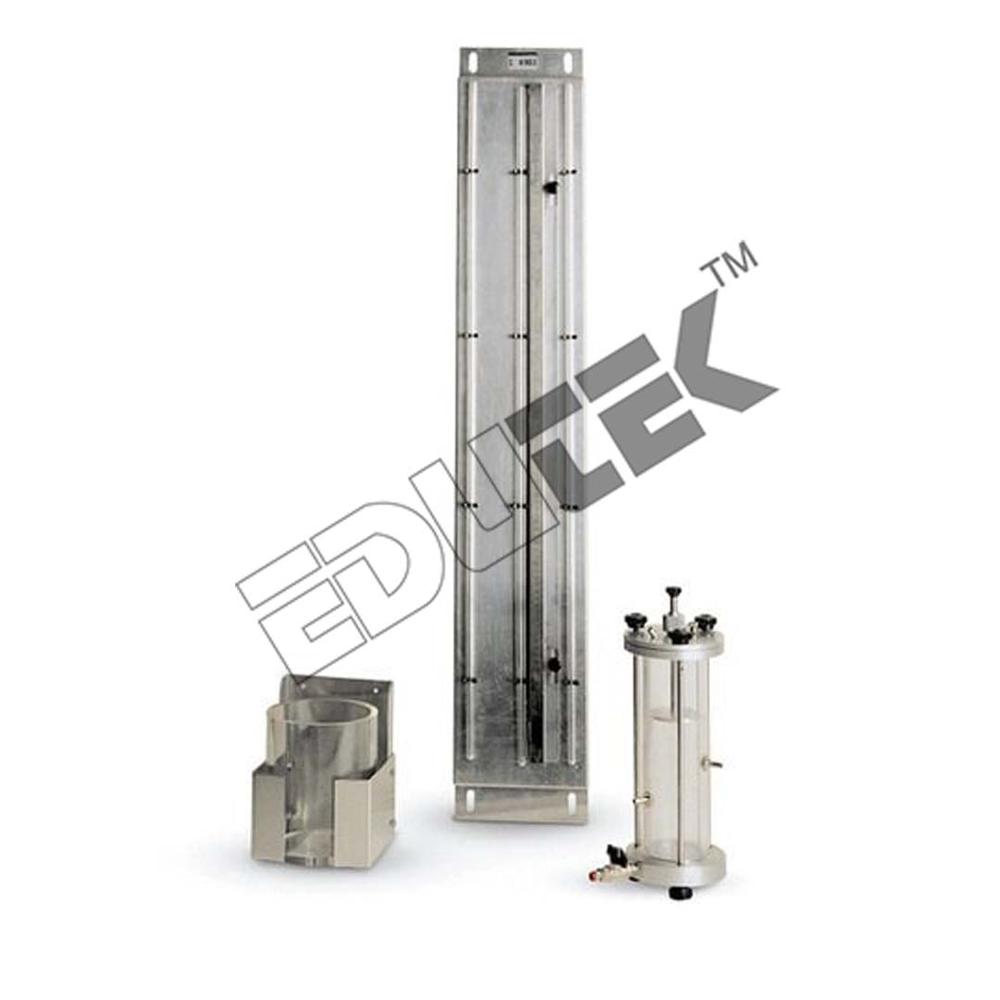
Constant Head Permeability Apparatus
Specification of Constant Head Permeability Apparatus:
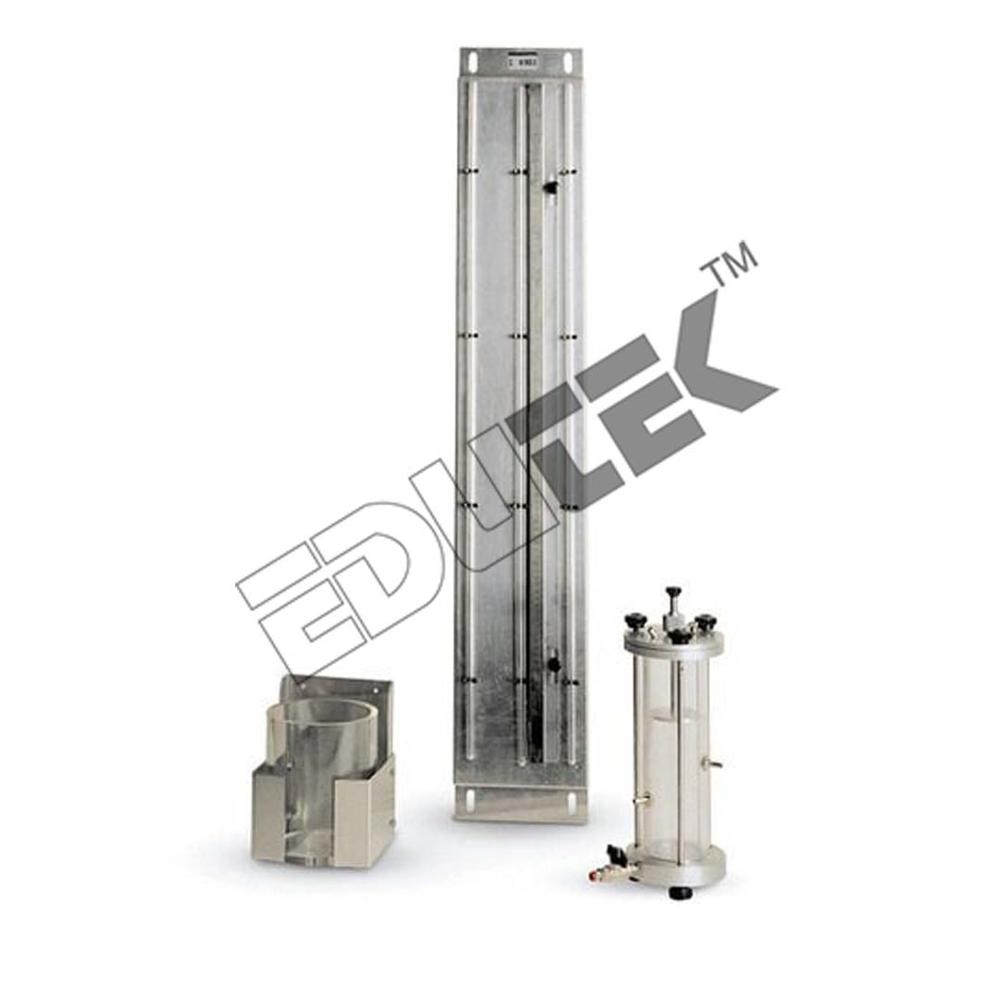
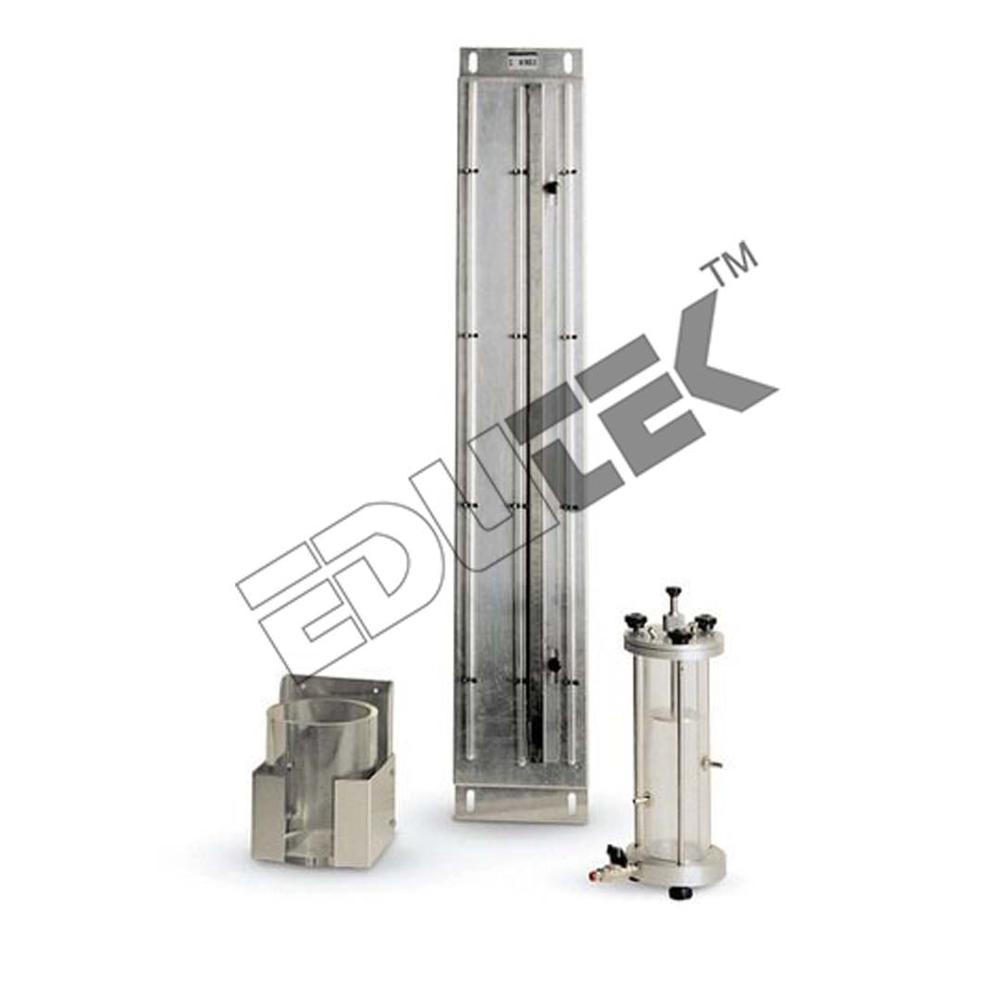
- Constant head permeability apparatus suitable for BS 1377,ASTM 2434;AASHTO T215 comprising of nominal cell : 75mm to 114 mm.
- Transparent plasticomprising of nominal cell : 75mm to 114 mm.
- Transparent plastic cell wall; 3 to 12(6 blanked ff) take - off points.
- Anodised aluminium end plates weight 2.6 to 6.1 Kg.
- Three manometer glass tubes of constant bore.
- Metre scale and connecting tubing for cell pressure take- off points all mounted on a free.
- Standing panel the weight of it 2.8 Kg. and stand.
- Transparent plastic constant level tank with attachment for wall mounting.
- The inlet ,outlet and over flow pipes are fitted to the base of the tank and can be adjusted for height with in the tank.
- Supplied with.
- Connecting tubing. Weight : 2.4 Kg.
With the necessary spares :
- 75 mm diameter constant head cell wall.
- 114 mm diameter constant head cell wall.
- Set of 3 Replacement Glass tubes.c cell wall; 3 to 12(6 blanked ff) take - off points.
- Anodised aluminium end plates weight 2.6 to 6.1 Kg.
Advanced Laboratory Soil Permeability TestingEngineered for versatility, this apparatus is suitable for detailed permeability analysis of various cohesionless soils, sands, and gravels. Its triple-glass standpipe design accommodates different flow scenarios, making it suitable for comprehensive research and routine testing. The manual, gravity-fed system allows for adaptable and consistent operation, ideal for both academic and industrial laboratories.
Precision Construction with High EfficiencyBuilt from high-grade stainless steel and borosilicate glass, the CHPA-01 apparatus offers durability and chemical resistance, ensuring longevity and reliable results. The flexible PVC connecting tubes guarantee leak-proof performance, while the corrosion-resistant finish preserves operational integrity. The apparatus delivers accurate, repeatable results with 100% measurement precision, supported by its analog scale display.
FAQs of Constant Head Permeability Apparatus:
Q: How is the Constant Head Permeability Apparatus used to determine soil permeability?
A: The apparatus operates by maintaining a constant water head using up to three glass standpipes of different diameters, allowing water to flow through a soil sample (38 mm diameter, 360 mm length). The water passing through the specimen is collected and measured over time using the 5-liter collection tank, enabling accurate calculation of the soils hydraulic conductivity as per IS 2720 (Part XVII) and ASTM D2434 standards.
Q: What types of soils are suitable for testing with this device?
A: This apparatus is specifically designed for cohesionless soils such as sands and gravels. Its construction and measurement range accommodate granular soil samples with relatively high permeability, providing consistent results for geotechnical and civil engineering investigations.
Q: When should I use a constant head method over a falling head method?
A: The constant head method, as used in this apparatus, is most appropriate when testing soils with higher permeability, such as sands and gravels. It allows for steady-state flow, making it ideal for these soil types, whereas the falling head method is better suited for less permeable, finer soils like silts and clays.
Q: Where is this apparatus commonly used?
A: The Constant Head Permeability Apparatus is used in soil mechanics and geotechnical laboratories within universities, research centers, construction sites, and soil testing facilities. Its robust construction and compliance with international standards make it suitable for both routine quality control and advanced research applications.
Q: What are the benefits of using a manual, gravity-fed permeability apparatus?
A: A manual, gravity-fed system offers operational simplicity, minimal maintenance requirements, and reliable performance without the need for external power. This design ensures uninterrupted testing, cost efficiency, and ease of use in various laboratory environments, while the analog display provides immediate, accurate readings.
Q: How accurate are the measurements provided by this instrument?
A: The apparatus delivers up to 100% accuracy in measuring permeability within a range of 1 x 10 to 1 x 10 cm/sec, as confirmed by its analog scale. Precision components, such as borosilicate glass and stainless steel, ensure measurement reliability and repeatability for laboratory standards.





 Send Inquiry
 Send Inquiry

