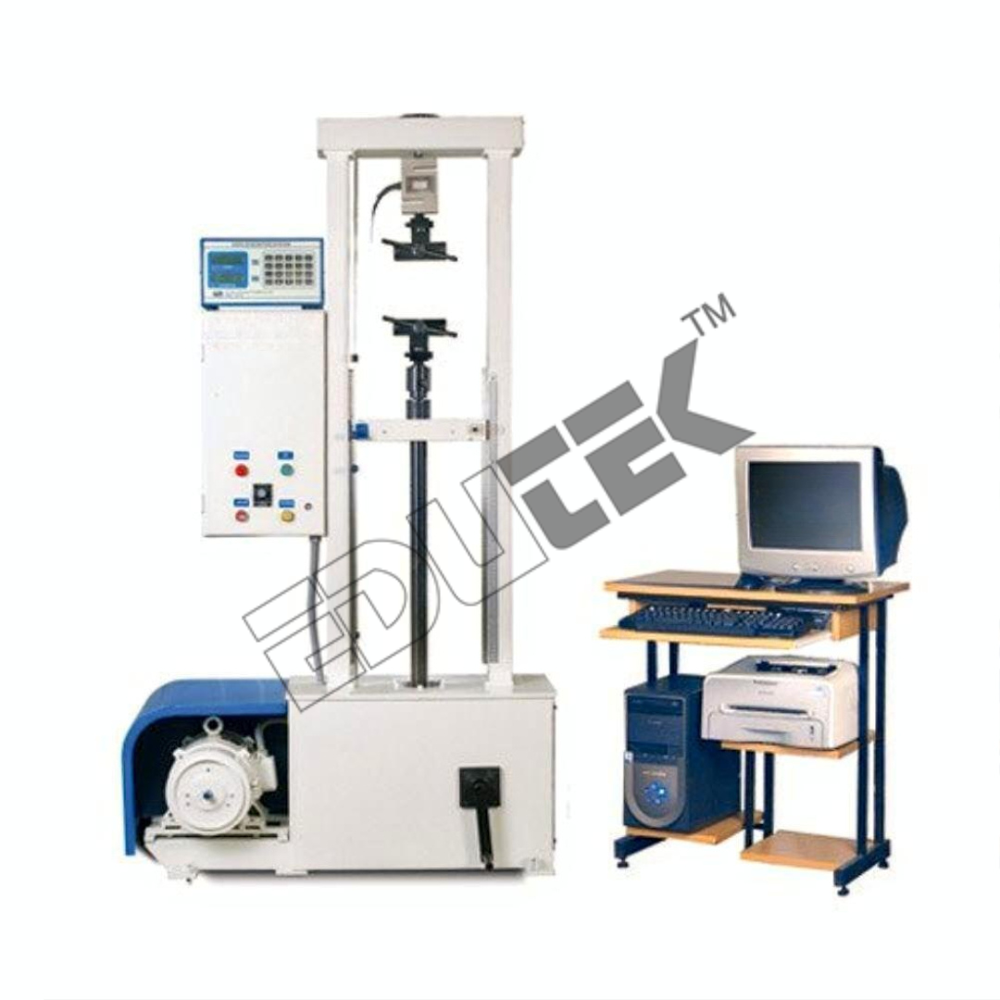
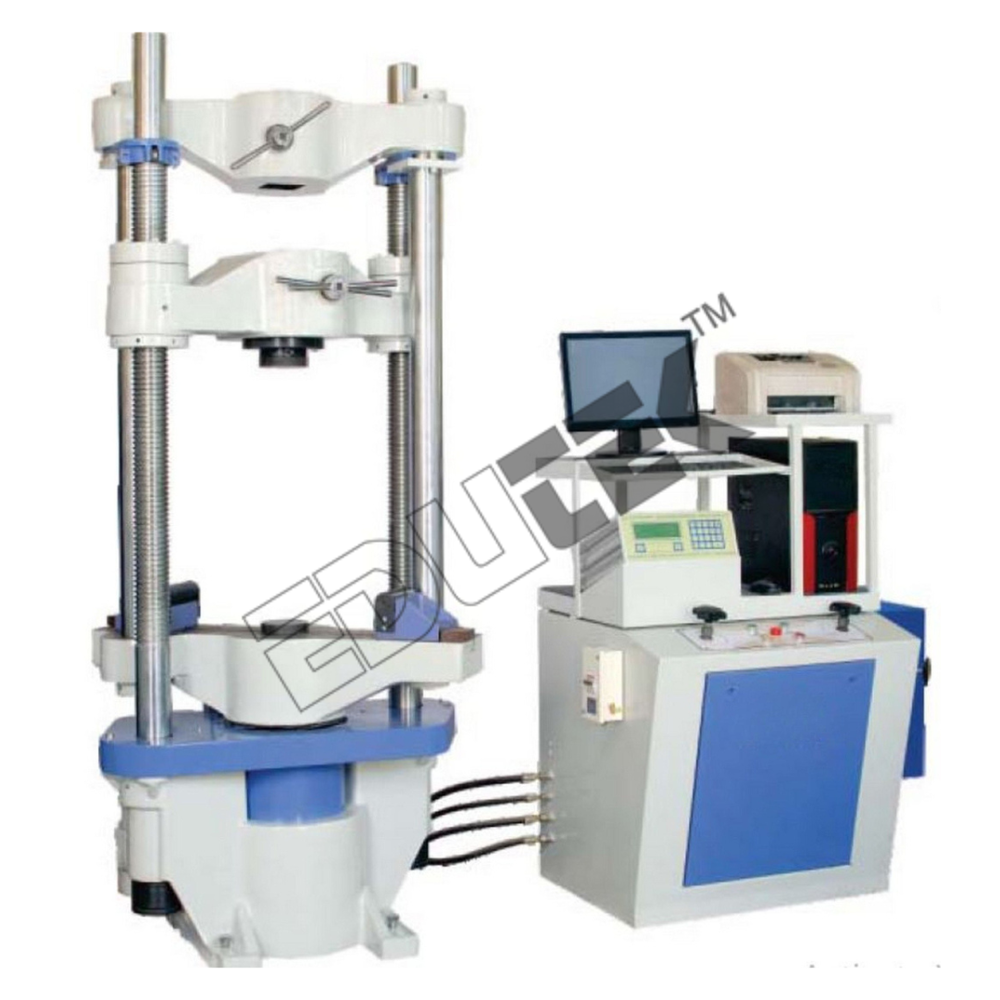
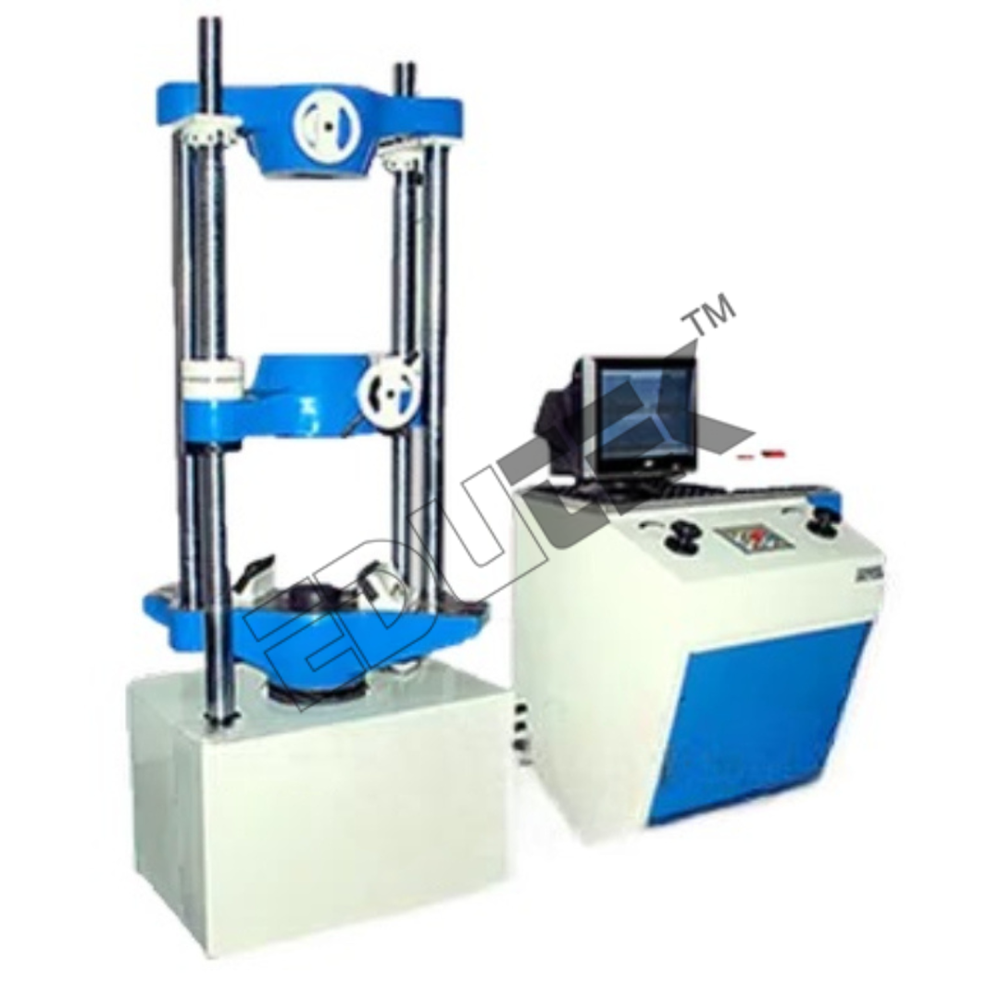
About Computerized Universal Tensile Tester
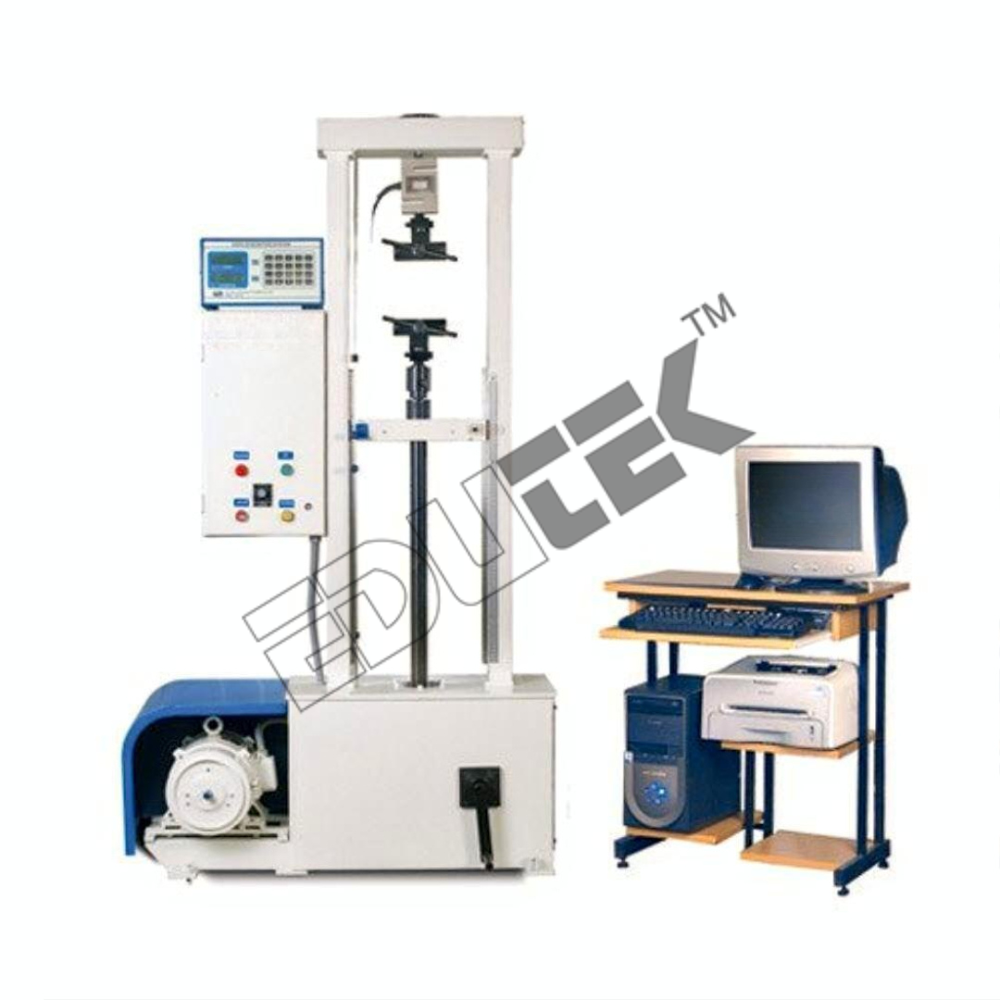
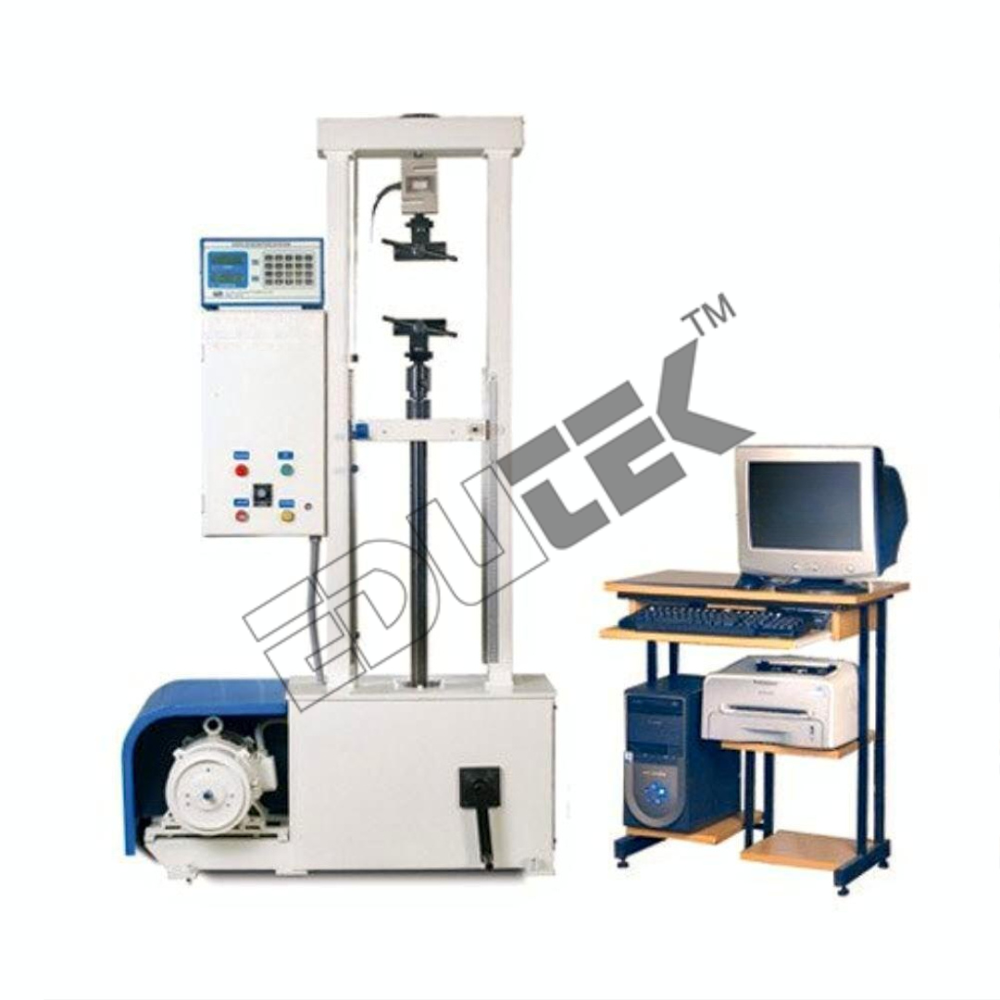
Computerized Universal Tensile Tester
Specifications :
- Loading System - AC/DC drive.
- Max. capacity - available from 10 Kg f to 10,000 Kg f.
- Test Width (mm) approx. - 400mm.
- Cross head Travel (mm) approx. - 1000mm
- Effective Stroke (mm) approx. - 800mm.
- Cross head Speed (mm/min) - up to to 500 mm/min(approx).
- Cross head Return Speed - up to 500mm/min.
- Tensile Load Measurement Accuracy - +/- 1%.
- Stroke Limiter upper/lower - 2 points (upper/lower).
- Power : 220-240 Volts, 1-phase, 50Hz.
- Test parameters displayed with graph simultaneously.
- Real time graphic display of data.
- Overlay display of data curve possible during test.
- Select able graphical display presentation.
- Other test methods can be programmed by the operator.
- Return after a test is selected.
- Calibration File to calibrate the unit.
Advanced Data Acquisition and AnalysisEquipped with high-speed sampling up to 1000 Hz and comprehensive Windows-based analysis software, this tensile tester streamlines test data acquisition and reporting. Users can generate custom reports, plot graphs automatically, and store data both internally and externally for seamless traceability, enhancing workflow efficiency and compliance with global standards.
Versatile Testing CapabilitiesThis tester supports a broad range of applications including metals, plastics, textiles, rubber, and cables. Its interchangeable grips and adjustable stroke length up to 900 mm facilitate diverse tests. Programmable limits and automatic elongation measurement ensure repeatable, precise results, making it ideal for quality control and R&D environments.
Superior Safety and User ConvenienceThe machine features emergency stop, overload, and over-travel protections for operator safety. Its self-diagnostic software minimizes maintenance needs, while the multi-language user interface option and adjustable machine speed assure user-friendly operation for global customers.
FAQs of Computerized Universal Tensile Tester:
Q: How does the automatic elongation measurement work on the Computerized Universal Tensile Tester?
A: The tester uses a precision extensometer to automatically capture elongation readings during a test, ensuring accurate measurements without manual intervention and enhancing repeatability.
Q: What types of materials can be tested with this Universal Tensile Tester?
A: You can test metals, plastics, rubber, cables, textiles, and many other materials. The interchangeable grips and wide load capacity accommodate various specimen shapes and strengths.
Q: When is it necessary to use the emergency stop or overload protection features?
A: Emergency stop and overload protection should be used during any abnormal operation, such as specimen breakage or excessive load detection, to instantly halt movement and prevent damage or injury.
Q: Where can test data be stored after performing tests on the machine?
A: Test data can be saved to the internal memory, external USB devices, or transferred via RS232 or Ethernet (optional), making data management flexible and convenient.
Q: What benefits does the Windows-based analysis software offer users?
A: The Windows-based software allows for test parameter customization, automatic graph plotting, and custom report generation. This streamlines analysis and helps users meet compliance requirements efficiently.
Q: How is the speed and crosshead travel adjusted during a test?
A: Speed and crosshead travel are programmable via the digital interface or PC control. Users specify limits and movement rates to suit specific test standards or specimen needs.
Q: What maintenance process is recommended for the Universal Tensile Tester?
A: Routine maintenance is minimized due to the self-diagnostic software. Regular checks of grips, load cell calibration, and ensuring clean machine operation are recommended to maintain accuracy and longevity.




 Send Inquiry
 Send Inquiry

