About Bunsen Burners
Bunsen Burners
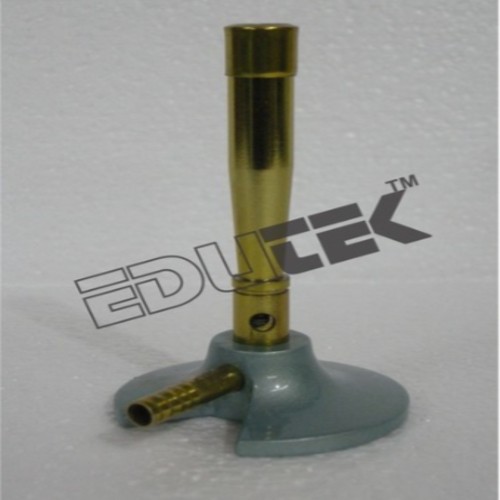
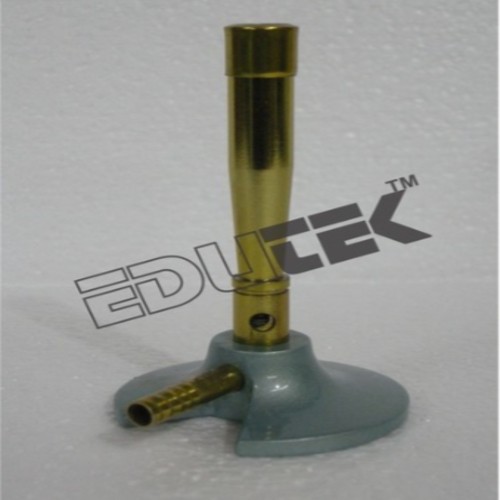
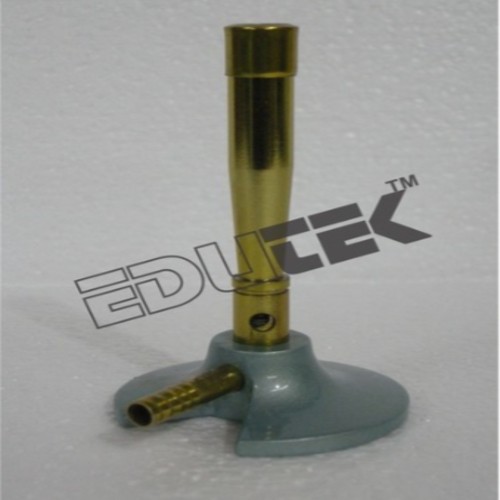
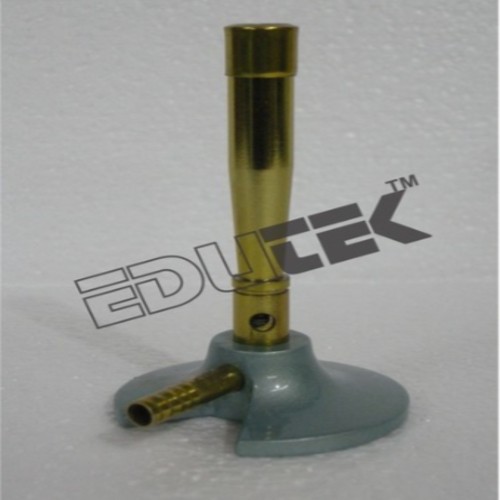
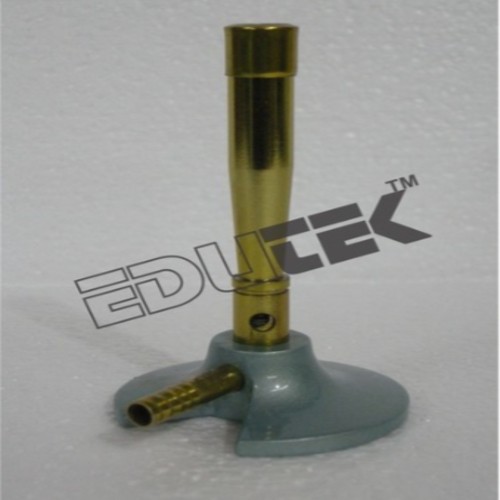
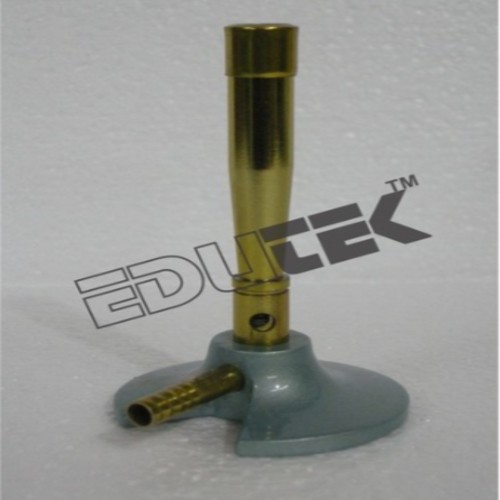
Bunsen burners are made of thick brass chrome plated pipe with screw air regulators painted. These Bunsen burners have light weight base with LPG & PG nipples. The high quality of our burners is being assured by the stringent tests we perform before supplying these to the clients. These are available in two different specifications such as:
- Bunsen Burner designed with duco painted heavy base supplied with LPG & PG nipples
- Bunsen Burner With Stop Cock: These are provided with brass stop cock.
Technical Specification
| For use with bottled gas. |
| For use with natural gas. |
| For use with coal gas. |
Manufactured from robust metalsincluding brass, chromium-plated alloys, and aluminumthe Laboratory Bunsen Burner ensures prolonged use even under rigorous laboratory conditions. These materials provide excellent resistance to corrosion and thermal stress, maintaining the burners functionality over extended periods.
Precision Flame ControlThe built-in rotatable air regulator offers laboratory professionals the ability to finely tune the amount of air mixing with the gas, enabling optimal adjustability of the flames intensity and temperature. This feature allows for versatility in performing precise heating, sterilization, and combustion experiments.
Wide Range of Laboratory ApplicationsIdeal for scientific laboratories, the Bunsen Burner supports functions from basic sample heating to sterilizing equipment and conducting controlled combustion reactions. Thanks to its adjustable flame and temperature resistance, it serves diverse laboratory needs safely and effectively.
FAQs of Bunsen Burners:
Q: How do you operate a Laboratory Bunsen Burner safely?
A: To safely operate a Laboratory Bunsen Burner, connect it to a gas source, ignite it at the nozzle using a spark or match, and adjust the flame using the rotatable air regulator. Always place the burner on a flat, stable surface, and ensure that loose items and flammable materials are kept away from the flame. Supervise the burner during use and shut off the gas when finished.
Q: What are the main applications of this Bunsen Burner in laboratories?
A: This Laboratory Bunsen Burner is commonly used for heating substances, sterilizing laboratory tools, and supporting combustion reactions in scientific experiments. Its adjustable flame and temperature capability make it suitable for a broad range of laboratory heating tasks.
Q: When should I use the air regulator on my Bunsen Burner?
A: The air regulator should be adjusted whenever you need to modify the flames intensity or temperature. For a hotter, blue flame (ideal for most laboratory processes), increase the air supply. For a cooler, yellow flame, decrease the air intake. Proper air adjustment is vital for both safety and experimental accuracy.
Q: Where can this Bunsen Burner be used?
A: This burner is intended for use in scientific laboratoriessuch as those found in schools, research centers, and industrial testing facilitieswhere controlled, adjustable heating is required for experiments and equipment sterilization.
Q: What benefits does this Laboratory Bunsen Burner offer compared to electrically powered alternatives?
A: Because it operates using gas rather than electricity, this Bunsen Burner provides rapid heating, greater temperature range (up to 1400C), and simple flame adjustment without electrical infrastructure. This makes it more versatile and portable for a variety of laboratory settings.
Q: What materials are used to manufacture the burner, and how does this affect performance?
A: This Laboratory Bunsen Burner is constructed from metals like brass, chromium-plated alloys, or aluminum. These materials impart excellent durability, prevent corrosion, and withstand repeated high-temperature exposure, ensuring reliable performance during long-term laboratory use.





 Send Inquiry
 Send Inquiry

