About Bubble Cap Distillation Column
Bubble Cap Distillation Column:
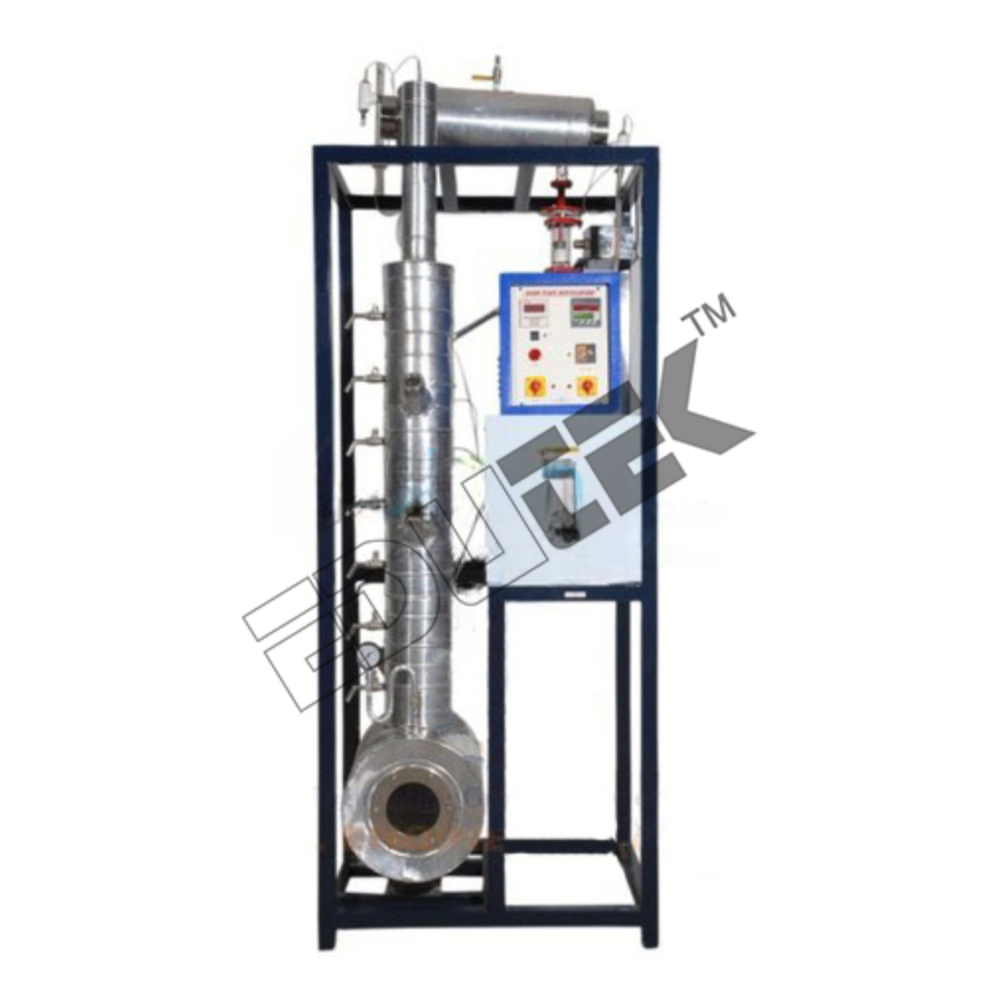
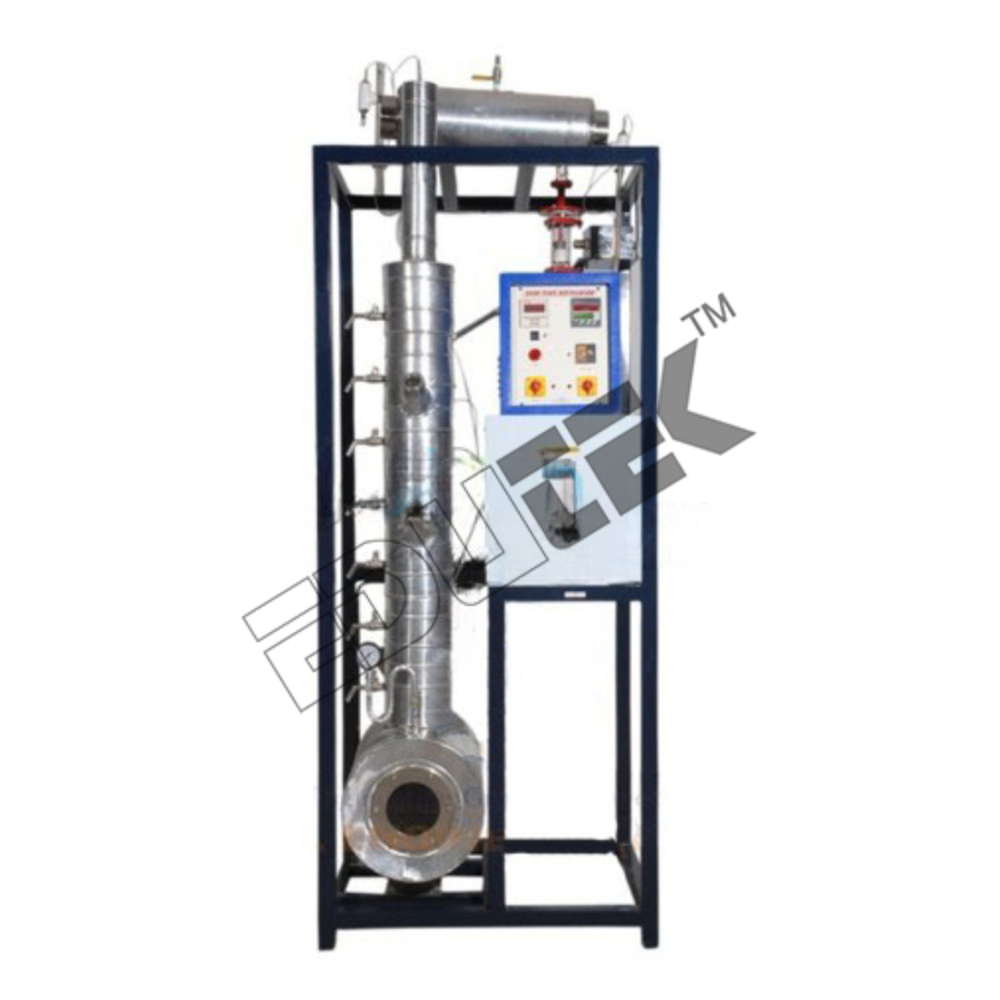
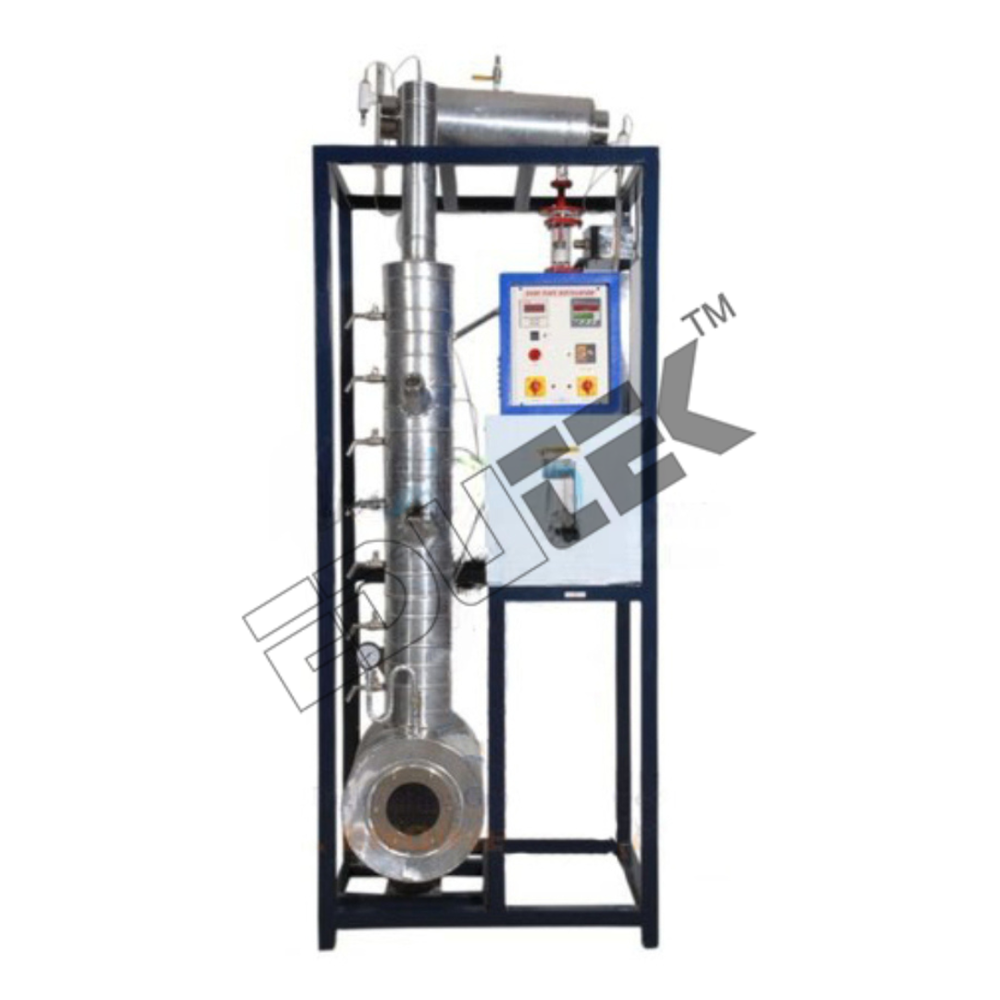
- The column is made of Stainless Steel with seven plates for mounting the bubble caps. Each plate is provided with one bubble cap. An electrically heated re-boiler is installed at the bottom of the column. The vapors form the top of column are condensed in the shell and tube type condenser by circulating cooling water supplied by laboratory overhead tank.
- The condensate is divided into reflux and distillate by automatic reflux divider and R/D Ratio can be varied. Reflux is fed back to the column and distillate is received in a receiving tank. The complete column is insulated for minimizing the heat loss. Instrumentation is done for pressure & temp measurement wherever is necessary
Enhanced Separation EfficiencyBubble cap trays in this distillation column foster thorough vapor-liquid interaction, which significantly amplifies mass transfer rates. This leads to high separation accuracy, uniform vapor distribution, and consistent product purity, making it ideal for demanding industrial applications such as chemical separation, solvent recovery, and purification.
Customizable Design and ConstructionThe comes with a fully customizable configuration, including adjustable numbers of trays, bubble caps, diameter (200 mm2000 mm), and height (up to 12 meters). Constructed from premium-grade stainless steel or mild steel, it serves a wide range of process needs, with options for insulation, heating, and corrosion resistance to match your specifications.
Robust Monitoring and ServiceabilityEquipped to integrate temperature and pressure gauges, the design ensures accurate tracking of your process conditions. Maintenance is straightforward, thanks to easy-access manholes and dedicated cleaning nozzles, minimizing downtime and simplifying routine servicing or inspection.
FAQs of Bubble Cap Distillation Column:
Q: How does the bubble cap arrangement improve the vapor-liquid contact efficiency?
A: The bubble cap trays create multiple points for vapor to pass through and interact with the liquid, significantly enhancing mass transfer between phases. This configuration increases contact surface area, ensuring efficient separation and higher product purity.
Q: What industries commonly utilize the Bubble Cap Distillation Column?
A: Common application sectors include chemical manufacturing, pharmaceuticals, petrochemical processing, food and beverage distilleries, and solvent recovery operations, thanks to the columns versatile design and capacity range.
Q: When should a customizable distillation column be chosen over standard models?
A: A customizable column is recommended when unique process requirementslike specific diameter, tray number, pressure, or temperaturemust be met for optimal separation, particularly for diverse feedstocks or variable production volumes.
Q: Where can these distillation columns be installed and operated?
A: The is suitable for installation in industrial facilities such as chemical plants, pharmaceutical factories, and food processing units. Its corrosion resistance and multiple finish options adapt to varied operational environments.
Q: What is the process for maintaining and cleaning the bubble cap column?
A: Maintenance is simplified by easy-access manholes and cleaning nozzles. Routine servicing involves inspection of trays, bubble caps, and the internal shell, facilitated by the columns ergonomic service points.
Q: How does the columns design ensure long service life and reliable operation?
A: Constructed from robust materials like SS316 and SS304, the column offers outstanding corrosion resistance. Options for insulation and mirror or industrial surface finishes contribute to its durability and dependable long-term performance.
Q: What are the principal benefits of using a bubble cap tray column compared to packed columns?
A: Bubble cap tray columns excel in processes requiring high separation efficiency, consistent vapor distribution, and where ease of cleaning and tray access are necessary. They outperform packed columns in applications with variable feed conditions or where process adjustments are frequent.




 Send Inquiry
 Send Inquiry

