About Absorption In Packed Column Apparatus
Absorption In Packed Column Apparatus
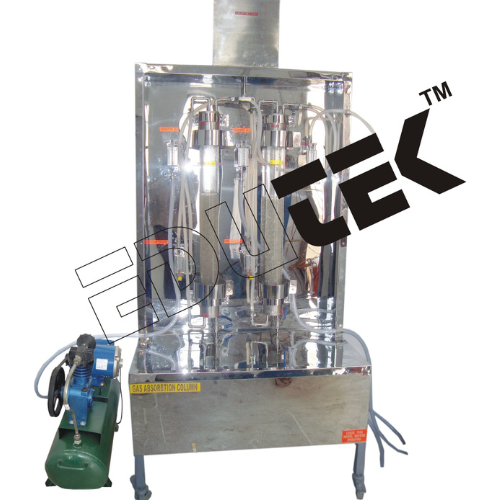
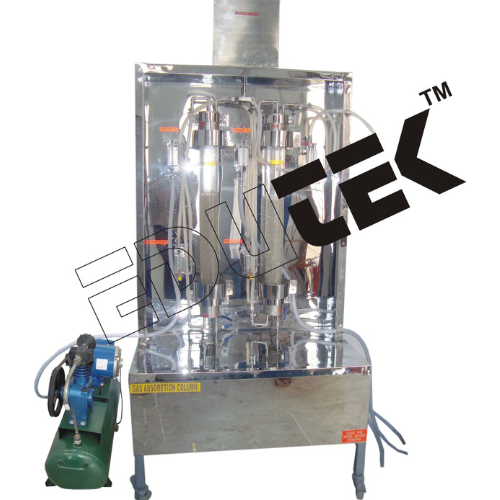
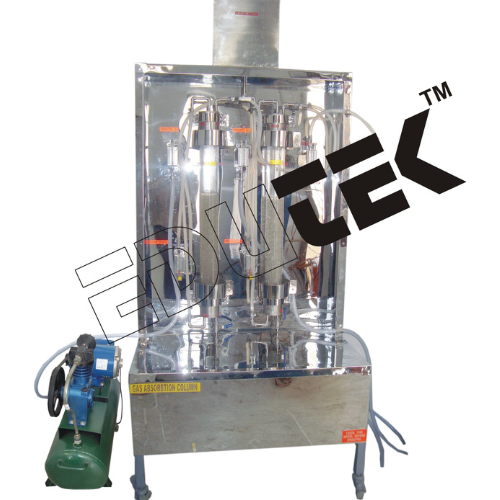
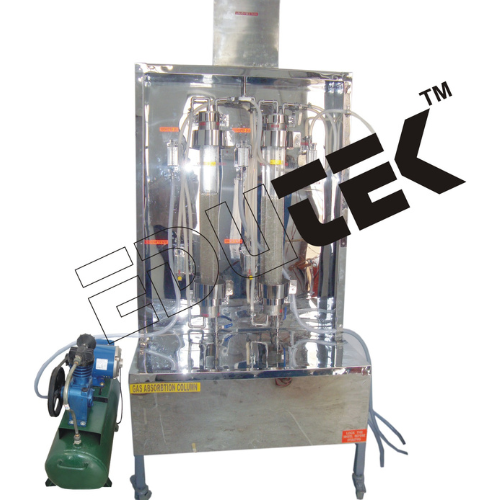
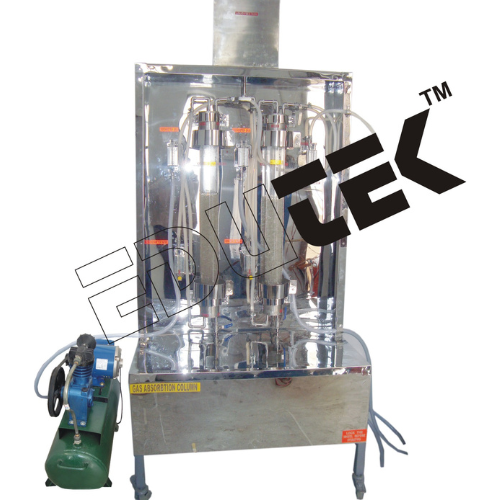
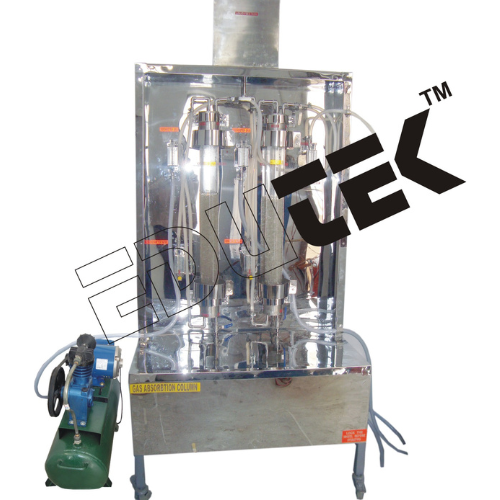
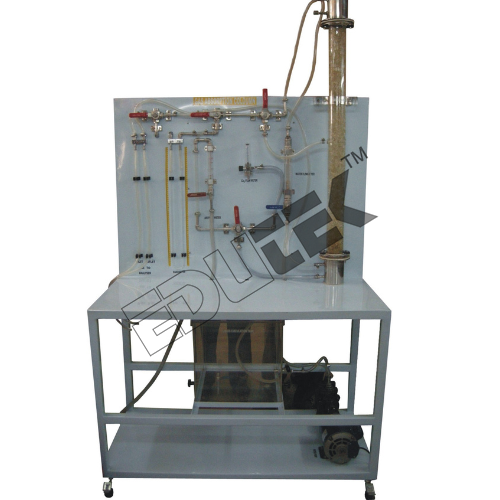
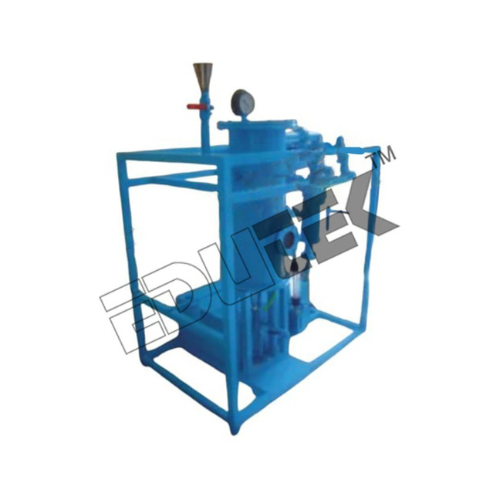
The absorption column is designed to demonstrate the basics of gas absorption in the unit operations of chemical engineering. A glass absorption column is used to allow mass transfer between the absorption liquid and feed gases within the unit. Students are exposed to the working principle s of a gas absorption column via wetted wall system.
Some of the other features are as follows:
- Compares absorption characteristics of packed columns.
- Allows humidification and stripping to be studied.
- Complete visual monitoring of the process.
- Easily operated and used.
- No further development work necessary.
- Suitable for project or research work.
Comprehensive Study of Gas AbsorptionThis apparatus facilitates in-depth investigations of gas-liquid absorption processes in a controlled environment. Users can analyze key operational parameters, measure mass transfer coefficients, and observe phenomena through the transparent column, providing valuable insights for both educational and research applications.
Robust and Safe ConstructionConstructed from high-quality borosilicate glass and engineered for chemical resistance, the system incorporates stainless steel/PVC fittings and a powder-coated mild steel frame. Integrated safety features such as electrical overload protection and non-return valves ensure reliable operation for students and professionals alike.
User-Friendly and Versatile DesignFeaturing analog and digital displays (model-dependent) and straightforward manual or semi-automatic controls, the apparatus is suitable for laboratory table-top setups. With low maintenance requirements and easy-to-operate flow control modules, its tailored for maximum educational utility and minimal operational complexity.
FAQs of Absorption In Packed Column Apparatus:
Q: How does the Absorption In Packed Column Apparatus work?
A: This apparatus operates by passing a liquid and a gas through a vertically packed borosilicate glass column containing Raschig rings or glass beads. The liquid and gas flow rates are controlled precisely using rotameters. As the two phases interact over the packing, absorption takes place, allowing users to study gas-liquid mass transfer dynamics under varying conditions.
Q: What can be studied using this apparatus?
A: With this equipment, you can investigate the principles of gas absorption in a packed column, determine mass transfer coefficients, and analyze the influence of operational variables such as flow rates, temperature (up to 80C), and packing type on absorption efficiency. It is especially useful for chemical engineering education and research.
Q: When is it suitable to use this apparatus in a laboratory?
A: The apparatus is ideal for use during laboratory sessions focused on unit operations, separation processes, or mass transfer analysis. It is also employed in research projects where experimental verification of absorption theories or quantitative measurement of process variables is required.
Q: Where is the Absorption In Packed Column Apparatus typically installed?
A: Due to its table-top, ready-to-use configuration, the apparatus is commonly installed in university and research institution laboratories, specifically within chemical engineering departments. Its manageable dimensions (600 x 400 x 1500 mm) allow flexible placement on standard laboratory benches.
Q: What is the process for controlling liquid and gas flow rates?
A: Liquid and gas flows are independently measured and adjusted using rotameters equipped with control valves (with 1% accuracy). The liquid circulates via self-priming, chemical-resistant pumps, while gas flow is regulated through an acrylic rotameter, ensuring stable and reproducible experimental conditions.
Q: How is the apparatus beneficial for educational purposes?
A: Offering direct visualization of absorption phenomena through its transparent column, the apparatus enables students to connect theoretical concepts with practical observations. Its controlled parameters and safe design foster hands-on learning, deepening understanding of key chemical engineering processes.
Q: What safety features are included in the setup?
A: Safety is prioritized through multiple features: electrical overload protection is integrated in the powder-coated control panel (with MCB and indicators), non-return valves prevent backflow, and a leak-proof, corrosion-resistant construction enhances operational security during laboratory use.





 Send Inquiry
 Send Inquiry

