About Absorption in Packed Bed
Absorption in Packed Bed:
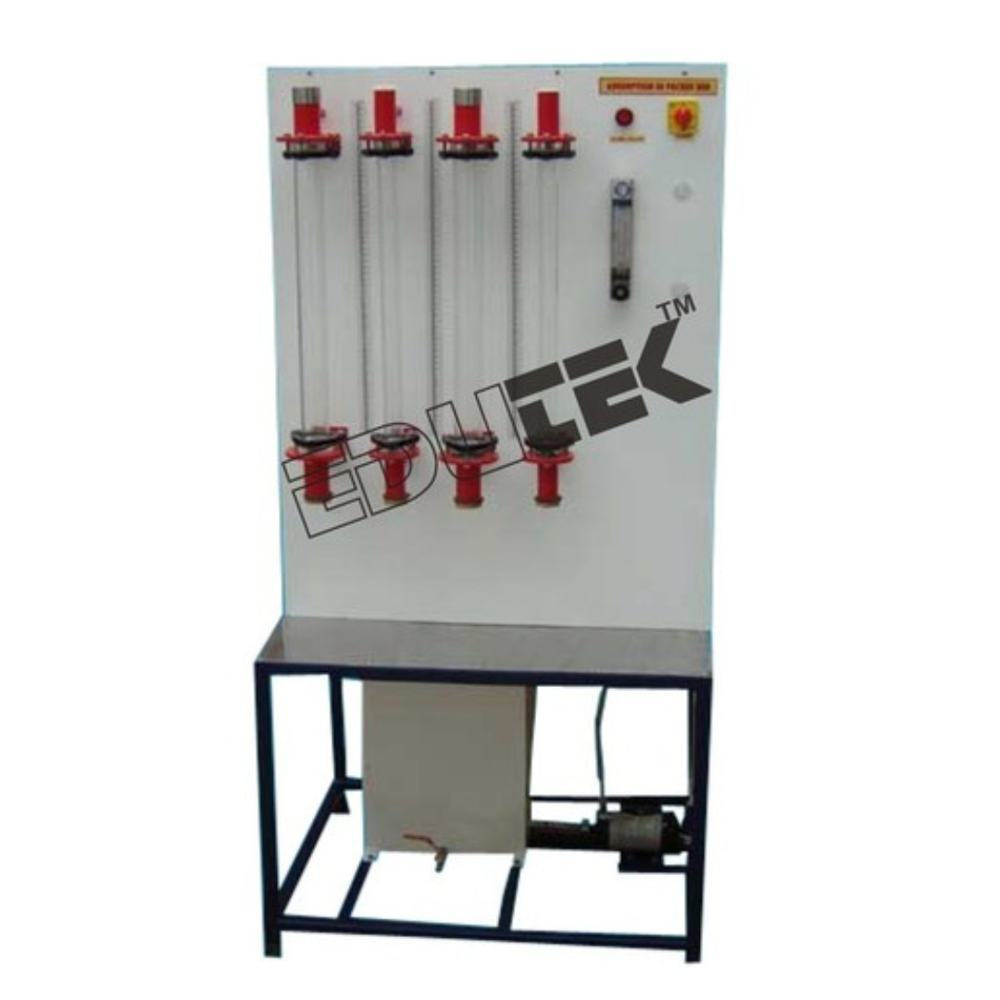
We are offering superior quality Adsorption in Packed Bed to the esteemed customers, as per their specific demands. These are designed under the strict command of our quality analyzers keeping in mind the industry guidelines. We make sure to timely deliver the ordered products at the customers' end, via our wide distribution network.
Utilities Required:
- Water Supply & Drain.
- Electricity Supply: I Phase, 220VAC, 1.5kW.
- Instruments, Laboratory Glassware and Chemicals required for analysis as per the system adopted.
Specifications:
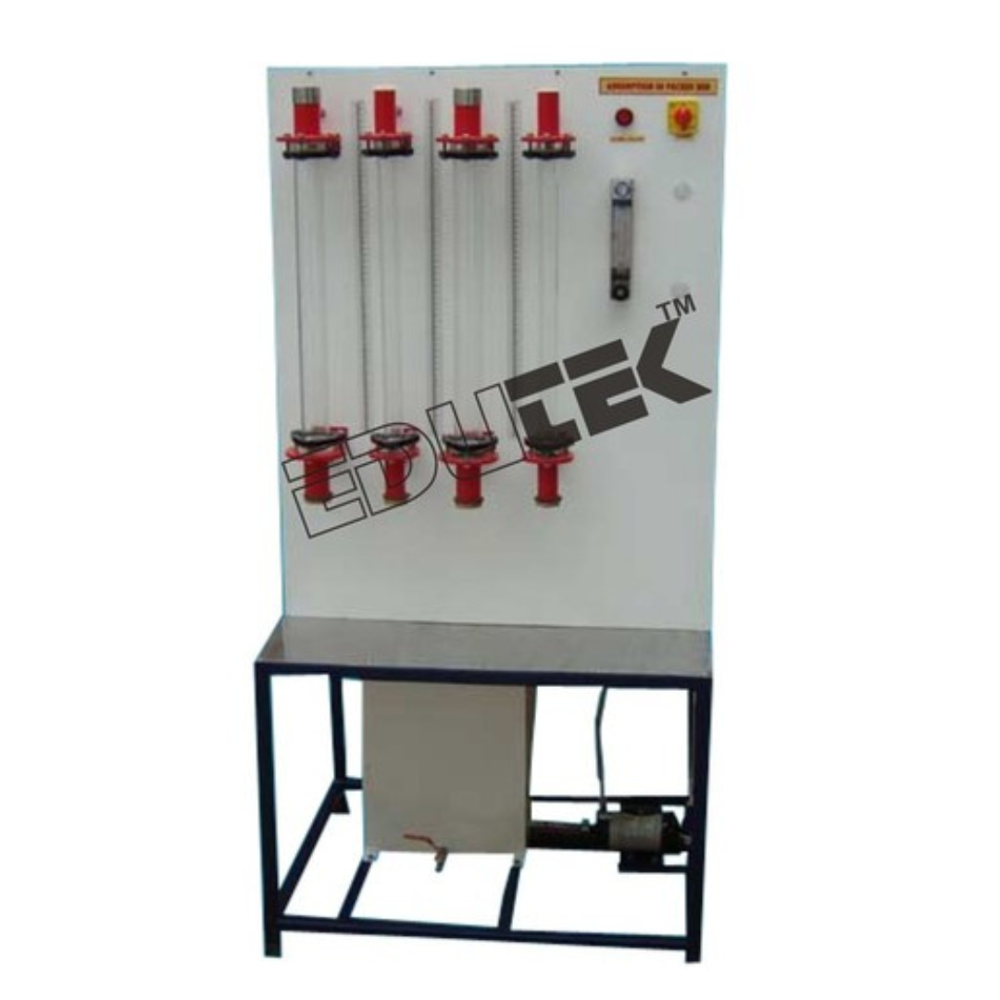
- Product Adsorption Setup.
- Reactor Column:- Material Borosil Glass, different diameter with different height of packing (3 Nos.).
- Feed Tank:- Material Stainless Steel, Capacity 20 Ltrs., feed lines, drain valve etc. (1Nos.).
- Receiving Tank:- Material Stainless Steel, Capacity 20 Ltrs (1Nos.).
- Feed Circulation:- By pump, Magnetic drive made of Polypropylene (1Nos.).
- Flow Measurement:- Rota-meter 1 Nos. (for feed).
- Feed Piping:- PVC / SS size.
- Stop Watch:- Electronic.
- Control Panel:- On off switch, Mains Indicator etc.
- The setup is painted with good quality paints & mounted on a strong support.
Comprehensive Absorption StudiesThis apparatus is specially designed for in-depth demonstration and practical research of mass transfer and absorption in packed towers. With interchangeable packing like Raschig Rings or glass beads, students and educators can visually observe the liquid and gas flow distribution, investigate pressure drops using the integrated U-tube manometer, and analyze operational parameters effectively.
Robust, Safe, and Customizable DesignBuilt with a borosilicate glass column and stainless steel structure, the unit ensures durability and clear visualization. All wetted parts use anti-corrosive materials, while electrical overload protection guarantees user safety. With customizable column packing and adjustable flow rates, the system can adapt to specific research or instructional needs within the lab environment.
User-Friendly Operation and Accurate MeasurementEase of assembly and operation make this equipment ideal for educational use. Analog and optional digital displays, coupled with accurate rotameters and measuring cylinders, ensure precise monitoring of flow rates. Its modular design facilitates both demonstration and experimentation, supporting repeatable and reliable results in chemical engineering education.
FAQs of Absorption in Packed Bed:
Q: How does the absorption process work in this packed bed equipment?
A: Absorption occurs as a gas stream passes upward through the packing materialsuch as Raschig Rings or glass beadswhile a liquid flows downward. The large surface area of the packing enhances mass transfer, enabling the gas to dissolve partially or fully into the liquid, which is collected for analysis.
Q: What are the main benefits of using Raschig Rings or glass beads as packing materials?
A: Both Raschig Rings and glass beads offer high surface area and promote efficient contact between the gas and liquid phases, enhancing absorption rates. These materials are also chemically resistant and allow for visual monitoring of flow patterns inside the transparent column.
Q: When should I customize packing height or type in the column?
A: Customization is beneficial when you need to simulate different industrial conditions or conduct comparative studies. Varying the packing height or type allows investigation into how these parameters influence absorption efficiency and pressure drop across the column.
Q: Where is this equipment typically installed and operated?
A: This device is designed for use in indoor, well-ventilated laboratory environments, such as chemical engineering teaching and research labs. Its compact footprint and safety features make it suitable for standard lab benches.
Q: What is the process for setting up and operating the packed bed absorber?
A: Fill the liquid feed tank (20 L capacity), connect the compressed air source (at 12 bar), and set desired liquid and gas flow rates using the built-in rotameters. The centrifugal pump circulates the liquid, while the gas flows through the column. Monitor pressure drops with the U-tube manometer and track system parameters via the displays.
Q: How can this equipment be beneficial for chemical engineering students?
A: It provides hands-on experience with real equipment used in industry for gas-liquid absorption. Students learn to measure flow rates, analyze pressure drops, and interpret operational results, reinforcing theoretical concepts through direct experimentation.
Q: What safety and maintenance features does the system include?
A: The system incorporates electrical overload protection, anti-corrosive materials, and safe, low-maintenance components. Regular checks and cleaning of the glass column and PVC fittings ensure long operational life and consistent data reliability.






 Send Inquiry
 Send Inquiry

